
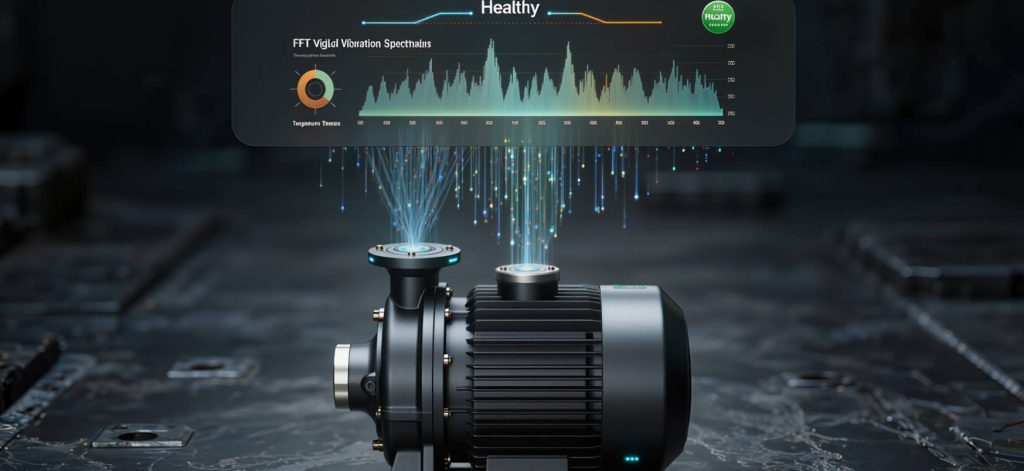
From Reactive to Predictive: The Digital Transformation of Pump Maintenance
For most of the pump industry’s history, maintenance has been reactive (fix it when it breaks) or preventive (fix it on a calendar schedule regardless of condition). Both approaches waste money—reactive maintenance causes unplanned downtime and collateral damage; preventive maintenance replaces components that may have thousands of hours of useful life remaining.
Digital tools—wireless vibration sensors, cloud-based analytics, digital twins, and remote monitoring platforms—are changing this equation. But the technology is only as good as the maintenance strategy that uses it. This article explores how to integrate digital tools into a practical pump maintenance program without overspending on technology.
What Digital Maintenance Actually Means
“Digital maintenance” is not about buying a monitoring system and hoping it solves your problems. It is about continuously collecting the right data, analyzing it to detect developing issues, and acting on the information before the pump fails—all with minimum human intervention in the data collection process.
The essential components:
- Sensors: Vibration (accelerometers on bearing housings), temperature (bearing and seal flush), pressure (suction and discharge), and optionally flow (clamp-on ultrasonic) and power (motor current/power monitor). These generate the raw data.
- Data aggregation: A gateway or edge device collects sensor data and transmits it—via WiFi, cellular, or plant network—to a central database or cloud platform.
- Analytics: Software that compares current data against baselines and trends, applies fault detection algorithms (FFT for bearing defects, envelope analysis for early-stage damage), and generates alerts when parameters exceed thresholds or trend in the wrong direction.
- Action: A human—a reliability engineer or maintenance planner—reviews the alert, diagnoses the root cause, and schedules the corrective action. The technology does not replace human judgment; it ensures human attention is directed where it is needed most.
The Pragmatic Approach: Start Small, Scale What Works
The mistake many plants make is attempting to instrument every pump at once. A more practical approach:
- Start with critical unspared pumps—those whose failure stops production. Instrument vibration, temperature, and pressure differential on 5-10 pumps and run the program for 6 months to validate the technology and build organizational confidence.
- Add high-maintenance pumps—those that appear repeatedly in the work order history. These pumps are already costing the plant money; condition monitoring can reveal why and provide early warning before the next failure.
- Expand to the balance of the fleet only after the first two tiers demonstrate ROI through reduced unplanned downtime and extended component life.
The Technology Selection Checklist
When evaluating pump monitoring systems, focus on these questions:
- Does the system measure tri-axial vibration (all three axes), or only single-axis? Single-axis will miss misalignment signatures that manifest axially.
- Does the analytics software perform automated FFT analysis, or does it only trend overall vibration? Trending overall vibration is useful, but FFT is essential for diagnosing the root cause (unbalance vs. misalignment vs. bearing defect vs. vane-pass).
- Can the system integrate with your existing CMMS (computerized maintenance management system) to auto-generate work orders from alerts?
- What is the sensor battery life or power requirement? Wireless sensors with 3-5 year battery life eliminate wiring costs and simplify installation.
Key Takeaways
- Digital maintenance shifts pump care from reactive and calendar-based to condition-based—fixing what needs fixing, when it needs fixing.
- Start with critical unspared pumps to demonstrate value, then expand based on ROI.
- The analytics matter more than the sensors—look for systems that perform automated FFT analysis, not just overall vibration trending.
- The technology supports human judgment; it does not replace it. An alert is only valuable if someone acts on it.