
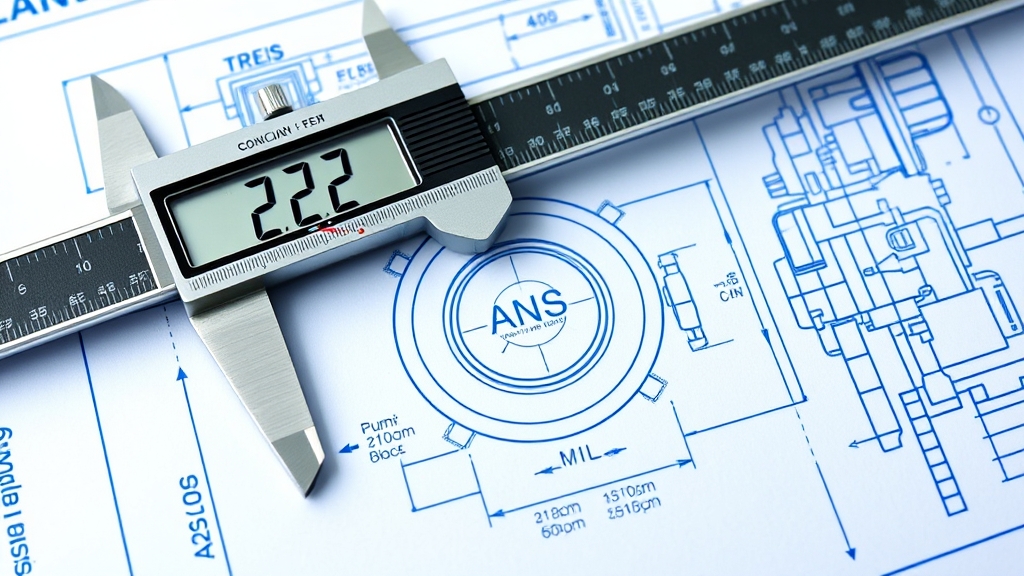
The 15-Minute Verification That Saves Weeks of Rework
Ordering replacement pump parts should be straightforward — but when the components arrive and don’t fit, the consequences cascade: the pump stays disassembled on the shop floor, the customer’s process remains down, and trust erodes. For maintenance service providers, verifying dimensional interchangeability before ordering is the single most valuable due diligence step in the procurement process.
This guide provides a systematic method to measure, document, and verify the critical dimensions that determine whether replacement wet-end components will fit your existing pump installation.
The Critical Interface Checklist
There are exactly seven interfaces that must match for a replacement component to be truly “drop-in” compatible:
1. Nozzle Flange Positions
| Measurement | How to Measure | Acceptable Tolerance | Consequence If Wrong |
|---|---|---|---|
| Suction flange elevation | Height gauge from baseplate top to flange centerline | ±0.06 in | Suction pipe must be cut and re-welded |
| Discharge flange elevation | Same method as suction | ±0.06 in | Discharge pipe must be cut and re-welded |
| Flange drilling | Calipers on bolt circle and bolt holes | Must match exactly | Flange adapter needed |
2-7: Remaining Critical Interfaces
- Baseplate mounting pattern: Foot bolt hole spacing ±0.03 in
- Shaft centerline height: From baseplate to shaft center ±0.03 in
- Coupling hub fit: Shaft diameter, keyway, shaft length
- Seal chamber: Bore diameter, depth, gland bolt pattern
- Wear ring fits: Casing ring bore, impeller ring OD, running clearance
- Impeller fit on shaft: Shaft diameter, impeller bore, keyway
Common Pitfalls and How to Avoid Them
Pitfall 1: Relying on Model Numbers Alone
Many pump models have undergone internal design changes over their production life while keeping the same model number. Always measure — never assume.
Pitfall 2: Ignoring Thermal Growth
For pumps handling fluids above 250°F, thermal expansion can shift shaft centerlines by 0.010-0.030 in. Specify your operating temperature when ordering.
Pitfall 3: Mismatched Wear Ring Materials
If the original pump had a cast iron casing and a 316SS wear ring, but you upgrade to a 316SS casing, the running clearance specification changes because the thermal expansion coefficients differ.
How ANSI Pumps Pro Ensures Compatibility
- CMM inspection: Every critical interface measured and compared against OEM reference
- 3D scanning: Production samples laser-scanned and overlaid on OEM CAD model
- Pre-shipment fit test: Components dry-assembled and verified before packaging
- Dimensional reports: Available on request — measured values for every critical interface
Need to verify compatibility before ordering?
Download our dimensional data collection template or send us your existing pump measurements. Our engineering team will verify compatibility and provide a detailed quote — typically within 24 hours.