
ANSI Pumps Pro · The Definitive Procurement Guide
Let’s cut to the chase: if you’re running Goulds, Durco, or Flowserve ANSI pumps in your plant, and you’re still sourcing every replacement wet end component through the OEM channel, you’re paying more than you need to and waiting longer than you have to. It’s not 2015 anymore. The aftermarket has matured — and the numbers back it up.
This guide is written for the maintenance manager, the procurement lead, and the plant engineer who want a clear, no-nonsense picture of what a high-compatibility ANSI pump wet end package actually looks like, how to evaluate one, and how to order with confidence. No vague promises. Just the specifics that matter when uptime is on the line.
What Is a Wet End Package — and What Makes It “High Compatibility”?
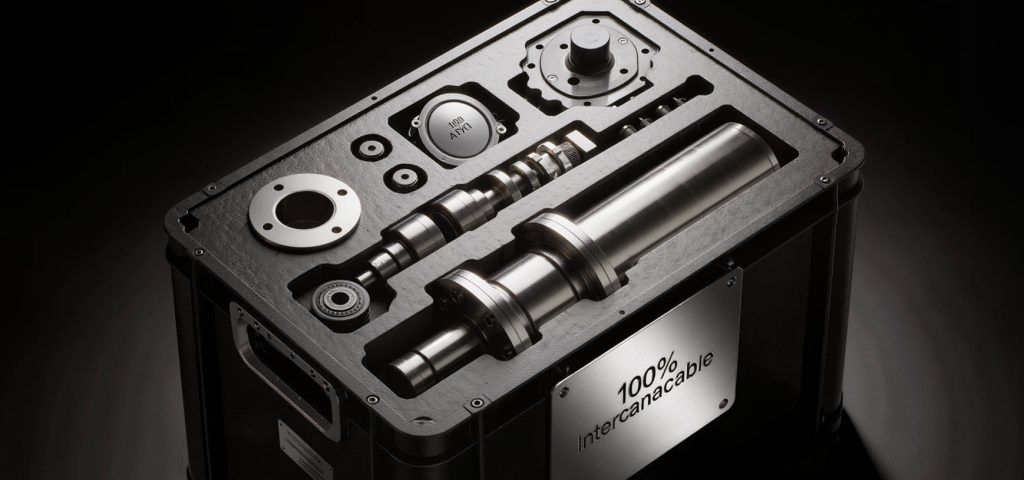
A wet end package is the complete set of components that contact the process fluid — the hydraulic assembly from the casing gasket inward. A high-compatibility wet end package means every component in that set was engineered to match the dimensional envelope, material specification, and hydraulic profile of the original OEM pump it replaces.
Here’s the difference between commodity aftermarket and high-compatibility aftermarket:
The price difference between these two tiers is real — but so is the risk difference. The commodity part that “almost fits” costs more in field modification labor than the price difference ever accounted for.
Material Selection: Matching the Chemistry to the Application
The single most common mistake in wet end replacement is ordering the wrong material. Not because the buyer doesn’t know what they need, but because they assume the material that “worked fine” in their old pump is still the right call. Sometimes it is. Sometimes the process chemistry has shifted over time and nobody told maintenance.
Here’s a practical material selection reference for the most common ANSI pump wet end alloys:
316 Stainless Steel
The workhorse. Good general corrosion resistance for water, mild chemicals, food-grade applications. Not suitable for chlorides above ~200 ppm at ambient temperature (lower threshold at elevated temperatures). Most commonly stocked material.
Typical applications: Water treatment, food & beverage, general chemical transfer (non-chloride), HVAC
CD4MCuN (Duplex SS)
Higher strength and better corrosion resistance than 316SS — particularly in chloride-containing environments. Good erosion-corrosion resistance. The go-to upgrade when 316SS isn’t cutting it but you don’t need a full nickel-based alloy.
Typical applications: Chemical processing with chlorides, bleach solutions, fertilizer production, pulp & paper
Hastelloy C-276
Nickel-chromium-molybdenum alloy. Exceptional resistance to oxidizing and reducing environments, pitting, and stress corrosion cracking. Handles aggressive acids, wet chlorine gas, and high-temperature corrosive media. Premium cost but indispensable for the right application.
Typical applications: Sulfuric acid, hydrochloric acid, phosphoric acid services, chlorinated solvents, fine chemical synthesis
Titanium (Grade 2 / Grade 7)
Outstanding resistance to chloride environments, seawater, and oxidizing media. Lightweight. The premium option for wet chlorine, hypochlorite, and seawater loops. Grade 7 (palladium-stabilized) for elevated-temperature chloride service.
Typical applications: Chlor-alkali processes, seawater reverse osmosis, sodium hypochlorite production, oxidizing acid loops
Alloy 20 (Carpenter 20)
Austenitic stainless with excellent resistance to sulfuric acid across a wide concentration and temperature range. The go-to for sulfuric acid handling where Hastelloy is overkill on cost.
Typical applications: Sulfuric acid dilution and transfer, pickling baths, chemical dosing systems
Cast Steel (WCB)
Carbon steel. For non-corrosive, high-pressure applications where corrosion resistance isn’t the driver. Most economical option. Often used for casings in closed-loop water systems with corrosion inhibitor treatment.
Typical applications: Closed-loop cooling water, fire water pumps, non-corrosive hydrocarbon transfer
Not Sure Which Material You Need?
Send us your process fluid composition (even a rough one), operating temperature, and what material your current pump is made of. Our applications engineers can cross-reference this against corrosion data and recommend the right alloy. We’d rather spend 15 minutes getting the material right upfront than have you come back six months later with a corrosion failure.
Sizing and Interchangeability: How to Make Sure It Fits
The anxiety around fit is completely rational. If the replacement casing doesn’t bolt to the existing baseplate, or the impeller doesn’t clear the casing, you’re down while you sort it out. Here’s how a qualified aftermarket supplier eliminates that risk:
- Frame size verification. Your pump has a specific ANSI frame size (e.g., STX, MTX, LTX for Goulds 3196; Group 1, 2, 3 for Durco Mark III). The supplier should confirm this from your pump tag information before quoting.
- Dimensional database cross-reference. Reputable aftermarket suppliers maintain a dimensional database that maps OEM part numbers to their equivalents, verified against physical samples and OEM documentation.
- Critical interface checklist. Before production, key mating dimensions should be documented and agreed upon: casing foot height, bolt circle pattern, shaft diameter at seal fit, seal chamber bore diameter, suction and discharge flange dimensions and drilling.
- Pre-shipment dimensional report. After manufacturing, those same critical dimensions should be measured and documented. You should receive this report before the parts arrive, so you can review it and flag anything that looks off.
The Total Cost Picture: OEM vs. Aftermarket Wet End
Purchase price is the visible number. Total cost of ownership includes procurement time, inventory carrying cost, and the cost of extended downtime. Here’s how a representative comparison plays out:
| Cost Factor | OEM Channel | High-Compatibility Aftermarket |
|---|---|---|
| Wet end kit purchase price | $14,000 – $21,000 | $8,400 – $12,600 |
| Lead time (weeks) | 14 – 18 | 5 – 7 (stock parts: 2–5 days) |
| Inventory carrying cost (cost of capital tied up in spares during extended lead time) |
Higher — longer lead times force larger safety stock | Lower — shorter lead times reduce required on-hand inventory |
| Downtime cost exposure (risk of extended outage if lead time stretches) |
Higher — 16-week average lead time window | Lower — 6-week average; emergency stock available for some models |
| Procurement overhead | Higher — multi-tier distribution adds handling cost | Lower — factory-direct, single point of contact |
The purchase price savings (35–40%) is the headline number. But for many plants, the real savings come from compressing the maintenance cycle — getting the pump back online in 6 weeks instead of 16. For a process-critical pump, those 10 extra weeks of production can be worth far more than the parts themselves.
How to Place Your First Order — Without the Guesswork
If you’ve never sourced aftermarket wet end components before, the process should be straightforward. Here’s what a well-structured RFQ looks like:
Information Your Supplier Needs
- Pump make, model, and frame size — e.g., “Goulds 3196, STX, 3×4-13” or “Durco Mark III 2, Group 2, 2×3-10”
- Serial number or tag number — helps the supplier cross-reference their dimensional database
- Which components you need — complete wet end kit, or specific components (e.g., “impeller only” or “casing + impeller + shaft”)
- Material grade — be specific: “316SS per ASTM A743 CF8M” not just “stainless steel”
- Mechanical seal information — manufacturer, model, and size, so the stuffing box cover bore is machined correctly
- Target delivery date — your turnaround schedule, not “ASAP”
- Documentation requirements — do you need MTRs, dimensional reports, hydrostatic certs, certificate of conformance? (The answer is usually yes.)
Red Flags to Watch For When Evaluating Suppliers
Not every company offering “ANSI pump replacement parts” is operating at the same level. Here’s what should make you pause:
- ✗ No MTRs available. If they can’t tell you the chemistry of the metal they’re selling you, walk away. This is non-negotiable for any process pump application.
- ✗ No dimensional inspection capability. “We measure by hand” is not the same as CMM verification. Hand measurement is fine for rough checks but it’s not a quality control system.
- ✗ Can’t provide references for your specific pump model. A supplier who’s never built parts for a Goulds 3196 but assures you they can “figure it out” is using your pump as a learning exercise.
- ✗ Vague about lead times. “We’ll let you know after we start” is not a commitment. A legitimate supplier can give you a firm ship date within 48 hours of receiving your PO.
- ✗ Price that’s too good to be true. If someone is quoting 70% below OEM, they’re cutting corners somewhere — metallurgy, dimensional accuracy, or testing. The goal is 35–40% savings, not chasing the absolute bottom of the market.
Why This Matters for Your 2025–2026 Maintenance Budget
The global ANSI pump market is growing at roughly 3.9% annually. North America remains one of the largest installed bases. But the parts supply chain hasn’t kept pace. OEM consolidation, foundry closures, and the persistent skilled labor shortage in precision manufacturing have created a structural gap between demand and OEM supply capacity.
That gap is being filled by qualified aftermarket manufacturers — shops that specialize in replacement wet end components and compete on the combination of delivery speed, dimensional accuracy, and material integrity. It’s not about “cheap parts.” It’s about a supply chain that actually responds when you need it to.
If your maintenance budget for 2025–2026 includes ANSI pump overhauls — and it probably does — now is the time to qualify an aftermarket wet end supplier. Get a trial order in. Run the parts through your incoming inspection. Build the relationship before you’re in a crisis. The worst time to find out whether a supplier can deliver is when your pump is already in pieces on the shop floor.
Ready to Get a Quote on Your ANSI Pump Wet End?
Send us your pump information and what you need. You’ll receive a detailed quotation with lead time commitment, material certification package outline, and dimensional documentation samples — everything you need to evaluate us as a supplier before you place an order.