
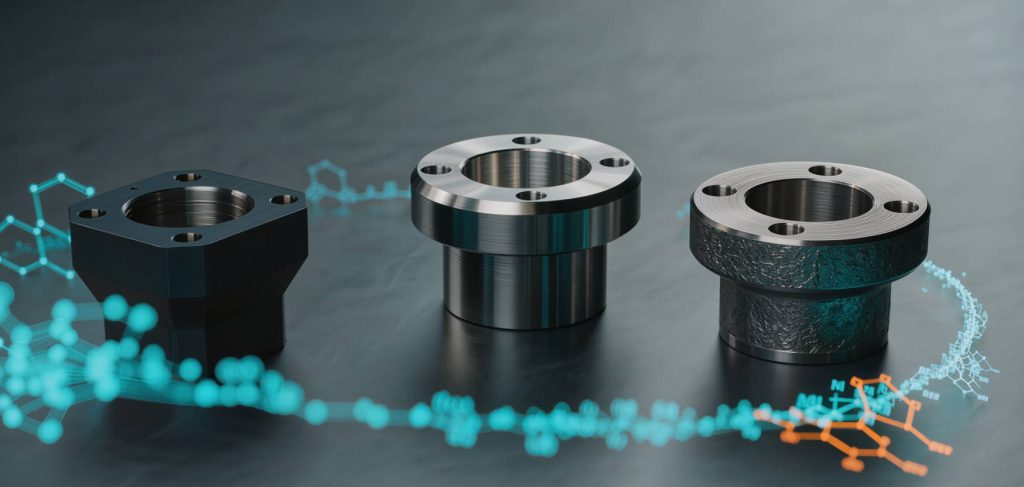
Material Selection: Where Pump Reliability Begins
In chemical process pumping, the material of construction is not just one factor among many — it is the single most important decision you make. Specify the wrong alloy and the pump fails within months — or weeks — regardless of how well it’s designed, manufactured, and installed.
This guide covers every standard and exotic alloy available for ANSI B73.1 process pumps, with practical guidance on when to use each one, what they cost, and what specific chemicals each grade handles best.
Material Grade Quick Reference
| Material | ASTM/ACI Grade | Relative Cost | Best For | Avoid For |
|---|---|---|---|---|
| Cast Iron | Class 30 | 0.3× | Water, neutral pH | Any acid or corrosive service |
| 316 Stainless Steel | CF8M | 1.0× | General chemical, organic acids | Strong reducing acids, hot chlorides |
| CD4MCuN (Duplex) | A890 Gr 1B | 1.5× | Chloride SCC resistance, high strength | Strong reducing acids |
| Alloy 20 | CN7M | 2.5× | Sulfuric acid, mixed acids | Hydrochloric acid |
| Nickel | CZ100 | 3.0× | Caustic soda, hot alkaline | Acids (except HF) |
| Titanium | B367 Gr C-3 | 3.5× | Chlorides, seawater, bleach | Strong reducing acids |
| Hastelloy C-276 | CW2M | 4.5× | Mixed acids, severe corrosion | Hot concentrated HNO₃ |
| Hastelloy B | N-12MV | 5.0× | Hydrochloric acid (all conc.) | Oxidizing environments |
Service Condition Guide
| Chemical / Service | Concentration | Temperature | Recommended Material | Alternative |
|---|---|---|---|---|
| Sulfuric Acid | 0-20% | Up to 150°F | Alloy 20 | 316SS (very dilute) |
| Sulfuric Acid | 20-70% | Up to 200°F | Alloy 20 or Hastelloy C | High-Si Cast Iron |
| Hydrochloric Acid | Any | Up to 150°F | Hastelloy B | Zirconium |
| Nitric Acid | 0-65% | Up to 200°F | 304L or 316L | Titanium |
| Caustic Soda | 0-50% | Up to 250°F | Nickel (CZ100) | 316SS (low temp only) |
| Sodium Hypochlorite | 0-15% | Up to 150°F | Titanium | Hastelloy C |
| Seawater / Brine | N/A | Any | Titanium or CD4MCuN | Super duplex |
| Ferric Chloride | Any | Any | Titanium | Hastelloy C (moderate temp) |
Common Material Selection Mistakes
Mistake 1: Using 316SS for Sulfuric Acid Above 10%
At concentrations above 10% H₂SO₄ and temperatures above 100°F, the passive layer on 316SS breaks down. Use Alloy 20.
Mistake 2: Using 316SS for Hot Chloride Service
Above 140°F, even 50 ppm chlorides can cause catastrophic Cl-SCC in 316SS. Switch to CD4MCuN or Titanium.
Mistake 3: Assuming Hastelloy C Handles Everything
Hastelloy C-276 performs poorly in hot concentrated HNO₃ (use Titanium) and is attacked by HCl above 15% at elevated temperature (use Hastelloy B).
Mistake 4: Overlooking Galvanic Corrosion
A Titanium impeller on a 316SS shaft in seawater will cause rapid shaft corrosion. Always specify compatible material pairs.
Not Sure Which Alloy Your Application Requires?
Send us your process fluid composition, concentration, temperature, and pH. Our metallurgy team will recommend the optimal material — and quote a 100% interchangeable wet-end kit in the correct grade.