
Durco Mark III Reverse-Vane Impeller Replacement & Fitment Guide
100% Interchangeable Reverse-Vane Replacement — for the verified corresponding Mark III POS 103 configuration. Confirm Group, pump size, exact OEM/replacement reference, current trim and material; the matched impeller is then supplied for direct installation in the existing pump without redesign or field remachining. Normal installation/adjustment procedures still apply. This page covers verified reverse-vane references only; front-vane/open-style Mark III configurations require separate identification.
Choose the fastest fitment path.
The same page supports buyers starting from pump identity, OEM reference, or an existing impeller.
Use exact references to narrow fitment.
Search the verified replacement and OEM references by pump size or part number, then confirm the installed Group, current trim, material and mating configuration before release.
| Pump Size | POS | Replacement Ref | OEM Ref | Verification Focus | Action |
|---|---|---|---|---|---|
| 1.5×1-62 | POS 103 | DKA3 | MY50798A62 | Confirm installed Group, current trim, material and reverse-vane configuration. | |
| 1.5×1-82 | POS 103 | DKB3 | MY50754A82 | Confirm installed Group, current trim, material and reverse-vane configuration. | |
| 3×1.5-62 | POS 103 | DKC3 | MY50746A62 | Confirm installed Group, current trim, material and reverse-vane configuration. | |
| 3×1.5-82 | POS 103 | DKD3 | MY50656A82 | Confirm installed Group, current trim, material and reverse-vane configuration. | |
| 3×2-62 | POS 103 | DKE3 | MY50723A62 | Confirm installed Group, current trim, material and reverse-vane configuration. | |
| 3×2-82 | POS 103 | DAF3 | MY46066A82 | Confirm installed Group, current trim, material and reverse-vane configuration. | |
| 4×3-82 | POS 103 | DAG3 | MY46157A82 | Confirm installed Group, current trim, material and reverse-vane configuration. | |
| 2×1-10A | POS 103 | DAH3 | MY46952AA100 | Confirm installed Group, current trim, material and reverse-vane configuration. | |
| 3×1.5-10A | POS 103 | DAK3 | MY51157A100 | Confirm installed Group, current trim, material and reverse-vane configuration. | |
| 3×2-10 | POS 103 | DAL3 | MY36862A100 | Confirm installed Group, current trim, material and reverse-vane configuration. | |
| 3×2-10A | POS 103 | DAM3 | MY51049A100 | Confirm installed Group, current trim, material and reverse-vane configuration. | |
| 4×3-10 | POS 103 | DAN3 | MY35641AA100 | Confirm installed Group, current trim, material and reverse-vane configuration. | |
| 4×3-10H | POS 103 | DAP3 | MY36877A100 | Confirm installed Group, current trim, material and reverse-vane configuration. | |
| 6×4-10 | POS 103 | DAQ3 | MY47210AA100 | Confirm installed Group, current trim, material and reverse-vane configuration. | |
| 6×4-10H | POS 103 | DAR3 | MY50824A100 | Confirm installed Group, current trim, material and reverse-vane configuration. | |
| 3×1.5-13 | POS 103 | DAS3 | MY36649AA130 | Confirm installed Group, current trim, material and reverse-vane configuration. | |
| 3×2-13 | POS 103 | DAT3 | MY49112A130 | Confirm installed Group, current trim, material and reverse-vane configuration. | |
| 4×3-13 | POS 103 | DAU3 | MY36847AA130 | Confirm installed Group, current trim, material and reverse-vane configuration. | |
| 4×3-13HH | POS 103 | DAV3 | MY50171AA130 | Confirm installed Group, current trim, material and reverse-vane configuration. | |
| 6×4-13A | POS 103 | DAW3 | MY36846AA130 | Confirm installed Group, current trim, material and reverse-vane configuration. | |
| 8×6-14A | POS 103 | DNA3 | MY40103AA140 | Confirm installed Group, current trim, material and reverse-vane configuration. | |
| 10×8-14A | POS 103 | DNB3 | MY48879A140 | Confirm installed Group, current trim, material and reverse-vane configuration. | |
| 6×4-16 | POS 103 | DNE3 | MY51017A160 | Confirm installed Group, current trim, material and reverse-vane configuration. | |
| 8×6-16A | POS 103 | DNG3 | MY48888A160 | Confirm installed Group, current trim, material and reverse-vane configuration. | |
| 1K1.5 × 1LF-82 | POS 103 | YB103OP | MY55575A82 | Confirm installed Group, current trim, material and reverse-vane configuration. | |
| 2K2 × 1LF-10 | POS 103 | YC103OP | MY55574A100 | Confirm installed Group, current trim, material and reverse-vane configuration. | |
| 2K3 × 1.5LF-13 | POS 103 | YD103OP | MY55573A130 | Confirm installed Group, current trim, material and reverse-vane configuration. |
Why the rear-cover relationship matters.
The diagram is intentionally schematic: it explains the verification logic without pretending to be a service or dimensional drawing.
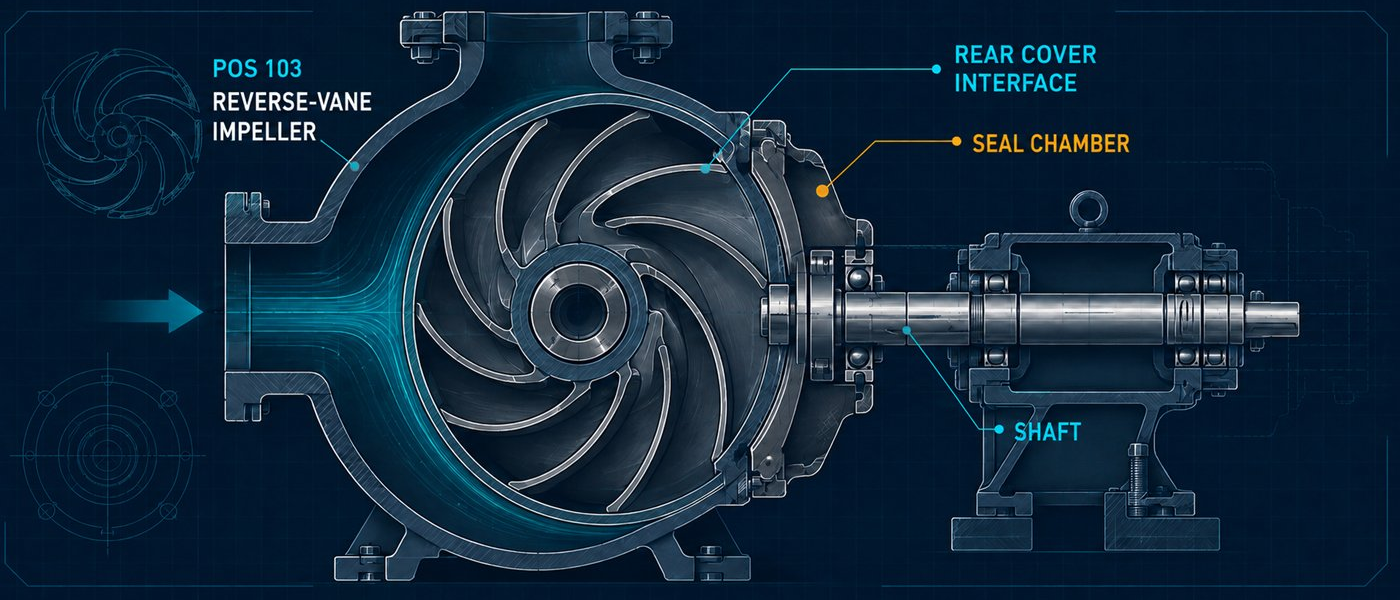
POS 103 identifies the function
It does not by itself prove fitment across Group, size, trim or material.
Rear-cover geometry is part of the review
For a reverse-vane Mark III configuration, verify the impeller against the applicable rear-cover geometry and adjustment procedure—not against POS 103 alone.
Keep the evidence attached
Nameplate, OEM number, current trim, material and photos can travel with the RFQ context.
Availability Confirmed by Exact Reference
Current stock or production route is confirmed only after the exact impeller reference, material, trim and quantity are verified. No availability promise is made from pump family or POS code alone.
Confirm the applicable OEM/replacement reference and pump context.
Verify the required material and current trim before quotation.
Availability is reviewed for the confirmed reference and requested quantity.
Move to the next buying task.
Find a Part by POS
Identify a component position in the parts breakdown.
Open POS finder →Search Mark III OEM Part Number
Check the exact reference and matched pump context.
Search OEM part number →Browse ANSI Replacement Impellers
Choose a verified model-specific impeller route.
Browse replacement impellers →