
01 / REVIEW
3D Model Review
3D model data can be used to review pump geometry and support drawing, visualization and configuration work.
ISO PROCESS PUMP SELECTION
Compare three industrial process-pump routes by service condition: AC for general process duties, DW where abrasion and erosion dominate, and DN where large solids, fibers and plugging risk drive the selection. AC is designed to EN ISO 5199 and EN 22858 (ISO 2858). Final pump selection is confirmed against the actual duty and configuration.
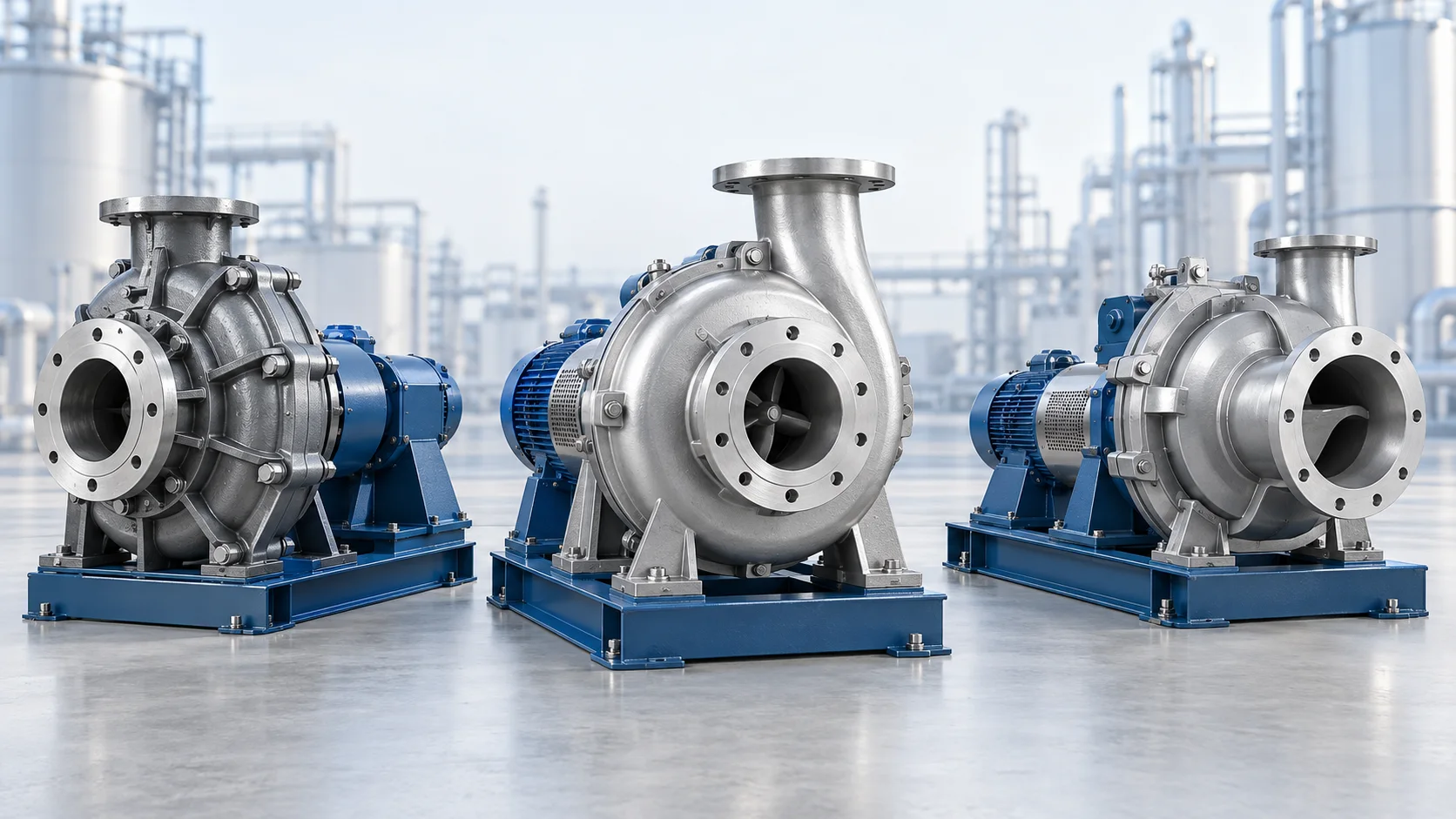
START WITH THE SERVICE DUTY
Select by the dominant process risk first. Final configuration still depends on the actual liquid, operating point and project requirements.
For general process duties from clean or lightly contaminated liquids through selected viscous, fibrous, solids-containing, gas-containing and self-priming services.
For abrasive or corrosive duties where erosion, wear life and slurry conditions are the primary selection concerns.
For sludge, slurries, large particles and long fibers where passage and plugging risk are the primary concerns.
* Published family pressure depends on material and size.
ENGINEERING SELECTION LOGIC
A route is a starting point, not an automatic final pump selection. Final hydraulic, mechanical and project requirements must be reviewed before quotation.
| Process condition | First review route | Why |
|---|---|---|
| Clean / lightly contaminated liquid | AC | General process duty |
| Viscous liquid | AC | General process starting point; confirm viscosity |
| Fibrous slurry | AC / DW / DN review | Route depends on wear, passage and plugging risk |
| Abrasive slurry | DW | Wear / erosion is the primary risk |
| Abrasive large solids | DW | Wear is the primary risk; passage must also be checked |
| Large solids / long fibers | DN | Passage / plugging is the primary risk |
| Gas-containing process liquid | AC / DW / DN review | Depends on service type and hydraulic configuration |
| Self-priming application | Engineering review | Supported in selected brochure applications; exact configuration must be confirmed |
| Desalination | AC | Listed AC application |
PUBLISHED FAMILY RANGES
Use these values as screening references only. They are family-level published maximums, not a guaranteed operating envelope for every size or material.
| Series | Primary duty | Capacity | Head | Pressure | Temperature |
|---|---|---|---|---|---|
| AC | General process | 11,000 m³/h | 160 m | 16 / 25 bar* | 180°C |
| DW | Wear resistant | 7,000 m³/h | 110 m | 16 / 25 bar* | 180°C |
| DN | Non-clogging | 2,000 m³/h | 90 m | 16 bar* | 180°C |
* Published family-level maximums are screening references, not a guaranteed operating envelope for every size or material. Actual allowable pressure and operating limits depend on the selected pump, material, size and configuration.
STANDARDS CONTEXT
ISO 5199 provides technical specifications for Class II centrifugal pumps and addresses mechanical and technical requirements relevant to process-pump service.
ISO 2858 / EN 22858 addresses designation, nominal duty-point and principal dimensional references for end-suction centrifugal pumps.
AC is stated in the published product data as designed to meet EN ISO 5199 and to comply with EN 22858 (ISO 2858). The supplied source does not establish the same ISO 2858 claim for every DW or DN configuration, so standard applicability must be confirmed for the selected product and project.
ENGINEERING VERIFICATION
Engineering tools support review and validation when required by the project.
3D model data can be used to review pump geometry and support drawing, visualization and configuration work.
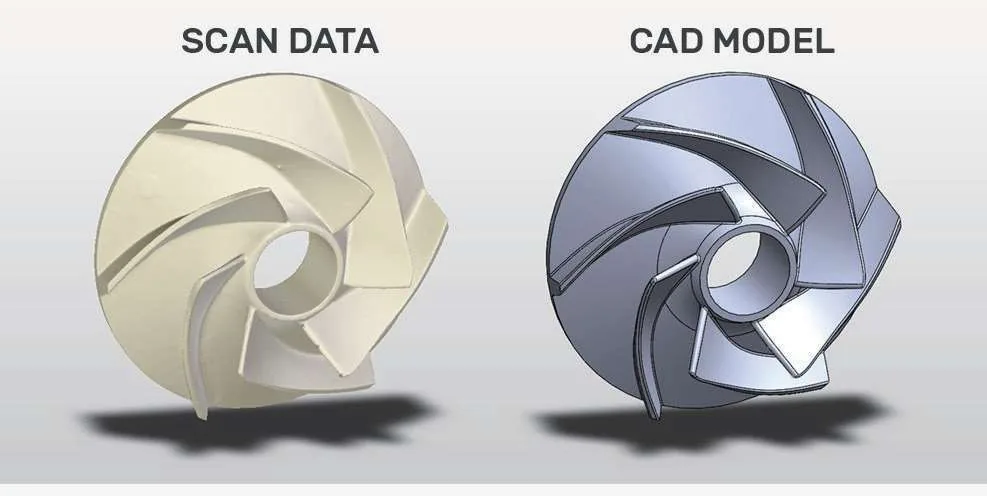
Scan data and CAD comparison can support geometry validation and component-development review.
Computational fluid dynamics can be used to study internal flow behavior and support hydraulic review when required by the project.
APPLICATIONS
Corrosive, viscous and process liquids requiring application-specific hydraulic and configuration review.
Fibrous media, slurry and solids-handling duties where wear and passage may influence pump selection.
Industrial water, wastewater and solids-containing applications requiring reliable process pumping.
Selected refining, petrochemical and downstream process duties.
Abrasive and corrosive process services where wear resistance can be a dominant selection factor.
Selected process duties where fluid properties and process requirements determine the final pump configuration.
EXISTING INSTALLATION
Start with the installed pump data instead of assuming interchangeability from a family name. Note the manufacturer, model, size, duty point and whether drawings or photos are available. Our engineering team will request the files during the replacement review.
Send Existing Pump DataFAQ
ISO 5199 defines technical requirements for Class II centrifugal pumps. ISO 2858 / EN 22858 defines designation, nominal duty-point and principal dimensional references for end-suction centrifugal pumps.
Start with AC for general process service, DW when abrasive wear or erosion is the dominant issue, and DN when large particles, long fibers or plugging risk dominate. Final selection still requires the actual duty and liquid data.
No universal claim should be made from the current product source. The published data explicitly states EN ISO 5199 and EN 22858 (ISO 2858) for AC. Standard applicability for DW, DN and individual configurations must be confirmed for the selected project.
Yes. Note the installed manufacturer, model, size, duty point and any nameplate, curve or GA drawing available. Our engineering team will request the files during the replacement review.
No. They are family-level published maximums for screening. The actual allowable operating range depends on pump size, material and selected configuration.
ENGINEERING REVIEW / RFQ
Choose a new pump selection review or an existing-pump replacement review. Final configuration, standard applicability and installation interfaces are checked before quotation.
New Pump Selection — send flow, head, liquid, temperature and service conditions.
Existing Pump Replacement — note the model, nameplate details, duty data and whether drawings or photos are available.
The existing product inquiry form is used for routing and engineering review.
By submitting this form, you acknowledge that the information provided will be used to respond to your inquiry and provide related technical or commercial support. See our Privacy Policy.