
Clean and lightly contaminated liquids
Define composition, temperature, normal duty and operating cases. Match wetted materials and sealing requirements to the liquid, then check the selected curve and installation interfaces.
AC SERIES · SINGLE-STAGE PROCESS PUMP
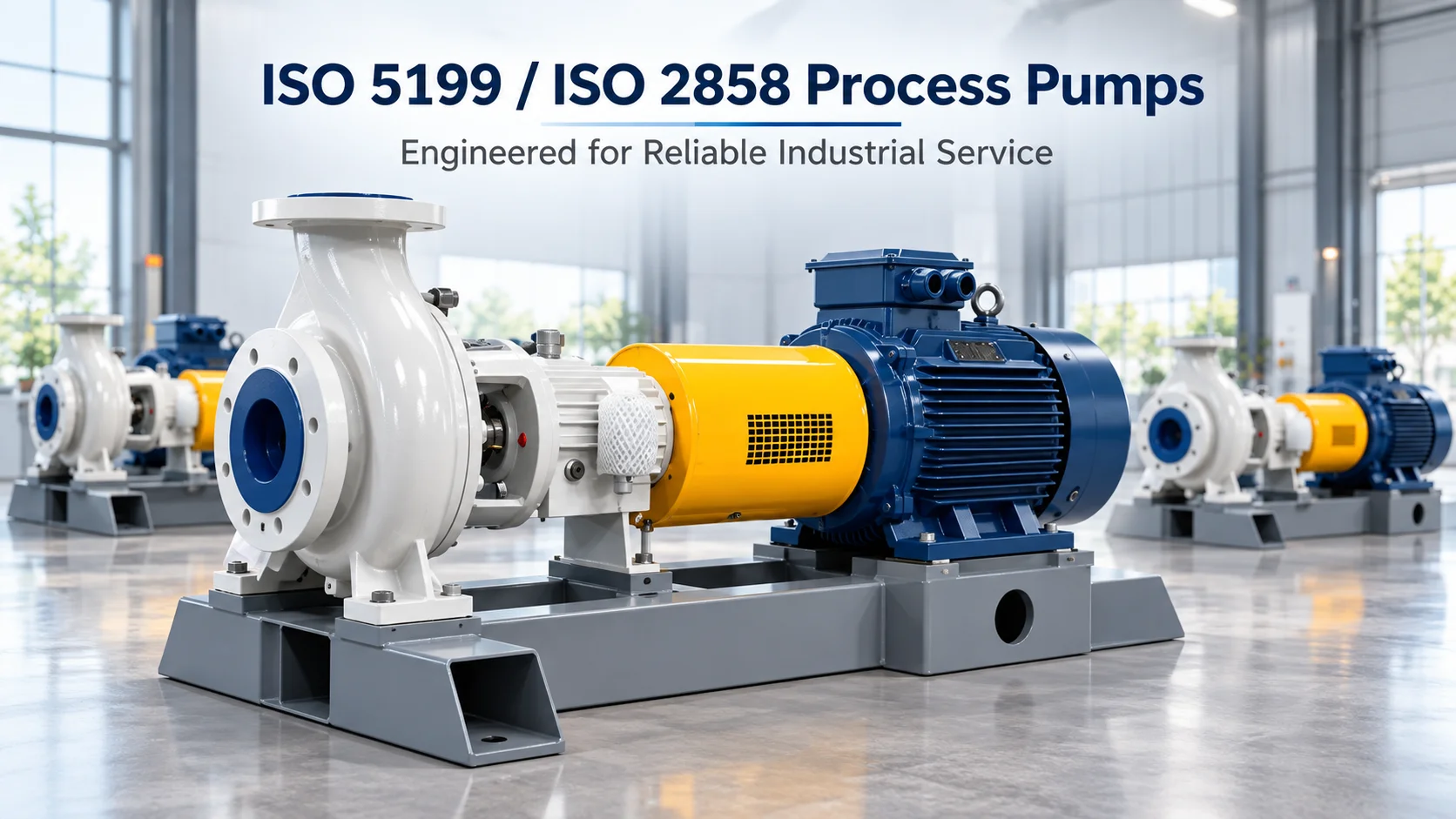
A single-stage centrifugal process pump referenced to EN ISO 5199 and EN 22858 (ISO 2858). Select the AC model around your liquid, duty, sealing arrangement and installation interfaces.
Send the details you know. Technical values and files are optional for the initial enquiry.
11,000 m³/h
160 m
≈ 232 / 363 psi
180°C
Separate series limits; the selected size, material, seal and operating configuration define the allowable duty. Source: Family Brochure, page 2.
01 / THE PRODUCT
A single-stage centrifugal process pump. Select the actual size, impeller, materials and seal against normal and alternate operating duties.
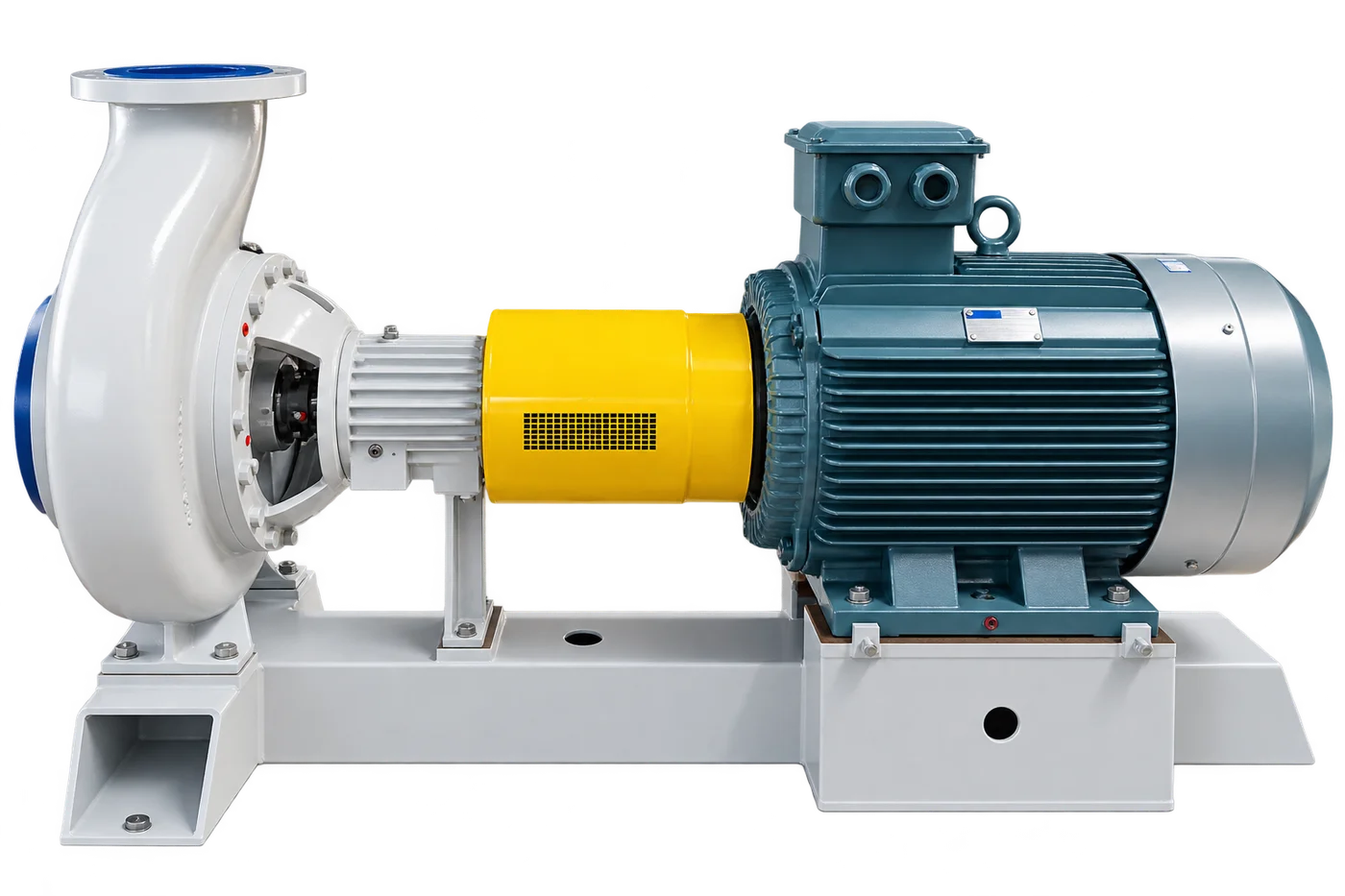
| Pump type | Single-stage centrifugal process pump |
|---|---|
| Design references | EN ISO 5199; EN 22858 (ISO 2858) |
| Flow range ceiling | 11,000 m³/h · approximately 48,400 US GPM |
| Head ceiling | 160 m · approximately 525 ft |
| Pressure class | 16 / 25 bar, depending on material and size |
| Temperature ceiling | 180°C · 356°F, depending on configuration |
| Seal arrangements | Dynamic seal, mechanical seal or packing; subject to application review |
| Selection documents | Request a model-specific performance curve and general arrangement drawing |
PROCESS DUTY
The AC family brochure covers clean and lightly contaminated liquids, viscous liquids, selected solids-bearing duties and desalination. The liquid conditions define the configuration to review.
Define composition, temperature, normal duty and operating cases. Match wetted materials and sealing requirements to the liquid, then check the selected curve and installation interfaces.
Keep viscosity, solids and fiber information with the duty. The brochure includes these liquid groups; the model review establishes the relevant hydraulic and material configuration.
Record the actual liquid chemistry and suction arrangement. For gas-containing or self-priming service, include the required construction and auxiliaries in the selection.
When wear or passage dominates the application, compare the DW wear-resistant and DN non-clogging routes alongside AC.
Published application groups: AC family brochure, page 2.
02 / ENGINEERING SELECTION
Review the model, wet-end materials, seal and interfaces together. Use the chemical resistance guide for preliminary screening, then confirm the components and full service conditions.
| Selection item | What to send | What needs confirmation |
|---|---|---|
| Model / pump size | Normal and alternate flow, total head, operating speed and suction conditions | Model curve, impeller, operating range and suction margin |
| Wetted materials | Liquid composition, concentration, temperature, solids and required grades | Grade by wetted component and suitability for the complete service |
| Shaft seal | Seal, flushing and containment requirements; existing arrangement if relevant | Selected seal arrangement, auxiliaries and service conditions |
| Flanges & mounting | Nozzle sizes, flange details, centerline, mounting and interfaces to retain | Proposed GA drawing and any piping, foundation or coupling changes |
| Motor / 60 Hz duty | Frequency (Hz), voltage, actual rpm, duty and motor requirements | Performance at the proposed speed and a suitable driver configuration |
Attach the information available now. Identify any required material records, inspection, testing or document approval so the quotation can define the agreed scope.
Send Your Specification ↗SEALING & SERVICE
The AC brochure lists dynamic sealing, mechanical seals and packing. Record the selected arrangement and any auxiliaries together with the liquid, pressure, temperature and operating sequence.
Include the start/stop sequence and the required sealing behaviour during operation and shutdown. Identify the complete arrangement in the proposal.
Specify the required containment and service conditions, including any flushing or support requirements. Keep those details with the material selection.
Define the service-liquid arrangement, acceptable leakage and maintenance requirements so the proposed packing system matches the installation.
The AC brochure describes modular parts and component interchangeability as an inventory benefit. Verify common items by part number across the installed sizes, and keep wet-end, seal and driver requirements with the spare-parts plan.
AC options: family brochure, page 2. General sealing reference: KSB shaft-seal guidance.
03 / EXISTING PUMP REPLACEMENT
Send the exact model and size, duty and available nameplate, curve or GA drawing. Identify the interfaces to retain and why the pump needs replacing. For installed AHLSTAR equipment, use the AHLSTAR replacement review.
A shared ISO reference does not establish interchangeability. Hydraulic duty, materials, seals, flanges and mounting dimensions must be checked.
Request Replacement Review ↗Manufacturer, exact model and size, nameplate, reason for replacement and available drawing revisions.
Normal and alternate flow, head, liquid, solids, materials, seal, speed and driver requirements.
Nozzles, flanges, centerline, foundation, coupling and maintenance space checked against the proposed GA.
STANDARDS & ACCEPTANCE
The AC brochure references EN ISO 5199 and EN 22858 (ISO 2858). Keep the applicable standard, selected configuration and document scope together in the purchase specification.
ISO 5199 covers technical specifications for Class II centrifugal pumps. State any project requirements that the quotation and technical review need to address.
ISO standard reference →ISO 2858 addresses designation, nominal duty point and principal dimensions for the covered end-suction pumps. The proposed GA establishes the installation interfaces.
ISO standard reference →Scroll sideways to compare all columns →
| Purchase question | Document or agreement | Detail to retain |
|---|---|---|
| What pump and duty are being supplied? | Selected curve and configuration. | Model, speed, impeller, liquid basis and operating points. |
| What will fit the installation? | General arrangement drawing. | Revision, nozzle/flange details, centerline, mounting and driver interfaces. |
| What materials and seals are included? | Component schedule and agreed records. | Required grades, sealing arrangement and auxiliaries. |
| What inspection or testing is required? | Agreed inspection and acceptance scope. | Method, conditions, criteria and any witness or document-approval requirements. |
| What is the supply boundary? | Quotation scope. | Bare pump or package, motor, coupling, baseplate, auxiliaries and requested spares. |
04 / TECHNICAL DOCUMENTS
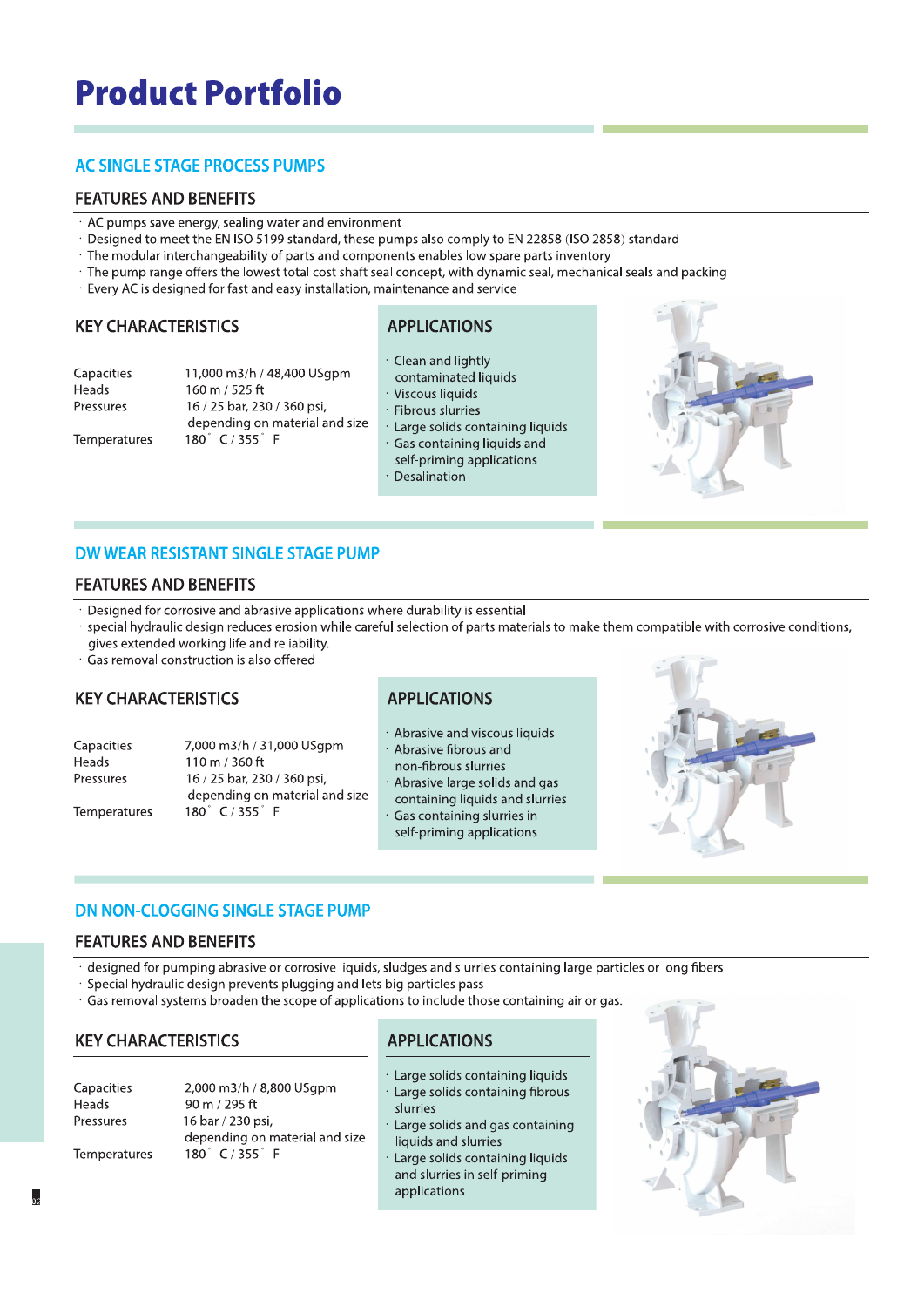 PDF · 4 PAGES
Published series ranges, AC sealing concepts and the AC/DW/DN application groups are on page 2. The brochure is the family overview for a model-specific selection.
Download Brochure ↓MODEL-SPECIFIC DOCUMENTSRequest the selected model, speed, impeller and drawing revision. State material-record, test and acceptance requirements in the enquiry.
Request Curve & Drawing ↗BEFORE YOU SPECIFY
ISO 5199 covers technical specifications for Class II centrifugal pumps. ISO 2858 addresses designation, nominal duty points and principal dimensions for the covered end-suction pumps. The AC brochure references EN ISO 5199 and EN 22858 (ISO 2858).
Start with the installed model, duty and available drawings. Review hydraulics, wet-end construction, seals, nozzles, mounting and driver interfaces before defining the replacement. A shared standard reference alone does not establish a direct fit.
State frequency, voltage, actual operating rpm and the required duty separately. The proposed pump curve and driver configuration must address those conditions. You may provide flow in US GPM and head in feet; identify every unit.
Provide the duty, liquid composition, concentration, temperature, solids and any required grades or seal conditions. Ask the proposal to identify the selected model, material by component and seal arrangement.
Yes. Choose the replacement route, describe the requirement and share the available documents. Leave unknown technical values blank and identify the remaining duty or interface checks during follow-up.
Use DW when abrasive wear or erosion dominates. Use DN when large particles, long fibers or repeated blockage dominate. When both occur, describe the wear pattern and plugging conditions so both requirements can be reviewed.
The family brochure lists dynamic sealing, mechanical seals and packing. Select the complete arrangement against the liquid, pressure, temperature, start/stop conditions and required auxiliaries.
List the required inspection, testing and approval records in the enquiry. Define the supply boundary, including whether the quotation is for a bare pump or a package with driver, coupling, baseplate and auxiliaries.
AC ENGINEERING REVIEW / RFQ
Share your duty or installed-pump details to start an AC selection or replacement review.
Request an AC Pump Quote