
Wetted materials
Review liquid composition, concentration, temperature and abrasive solids together. A material schedule should name the casing, impeller and other wetted components individually.
DN NON-CLOGGING SERIES
DN is a single-stage centrifugal process pump for liquids, sludges and slurries containing large particles or long fibers. Its published hydraulic design addresses passage and plugging, with gas-removal systems available for suitable air- or gas-containing duties.
* Separate series limits; allowable duty and pressure depend on size, material and configuration. Source: Family Brochure, page 2.
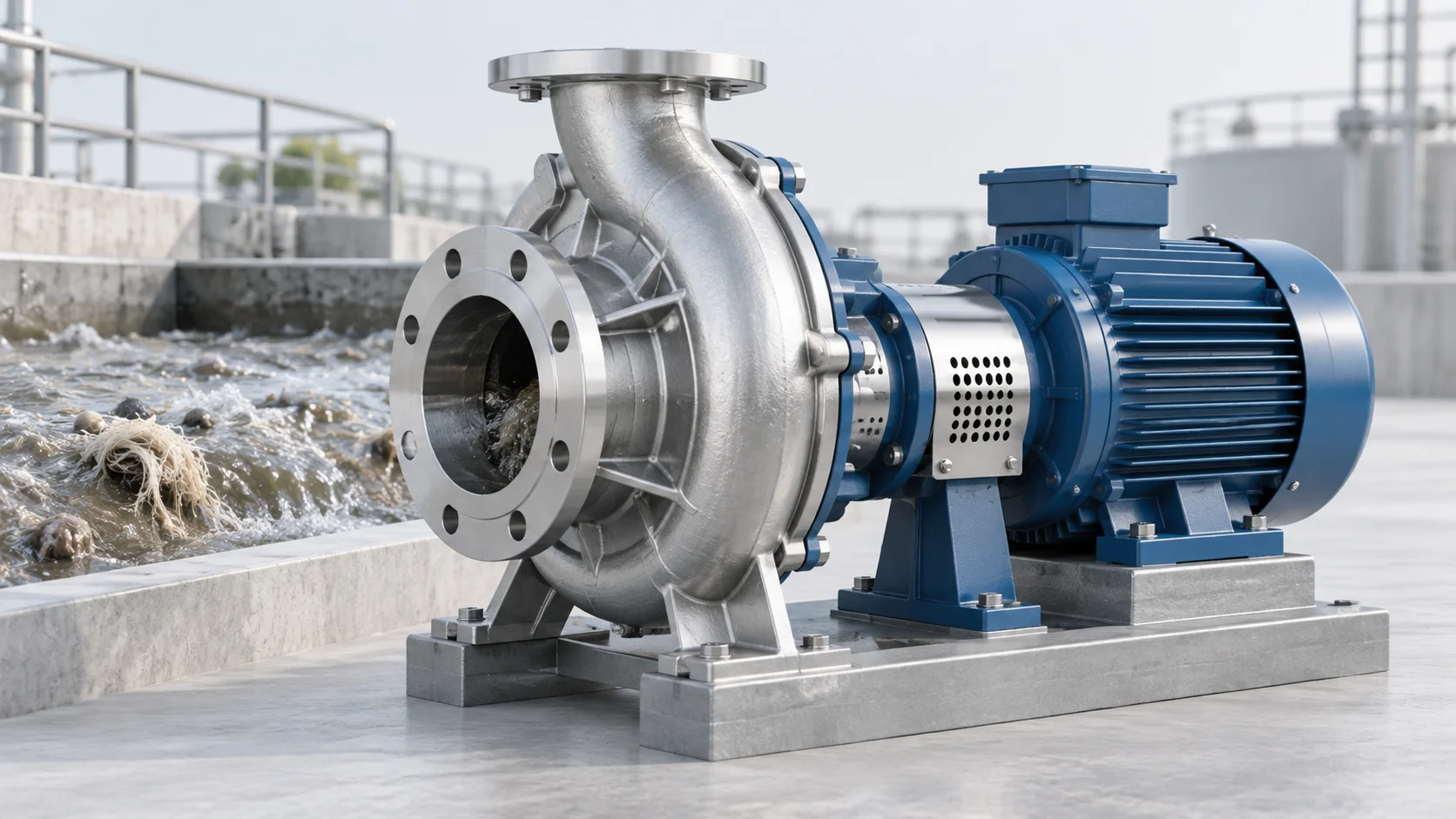
ENGINEERING PROBLEM
The DN family brochure describes a hydraulic design intended to let large particles pass and reduce plugging. Select the construction around the actual solids, fibers and liquid conditions.
DN is presented for large-solids-containing liquids and slurries. Match the particle size and shape to the passage of the selected impeller and casing.
The published scope includes fibrous slurries. Keep fiber length, flexibility and the tendency to wrap or form bundles alongside the particle information.
The brochure describes gas-removal systems for liquids containing air or gas. The duty and suction arrangement determine the relevant construction.
Published design overview: family brochure, page 2.
SOLIDS & FIBERS
A particle, a flexible fiber and a bundle of fibers create different passage requirements. Match the internal geometry to the material that actually reaches the pump.
Scroll sideways to compare all columns →
| Material behaviour | Why it matters | Useful selection evidence |
|---|---|---|
| Large, rigid particles | The smallest internal restriction matters alongside the largest piece expected in service. | Particle shape and distribution, plus the selected pump's passage definition. |
| Long or flexible fibers | Length, flexibility and bundles affect accumulation differently from a single rigid particle. | Fiber description, photographs and the location of wrapping or mats. |
| Changing solids loading | A steady liquid sample may miss the material arriving during a process upset or restart. | Normal and peak loading, concentration basis and operating sequence. |
General selection reference: KSB free-passage guidance. The family brochure gives no numerical DN passage limit; use the selected model's geometry.
PERFORMANCE & DUTY
Flow and head belong together on a model curve. Identify the speed and impeller configuration, then assess normal duty, alternate operating cases and suction conditions.
Scroll sideways to compare all columns →
| Record | What to identify | Decision it supports |
|---|---|---|
| Performance curve | Model, speed, impeller, flow and differential head, with units. | Whether normal and alternate duties sit within the proposed operating range. |
| Suction review | Available suction head, liquid temperature, gas content and relevant NPSH data. | Whether the suction arrangement supports the selected duty. |
| Driver and materials | Motor frequency, voltage, actual rpm and materials by component. | Whether the proposed package matches the liquid and site supply. |
| Passage and GA | Internal passage definition, nozzles, flanges, centerline and mounting. | Whether the pump can handle the solids and fit the intended installation. |
The published DN series limits remain in the specification cards above. The selected curve and drawing establish the proposed configuration.
CONFIGURATION
The DN brochure describes abrasive or corrosive service as well as large-particle and long-fiber duties. Define the complete liquid conditions before settling the wet-end and auxiliary arrangements.
Review liquid composition, concentration, temperature and abrasive solids together. A material schedule should name the casing, impeller and other wetted components individually.
Include the required containment, available service liquids and stop/start conditions. The seal arrangement and any auxiliaries belong in the proposed configuration.
Gas-removal systems are described in the DN brochure. Record how gas enters the stream and the suction arrangement so the relevant construction can be selected.
Published DN scope: family brochure, page 2. Model-specific material grades, seals and auxiliary details are defined in the proposal.
DN APPLICATIONS
Select against the actual liquid and operating conditions within these application groups.
Identify the largest pieces expected in normal and upset conditions. Compare the selected passage with the actual shapes and the complete flow path.
Describe the fibers and any observed bundles, wrapping or mats. Keep accumulation behaviour with the liquid conditions when reviewing the hydraulic arrangement.
The brochure includes large-solids streams with gas and selected self-priming applications. Record the gas source, suction level and operating sequence for that construction review.
Application groups: family brochure, page 2.
CHOOSE THE ROUTE
Abrasive service can also contain long fibers or large particles. Use the dominant failure mode to start the review, then keep the other requirement in the selection.
Start with DN when passage or repeated plugging drives the problem. Keep the particle geometry, fiber behaviour and obstruction location with the duty.
Review DW when material loss drives the maintenance interval. Evaluate the wear pattern, current materials and solids conditions alongside passage.
Explore the DW wear-resistant route →DN SELECTION CHECKLIST
Keep particle and fiber requirements with the duty and plugging observations. For an installed pump, start a replacement review.
TECHNICAL DOCUMENTS
The four-page family brochure contains the DN overview, applications and series limits on page 2. Keep its range information alongside the documents for the proposed pump.
Open Family Brochure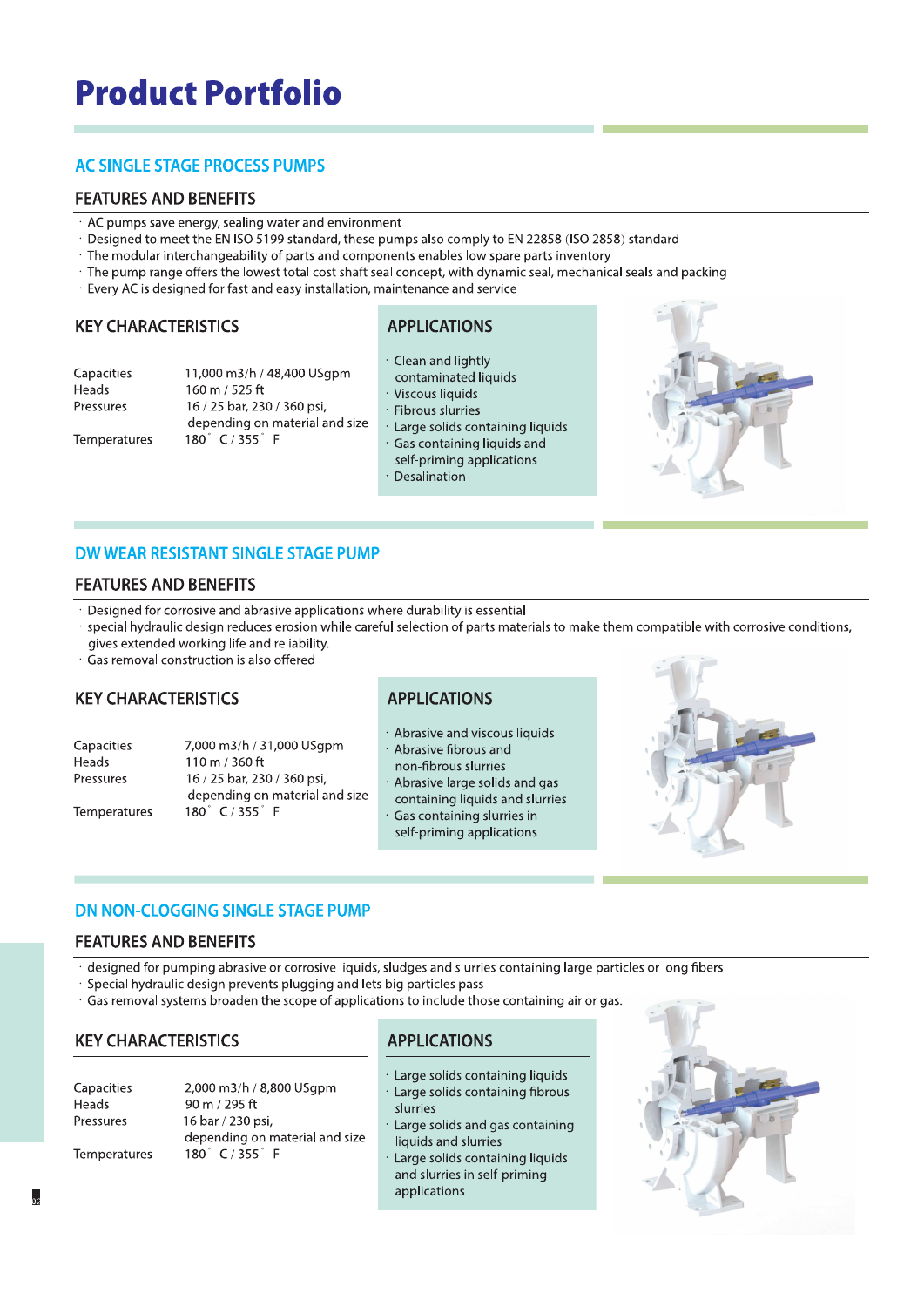
SELECTION QUESTIONS
Nozzle size describes an installation connection. Passage concerns the internal flow path of the selected pump. Keep the largest particle and its shape with the selected passage definition and drawing.
A long flexible fiber can wrap, bundle or form a mat. Record these behaviours as well as particle size. Photographs and the location of accumulation help distinguish an internal passage problem from a restriction elsewhere.
Non-clogging pumps can use different hydraulic arrangements. Vortex and channel designs have different passage and efficiency characteristics. Confirm the actual DN impeller and casing from the selected configuration.
The family brochure includes gas-removal systems and selected gas-containing applications. Selection still depends on the gas source, suction arrangement, operating duty and the proposed auxiliary construction.
Review both. DN addresses the passage-led route, while DW is the wear-led route. Bring wear photographs, particle and fiber information, current materials and duty into the same selection review.
Compare the installed identity, duty and construction with the proposed curve and GA. Review nozzles, flanges, centerline, mounting and driver interfaces, and identify which existing parts of the installation you want to retain.
Yes. Start with the information available, a clear requirement and an installed-pump nameplate where relevant. Mark unknown values for follow-up and add drawings or site photographs when available.
DN ENGINEERING REVIEW / RFQ
Share your duty, solids and fiber details to start a DN selection or replacement review.
Request DN Selection