
Normal and alternate duty
Define the flow and differential head for the conditions the process will actually use. Include changes in liquid properties or solids loading between those cases.
DW WEAR-RESISTANT SERIES
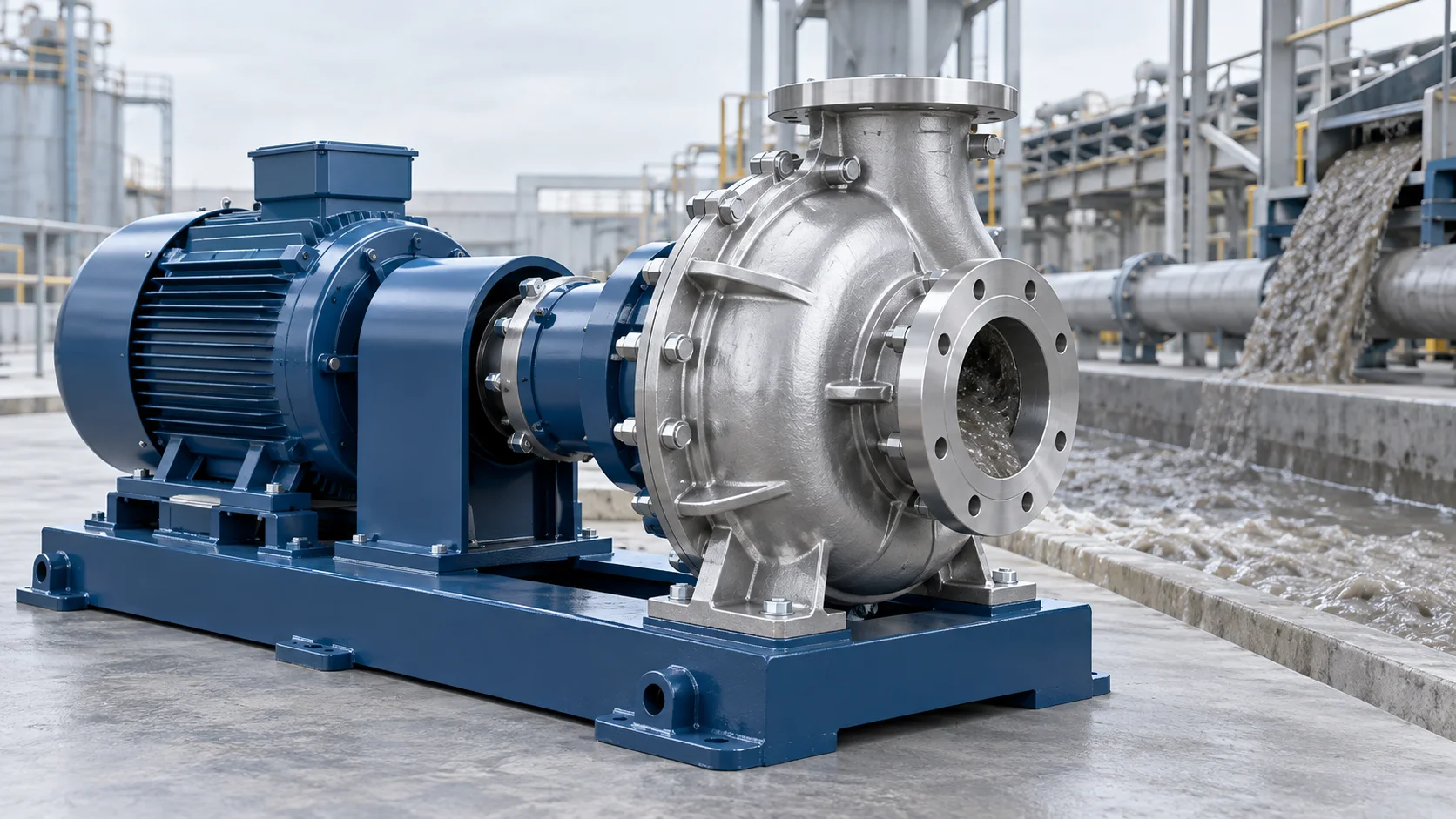
DW is a wear-resistant single-stage process pump for abrasive and corrosive applications. The published design combines hydraulics focused on reducing erosion with selection of parts materials for the liquid conditions. Gas-removal construction is also offered.
* Separate series limits; allowable duty and pressure depend on size, material and configuration. Source: Family Brochure, page 2.
ENGINEERING PROBLEM
The DW brochure addresses erosion through hydraulic design and material selection. Assess the liquid chemistry, solids and operating conditions as one duty when defining the proposed pump.
The published DW design targets erosion in abrasive service. Tie the selected hydraulic arrangement to the actual slurry and operating duty.
The brochure links parts-material selection with corrosive conditions. Identify grades by wetted component using the liquid composition, temperature and solids information.
Gas-removal construction is offered in the DW overview. Include gas content, suction conditions and the start-up requirement when defining that option.
Published design overview: family brochure, page 2.
HYDRAULICS & MATERIALS
The DW brochure pairs erosion-focused hydraulics with selection of parts materials for corrosive conditions. Assess the carrier liquid and the solids together when defining the wet end.
Scroll sideways to compare all columns →
| Condition | Why it changes the review | What the proposal should identify |
|---|---|---|
| Liquid chemistry and temperature | Corrosive conditions affect which component materials are suitable. | Grades by wetted component, with the stated liquid conditions. |
| Particle size, shape and hardness | Solids properties help define the abrasive duty. | The hydraulic arrangement and material choice tied to the solids description. |
| Solids loading | Mass and volume concentrations describe different quantities. | Concentration basis and the normal-to-maximum loading range. |
| Seal and auxiliary conditions | Containment and the liquids available for auxiliaries affect the sealing review. | The seal arrangement and agreed service connections. |
General slurry-property reference: Hydraulic Institute slurry properties. Use the chemical resistance guide for preliminary liquid screening.
PERFORMANCE & SPEED
A selected pump curve connects flow and head at a stated speed and impeller. The review also needs the liquid density, viscosity and solids conditions to assess the proposed duty and driver.
Define the flow and differential head for the conditions the process will actually use. Include changes in liquid properties or solids loading between those cases.
Identify the curve basis and the selected rpm. Where the process liquid differs from the curve's test liquid, include the relevant performance assessment in the selection record.
Keep motor frequency and voltage, power requirements, suction conditions and gas content with the proposal. Review a change in speed as a change in the complete duty.
General performance reference: Hydraulic Institute pump FAQs. The DW series range is published in the family brochure, page 2.
DW APPLICATIONS
Select against the actual liquid and operating conditions within these application groups.
Keep liquid viscosity, chemistry and temperature with the particle description. The selected curve and configuration should address those operating conditions.
Record loading, particle properties and wear history. For fibrous service, include accumulation behaviour so passage is assessed alongside abrasion.
The brochure includes abrasive large-solids and gas-containing duties, including selected self-priming applications. Identify the passage, gas-removal and suction requirements together.
Application groups: family brochure, page 2.
DW OR DN?
Start with DW when surface loss or erosion dominates. Record the wear pattern, existing construction and operating conditions.
Review DN when large particles, fibers or recurring blockage dominate. A harder material alone does not establish whether the solids will pass.
WEAR & MAINTENANCE REVIEW
Compare service history against the conditions that produced it. A record of what wore, when it was inspected and what changed is more useful than a service-life number alone.
Use the proposed GA and maintenance instructions to review removal space, coupling access and the parts included in the supply. Agree any required spare parts in the quotation.
Record the observation period and relevant process changes. An evidence-based comparison keeps the result tied to the application rather than promising a universal wear-life improvement.
DW RFQ CHECKLIST
Keep the slurry, operating conditions and wear observations together. For an installed pump, start a replacement review.
TECHNICAL DOCUMENTS
The family brochure describes the DW design, application groups and series limits on page 2. A model review adds the curve, construction and installation information needed for the particular duty.
Open Family Brochure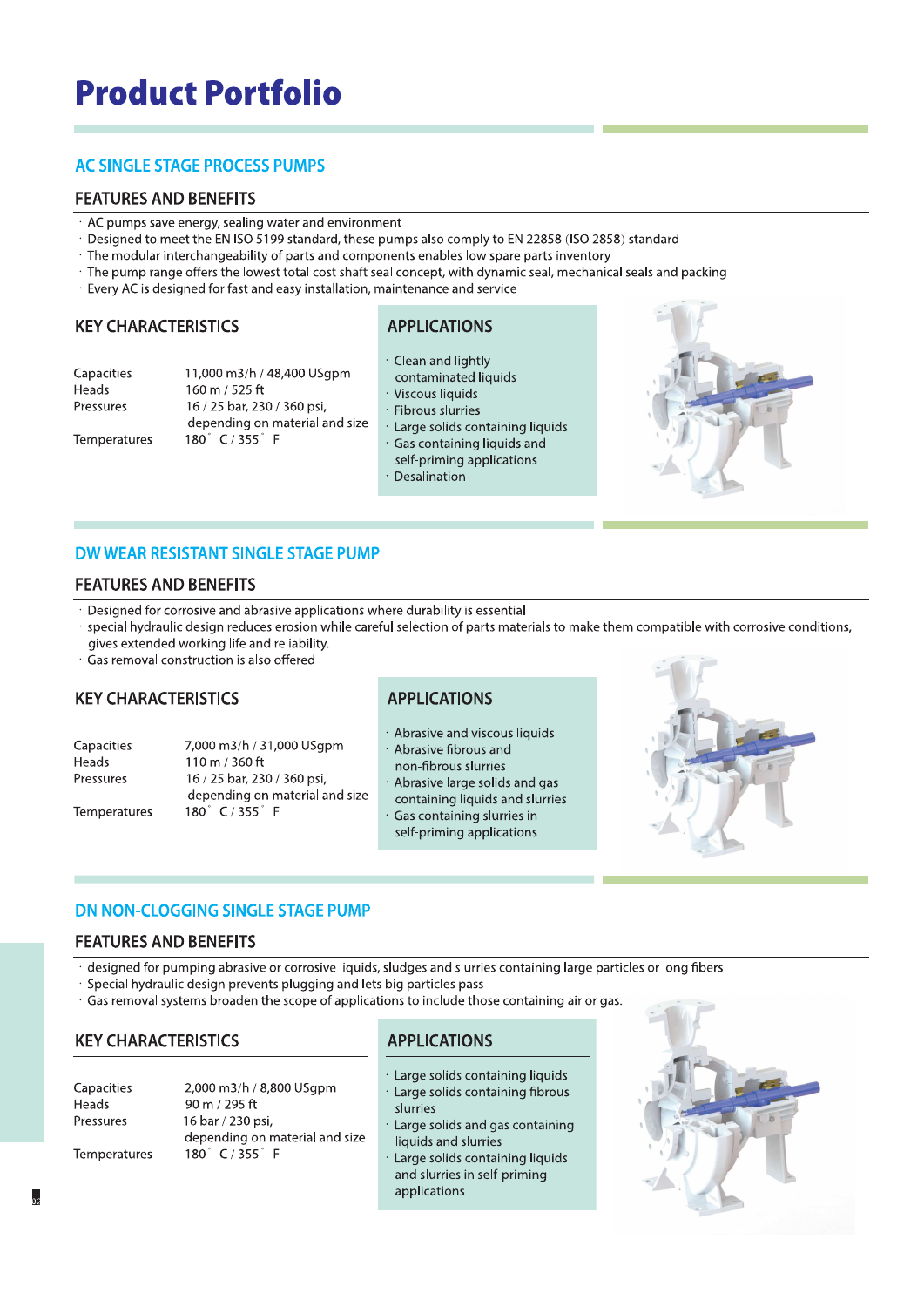
SELECTION QUESTIONS
Material selection must address the actual liquid chemistry, temperature and solids. The DW brochure combines hydraulic design with material selection for those conditions. Identify the required grades by component in the proposal.
A percentage by mass and a percentage by volume describe different mixtures. State the basis and the solids properties so the selection is assessed against the intended slurry.
Keep the curve's test basis with the selection. Viscosity and slurry conditions may require a performance assessment before confirming the duty and driver. State the liquid properties with the operating points.
DW is presented as a wear-resistant single-stage process pump. Match the actual particle, loading, liquid and duty requirements to the proposed design. A wear-resistant label alone does not establish suitability for every slurry application.
Include DN when large particles, long fibers or recurring blockage are significant. Describe both wear and plugging, since solving the material-loss problem still leaves passage to be checked.
A useful comparison needs the operating conditions, current construction, inspection records and observation period. Use those to assess a proposed change and define the acceptance criteria for the application.
Start with the nameplate, duty and current wear problem. Add the material description, wear photographs and available curve or GA. Identify the installation interfaces and parts of the package you want to retain.
DW ENGINEERING REVIEW / RFQ
Share your duty, slurry conditions and wear history to start a DW selection or replacement review.
Request DW Selection