Why a New Mechanical Seal May Leak Again
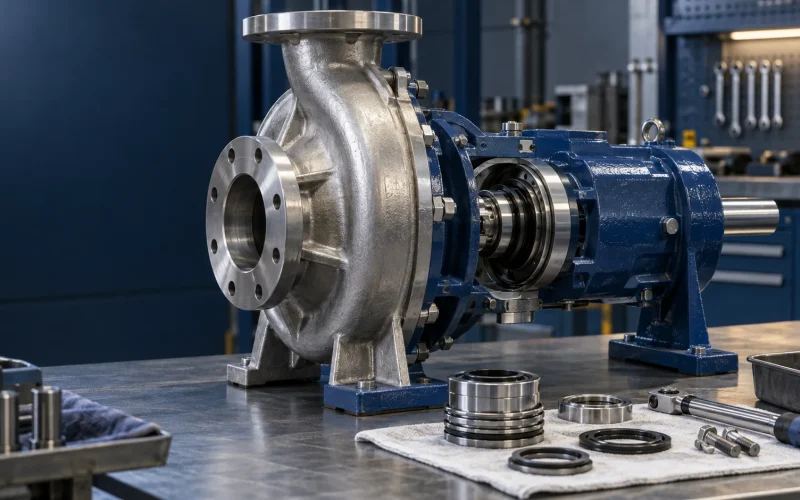
A leaking mechanical seal is a symptom, not automatically the root cause. Before ordering another seal, separate a seal-specific problem from shaft movement, seal-chamber geometry, alignment, piping strain, seal-support conditions or a changed process duty.
Review installation sequence, seal setting, centering clips, gland/stationary-seat seating and shaft position.
Measure shaft or sleeve runout, radial deflection, shaft endplay and seal-chamber runout before blaming the replacement seal.
Review seal-support operation, vaporization margin, suction conditions and the actual pump duty rather than treating the seal as an isolated component.
Identify the Mark III Seal Arrangement Before Disassembly
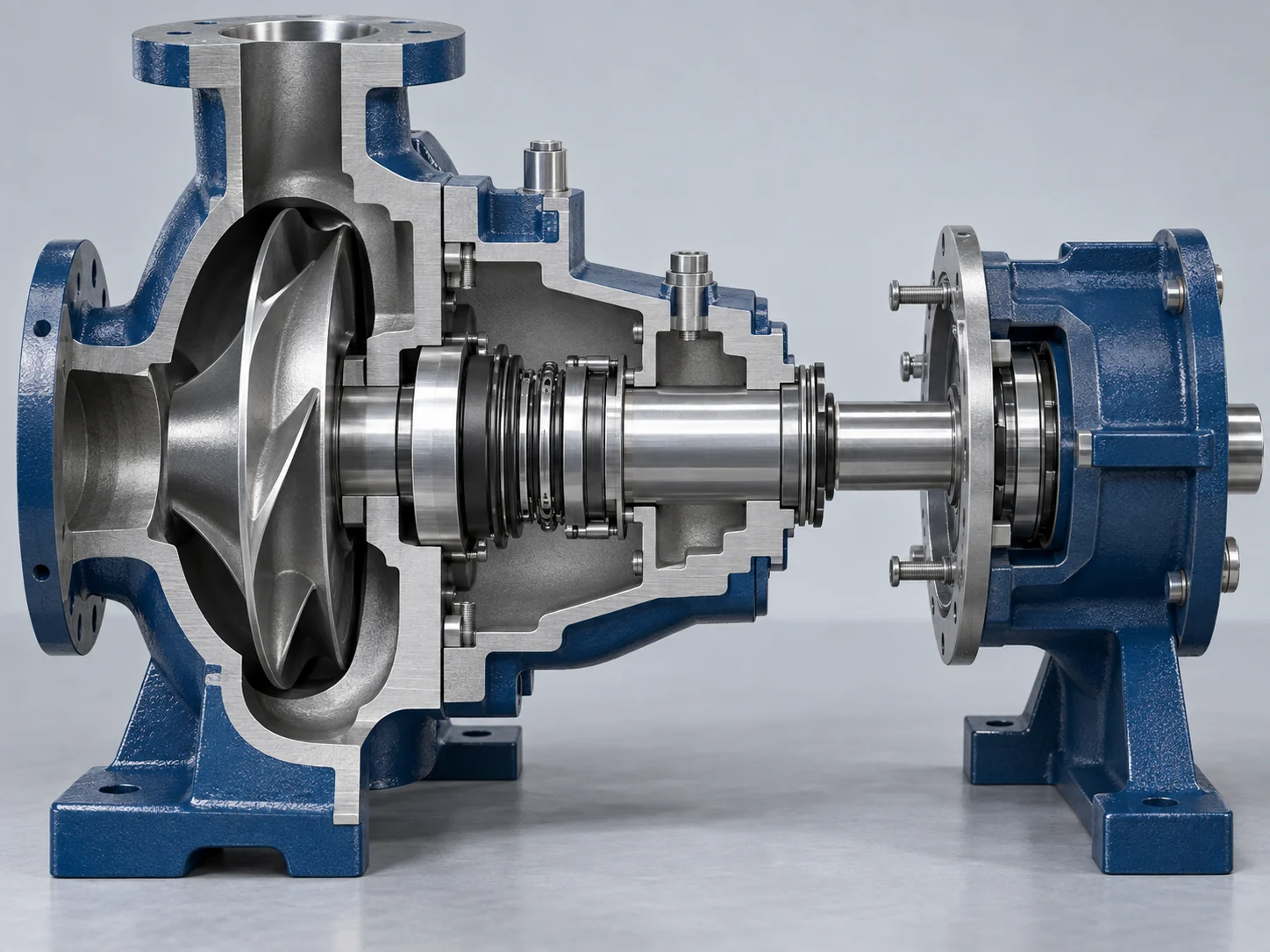
Do not assume every Durco Mark III uses the same rear cover or seal chamber. Record the pump identification, group, size, seal make/model, shaft or sleeve arrangement, auxiliary piping and the installed rear-cover / seal-chamber configuration before disassembly. For replacement-part work, verify the installed Durco Mark III configuration before ordering.
Seal type: component or cartridge
The Mark 3 IOM gives different assembly logic for cartridge and component mechanical seals. That distinction matters because a component seal is set from a final shaft axial position, while a cartridge seal uses its centering devices during installation.
SealSentry rear-cover / chamber configuration
| Code | Published Flowserve description | What the maintenance team should confirm |
|---|---|---|
| FML | Large taper bore with flow modifiers | Seal arrangement, large gland bolt/gasket circle, auxiliary piping |
| FMS | Small taper bore with flow modifiers | Seal envelope and small gland bolt/gasket circle |
| FMI | Small taper bore with flow modifiers and integral cast gland | Integral-gland arrangement and seal setting method |
| CBL | Large cylindrical bore; optional carbon bushing | Seal arrangement, bushing if fitted, chamber depth and ports |
| CBS | Small cylindrical bore | Mechanical-seal or packing arrangement and port configuration |
Source: Flowserve Durco Mark 3 ASME (ANSI) Chemical Process Pump brochure, SealSentry nomenclature. [2]
Durco Mark III Mechanical Seal Replacement Procedure
Step 1 — Isolate, drain and make the pump safe
Step 2 — Record the configuration before taking it apart
Photograph the nameplate, coupling area, seal gland, rear cover / chamber and every auxiliary line. Record the seal make/model, component or cartridge type, sleeve or solid-shaft arrangement, chamber code if known, and any existing reference marks. If a part number is available, use the OEM part-number cross-reference as a starting reference, then confirm the drawing and actual dimensions.
Step 3 — Remove the back pull-out assembly and access the seal
Support the rotating assembly using the lifting method approved for the actual pump group and installed arrangement. Follow the applicable Mark 3 IOM for power-end removal, impeller removal and seal disassembly.
If a cartridge seal is installed, the IOM instructs the technician to install the spacing clips / tabs before loosening the seal set screws or removing the seal from the cover so the seal compression is retained. [1]
Step 4 — Inspect the shaft, sleeve and seal chamber before installing a new seal
Clean the relevant sealing and register surfaces without creating scratches or burrs. Replace or repair damaged parts according to the approved maintenance basis; do not use a new seal to compensate for shaft movement or seal-chamber geometry that is outside the applicable acceptance criteria.
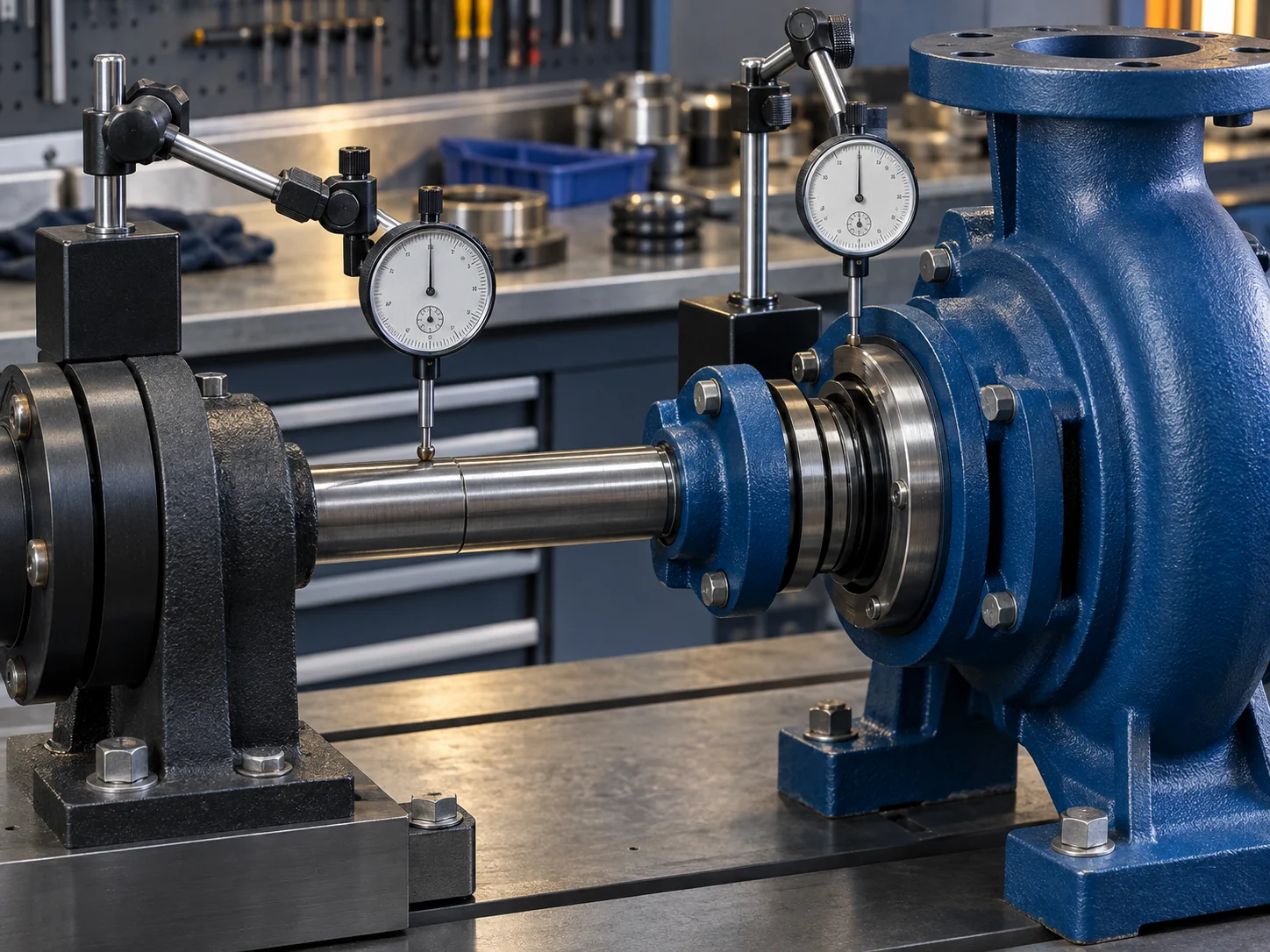
Mark 3 checks before installing a new mechanical seal
| Inspection point | OEM criterion | Why it matters |
|---|---|---|
| Shaft / shaft-sleeve runout | ≤ 0.025 mm (0.001 in.) FIM | Excess runout can shorten bearing and mechanical-seal life. |
| Static radial shaft deflection | Movement > 0.05 mm (0.002 in.) is not acceptable | Radial motion near the seal faces destabilizes the sealing interface. |
| Shaft axial endplay | ≤ 0.05 mm (0.002 in.) | Excess axial movement can overload, unload or separate the seal faces. |
| Seal-chamber face runout / face squareness | < 0.08 mm (0.003 in.) | A cocked gland or stationary seat can cause seal wobble. |
| Seal-chamber register concentricity | < 0.13 mm (0.005 in.) | Poor centering can interfere with piloting and alter seal-face loading. |
| Shaft movement caused by pipe strain | Indicator movement ≤ 0.05 mm (0.002 in.) | Piping loads can move the pump / shaft relationship after installation. |
These values come from the Durco Mark 3 User Instructions 71569102 (03-17), §§6.8.4.5–6.8.4.7. Use the IOM applicable to the installed pump and revision. [1]
Step 5 — Install the seal using the correct sequence
The seal manufacturer’s drawing remains controlling for seal-specific dimensions, face handling, elastomer lubrication and torque. The Mark 3 pump sequence still matters because the component and cartridge arrangements establish working position differently.
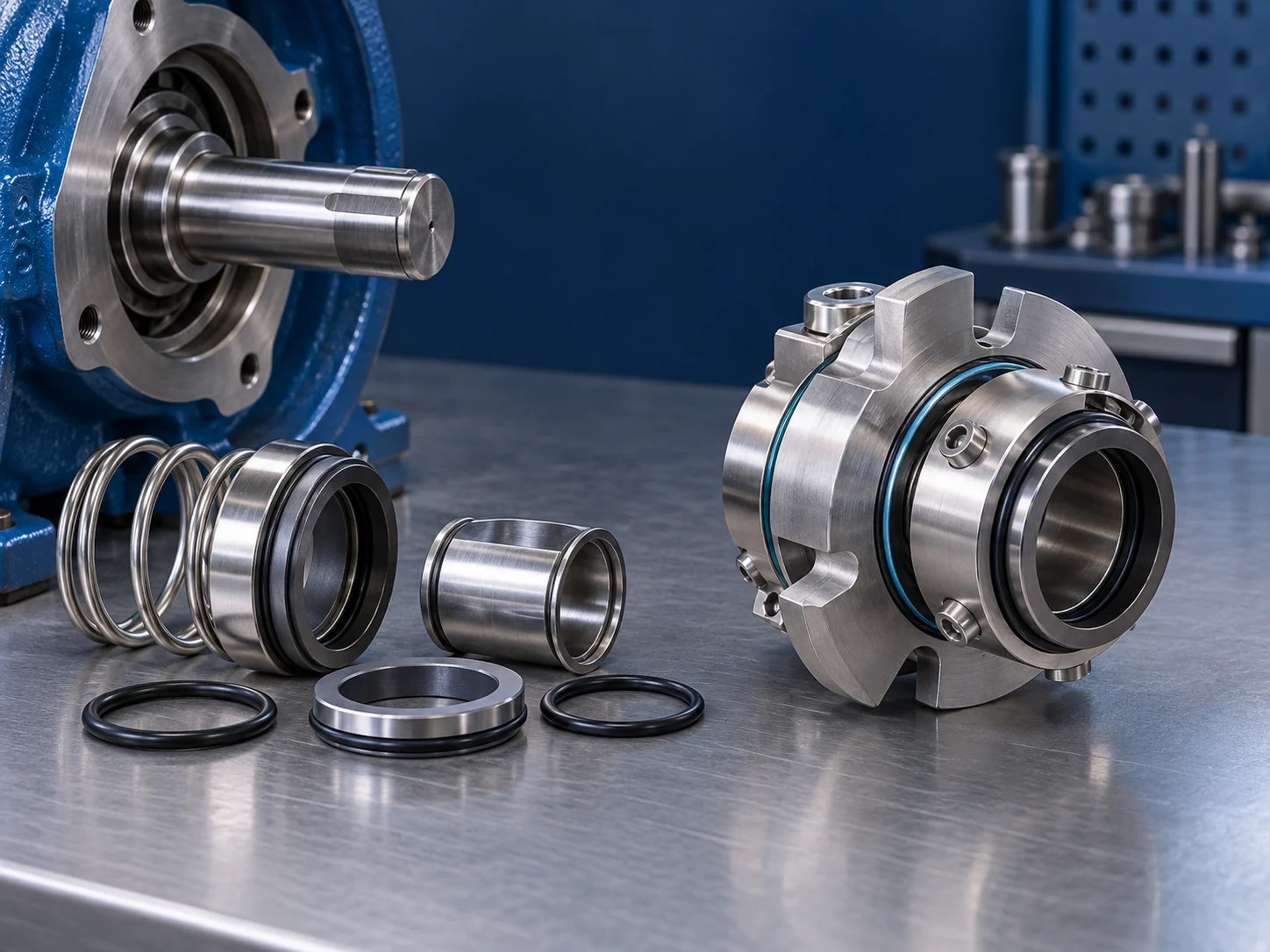
Component mechanical seal
The IOM first locates the shaft in its final axial position: install the rear cover, set impeller clearance, mark the shaft / sleeve at the seal-chamber face, then remove the impeller and rear cover to install the component seal to the seal manufacturer’s set dimension. When the impeller is reinstalled, the already-established clearance must not be changed without resetting the seal. [1]
Cartridge mechanical seal
The IOM sequence keeps the cartridge centering clips in place during installation, installs the rear cover / gland and impeller, locks the rotating seal unit to the shaft, and removes the centering clips last. [1]
Step 6 — Confirm the impeller-clearance relationship before final seal setting
For Mark 3 reverse-vane and the applicable recessed-impeller arrangements, the impeller is set from the rear cover; front-vane open impellers are set from the casing. The Mark 3 IOM warns: do not adjust impeller clearance with the seal already set because leakage or seal damage may result. [1]
For the full adjustment logic, follow the cited Mark III IOM procedure and confirm the applicable configuration before adjustment.
Step 7 — Reassemble, align and verify the seal-support system before restart
Verify the Seal Support System Before Blaming the Seal
The installed piping plan must be confirmed from the seal / project documentation; the Mark III pump model alone does not define it. For recurring leakage, check that the actual seal-support arrangement is doing what its design requires.
| Arrangement | What Flowserve describes | Maintenance checks |
|---|---|---|
| Plan 11 | Discharge-to-seal flush through an orifice | Check for a clogged orifice, adequate flow and piping temperature response. Flowserve lists a minimum 3 mm (0.125 in.) orifice and recommends sizing flow for the application. |
| Plan 53A | Pressurized external barrier-fluid reservoir for dual pressurized seals | Confirm reservoir pressure, level, compatible barrier fluid, self-venting loop and the project / seal-vendor pressure requirement. Do not substitute a generic pressure differential for the approved seal-system drawing. |
| Plan 62 | External atmospheric-side quench | Check that the top inlet / bottom drain arrangement is open and clear. Flowserve states quench pressure should be limited to 0.2 bar (3 psi) or less. |
Source basis: Flowserve Mechanical Seal Piping Plans. [3]
Mechanical Seal Failure Patterns After Installation
| Observed pattern | Inspect first | Engineering question |
|---|---|---|
| Leakage immediately after assembly | Seal setting, clips, gland / stationary-seat seating | Was the component or cartridge installation sequence followed correctly? |
| Leakage repeatedly returns | Runout, endplay, chamber face / register, bearings | Is the seal compensating for mechanical movement outside the acceptance criteria? |
| Leakage varies with process condition | Seal-support system and process vapor margin | Did temperature, pressure, fluid properties or suction conditions change? |
| Dry-running / heat distress evidence | Flush, barrier or quench arrangement | Was the required seal environment established before and during startup? |
| Leakage appears after piping work | Alignment and pipe strain | Did piping loads move the pump or shaft relationship? |
If the symptom points to cavitation, process-side instability or an off-duty operating point, use the centrifugal pump failure troubleshooting guide, calculate available NPSH when appropriate, and verify the real pump duty on the pump performance curve. This article should not recreate those calculations or performance data.
When Replacing the Seal Is Not Enough
When shaft movement, chamber geometry and support conditions are acceptable, replace / reset the seal to the seal manufacturer’s instructions.
Verify the installed chamber configuration, material, ports, register and seal envelope before replacing the cover or related metallic seal component.
If the shaft is damaged, verify the shaft drawing and interfaces before replacement. If a sleeve is fitted, document it as an installation interface; do not assume it is part of the supplied replacement scope.
If the casing, impeller, shaft, rear cover or power end shows wider damage—or the duty has changed—move from a seal-only repair to a broader replacement review.
Use the ANSI pump technical resources for supporting engineering data. When the repair scope extends beyond the seal, review the Durco Mark III replacement solution against the installed group, duty, materials, seal arrangement and available drawings.
Frequently Asked Questions
Why can a new Durco Mark III mechanical seal still leak?
Because the seal can be reacting to another condition: incorrect setting, shaft or sleeve runout, excessive endplay or radial movement, seal-chamber face / register error, misalignment, pipe strain, an unsuitable seal-support condition or a changed process duty. Check the measured condition before replacing the seal again.
What shaft runout should be checked before installing a new seal?
The referenced Mark 3 IOM states that shaft / shaft-sleeve runout should be 0.025 mm (0.001 in.) FIM or less, measured with a dial indicator while the shaft is rotated slowly. Confirm the IOM applicable to the installed pump revision. [1]
Should impeller clearance be set before or after the mechanical seal?
For a component seal, the Mark 3 IOM first establishes the final shaft axial position by setting impeller clearance, then uses that position to set the seal. The IOM warns not to change an already-established impeller clearance after the seal is set without resetting the seal. Cartridge seals use a different assembly sequence with centering clips. [1]
What is a SealSentry chamber on a Durco Mark III?
Flowserve publishes five SealSentry configurations: FML, FMS and FMI taper-bore / flow-modifier designs, plus CBL and CBS cylindrical-bore designs. Identifying the actual rear cover / chamber matters because seal envelope, gland arrangement and auxiliary piping are configuration-specific. [2]
Can recurring seal leakage indicate a larger pump or system problem?
Yes. Repeated leakage can justify checking shaft movement, alignment, pipe strain, seal support, process vaporization and the operating point. If the problem extends to multiple wet-end or power-end components, review the broader repair or replacement scope rather than treating the seal as the only failure.
Source Basis
[1] Flowserve. Durco Mark 3 Sealed Metallic Pumps — User Instructions, PCN 71569102, 03-17 (E). Relevant sections include safety, impeller clearance, disassembly, critical measurements / tolerances, and mechanical-seal assembly. Reference PDF.
[2] Flowserve. Durco Mark 3 ASME (ANSI) Chemical Process Pump. SealSentry seal-chamber nomenclature and configuration descriptions. Official product page.
[3] Flowserve. Mechanical Seal Piping Plans. Plan 11, Plan 53A and Plan 62 descriptions and preventive-maintenance notes. Official piping-plan reference.