
Why Your Goulds 3196 or Durco Mark III Replacement Shouldn’t Take 8 Weeks
When a Goulds 3196 pump fails in a critical chlor-alkali process line, or a Durco Mark III casing wears through in sulfuric acid service, every day of downtime costs thousands. The standard OEM lead time of 6–8 weeks for a replacement unit — or even 3–4 weeks for major components — forces plants into expensive workarounds: renting temporary pumps, stockpiling spares, or running at reduced capacity.
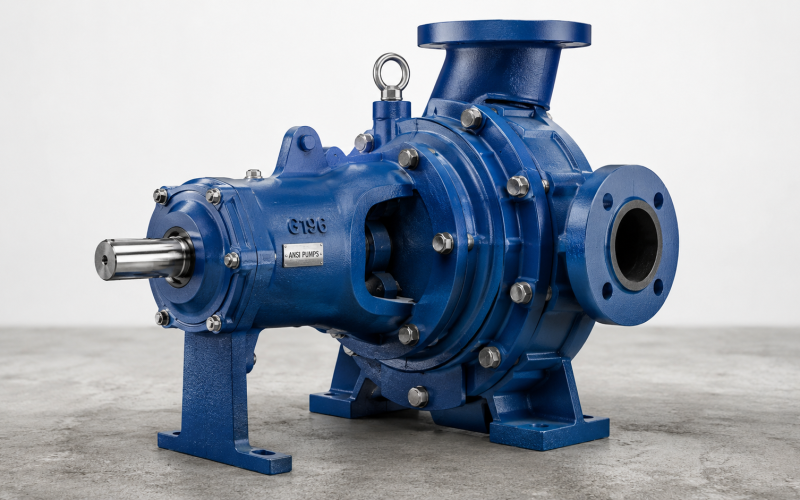
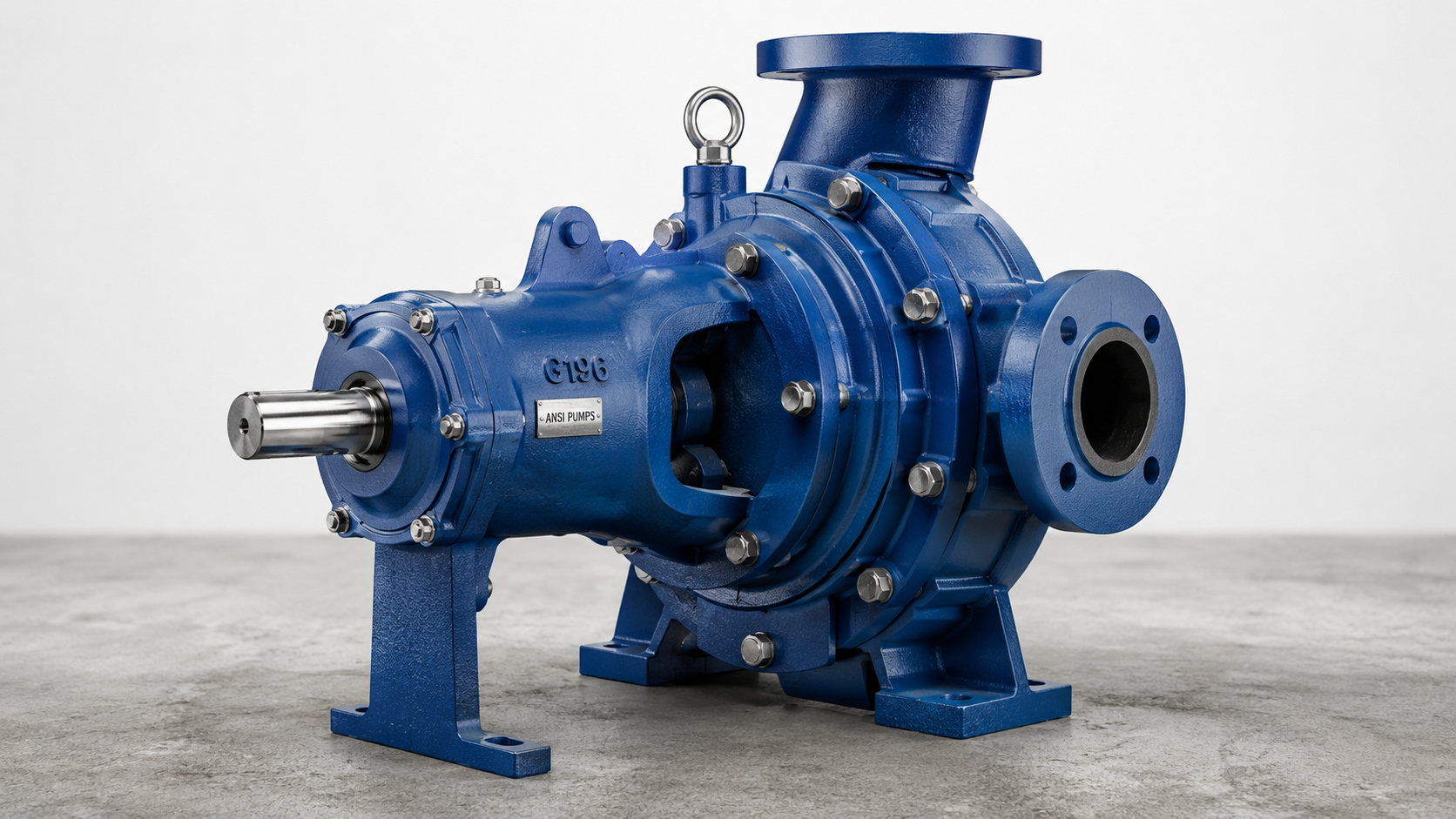
The G196 Series ANSI Process Pump eliminates that bottleneck. Engineered to the ANSI/ASME B73.1 standard with 100% dimensional interchangeability with both Goulds 3196 and Durco Mark III families, the G196 drops into your existing piping, baseplate, and coupling setup — no pipe modifications, no re-drilling, no adapter kits.
Whether you need a complete pump assembly or wet-end components (casing, impeller, cover) in 316SS, CD4MCuN, Alloy 20, or Hastelloy C-276, we ship from stock within days — not weeks.
G196 Series: Performance Specifications at a Glance
The G196 covers the full hydraulic envelope of the pumps it replaces, from compact 1×1½-6 STX frames to heavy-duty 8×10-17 XLTX units. Below are the envelope ratings across all frame sizes:
| Parameter | Maximum Rating | Notes |
|---|---|---|
| Flow Capacity | 7,000 GPM (1,364 m³/h) | Across full model range; 8×10-17 at max curve |
| Total Head | 730 ft (223 m) | High-head configurations at 3,500 RPM |
| Operating Temperature | −20°F to 700°F (−29°C to 371°C) | Material-dependent; ductile iron or 316SS for high-temp service |
| Working Pressure | 375 PSIG (2,586 kPa) | Class 300 flanges standard; higher on request |
| Speed | 1,450 / 1,750 / 2,850 / 3,500 RPM | 50 Hz and 60 Hz; VFD-compatible across the range |
| Frame Sizes | STX · MTX · LTX · XLTX | Footprint-identical to the OEM frames they replace |
Each pump ships with a certified performance curve matching its specific impeller trim and speed. Contact our engineering team with your duty point (flow, head, fluid, temperature) for a selection within 24 hours.
Engineering & Design: What’s Inside the G196
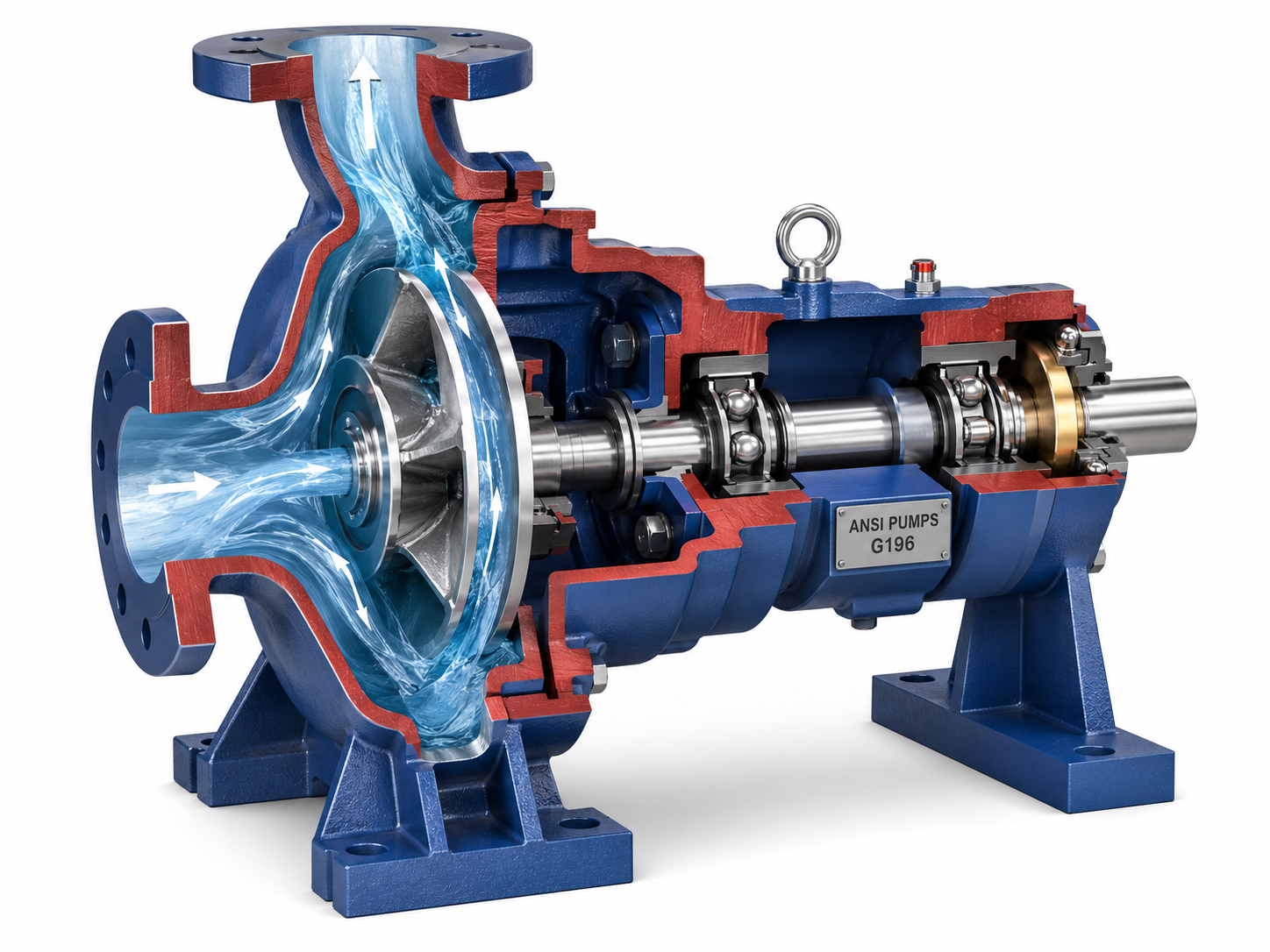
The G196 matches the Goulds 3196 and Durco Mark III dimensionally — but every internal component reflects modern manufacturing and material upgrades:
- Open impeller with external adjustment: Unlike closed or semi-open designs, the G196’s fully open impeller handles suspended solids without clogging. External adjustment screws let you restore design clearance in minutes, without disassembling the pump — maintaining efficiency over years of service.
- Heavy-duty bearing frame: STX, MTX, LTX, and XLTX frames use premium SKF or equal deep-groove ball bearings sized for continuous duty. Bronze or 316SS labyrinth isolators (Inpro/Seal type) exclude moisture and process fluid from the bearing housing — the #1 cause of premature bearing failure in chemical service.
- Three seal chamber options: Standard bore, large bore, and taper bore chambers accommodate everything from single cartridge seals to double pressurized API 682 arrangements. No adapter plates needed — the chambers are cast integrally with the casing.
- Full material matrix: Cast iron, ductile iron, 316SS (CF8M), CD4MCuN (duplex), Alloy 20 (CN7M), Hastelloy C-276 (CW12MW), Nickel (CZ100), and Titanium Grade 2. Each material is poured, machined, and hydro-tested in-house with full MTR documentation.
- Shaft & sleeve options: 316SS, 17-4 PH, or duplex shafts with hardfaced or replaceable sleeve options for abrasive or corrosive services.
Why Maintenance Teams Are Switching to G196
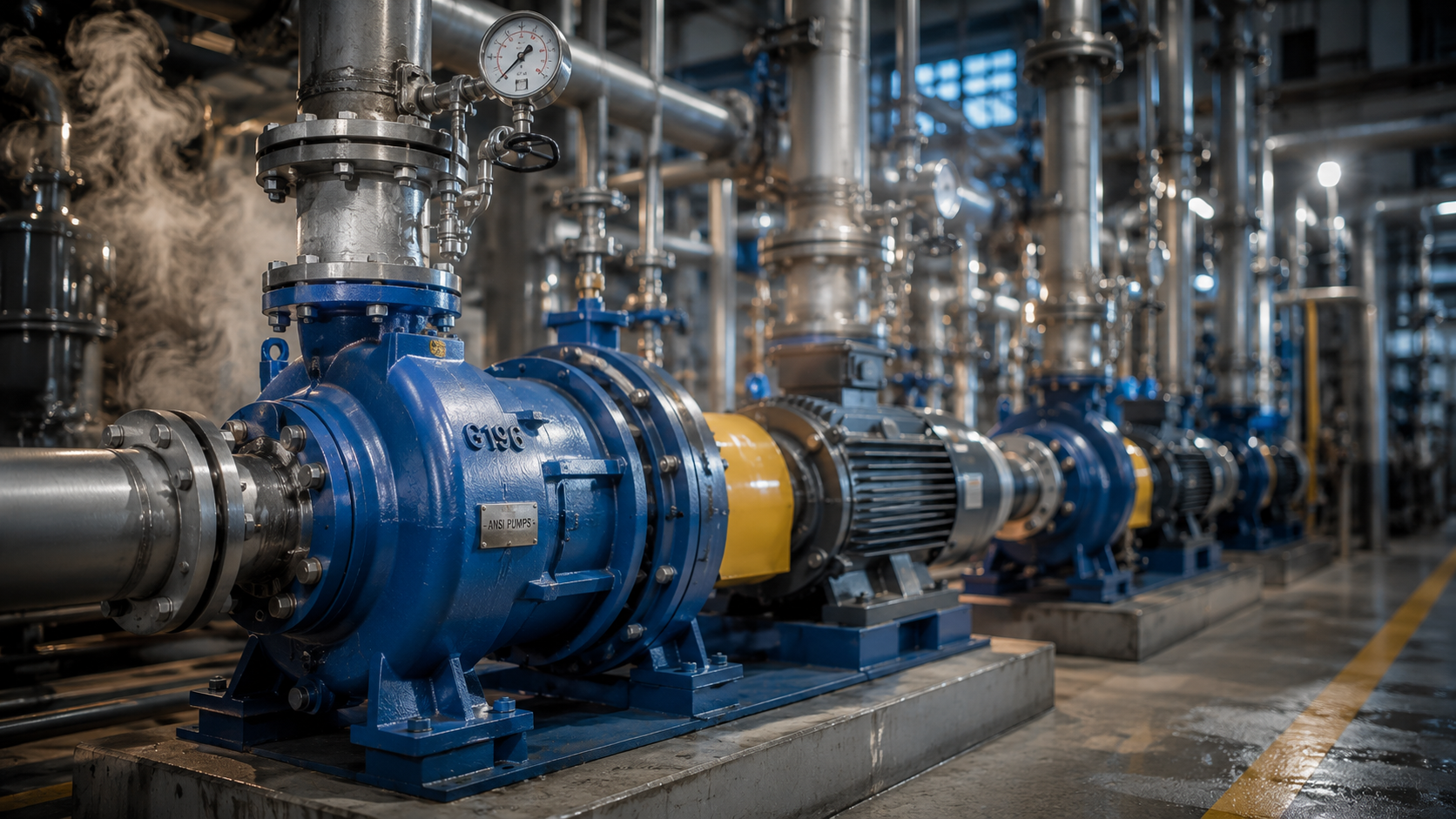
- Same form, fit, and function — lower total cost: The G196 bolts directly to your existing Goulds 3196 or Durco Mark III baseplate, couples to your motor without realignment in most cases, and uses the same gaskets and fasteners. The savings versus OEM list price typically cover the cost of a spare rotating assembly.
- Full ANSI/ASME B73.1 compliance: The G196 is designed, tested, and nameplated to B73.1 — not “B73.1-style” or “B73.1-compatible.” This matters for insurance, OSHA PSM audits, and ISO 9001 documentation.
- Stock availability — complete pumps and wet ends: We warehouse finished assemblies and major components (casings, impellers, covers, bearing housings) in the most-requested materials. Standard configurations ship within 5 business days; rush orders within 48 hours.
Get the G196 Specification Sheet & Quote
Tell us your current pump model, duty point, and material of construction. Our applications team responds with a dimensional cross-check, performance curve, and price within 24 hours — no registration, no spam.
Related Reading
- How to Rebuild Your Goulds 3196: A Step-by-Step Component Guide →
- Durco Mark III Compatible Parts: Cross-Reference & Material Guide →
- Goulds 3196 vs. Durco Mark III: Which Pump Fits Your Process? →
Editorial Standards & Expertise
ANSI Pumps Pro Engineering Team — 10+ years in ANSI B73.1 process pump design, manufacturing, and aftermarket solutions. Our content is reviewed by senior pump engineers with direct field experience across chemical, petrochemical, and industrial pump applications.
Fact-Checking: Technical claims reference published industry standards (ASME B73.1, ASTM, API 682, HI), peer-reviewed corrosion data, and internal engineering documentation. Product specifications and pricing reflect current (2026) information. Questions? Contact our team →