
ANSI Pump Replacement Guide
Griswold 811 Alternative: Seamless Replacement with 40% Cost Savings
The PSG Griswold 811 is an industry workhorse. Our ANSI B73.1 alternative delivers 100% dimensional compatibility, upgraded precision engineering, and up to 40% TCO reduction for chemical and industrial applications.
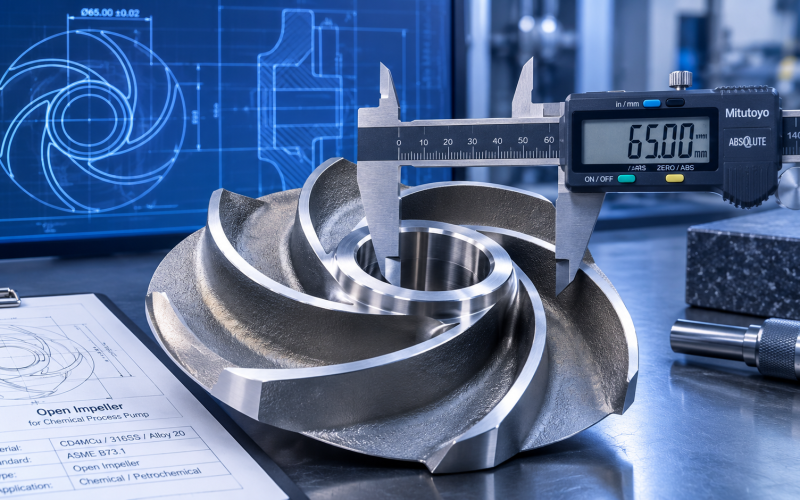
Reduce spare parts costs with standardized components
Zero piping or baseplate modifications required
Precision rotor balancing extends MTBF
The PSG Griswold 811 ANSI Series is a staple in industries ranging from chemical processing to water treatment, renowned for its reliability and broad hydraulic coverage. But as maintenance budgets tighten, plant managers are actively seeking a Griswold 811 alternative that offers identical performance with a significantly lower total cost of ownership (TCO). Our ANSI B73.1 process pump is engineered to be a true drop-in replacement, delivering premium reliability, faster lead times, and up to 40% cost savings compared to imported OEM equivalents.
Maximizing TCO Through Smart Sourcing
When replacing a Griswold 811, the initial purchase price is only part of the equation. The true cost lies in long-term maintenance, spare parts availability, and unplanned downtime. Imported OEM parts often come with steep premiums and unpredictable shipping times. Our alternative addresses these challenges head-on. By leveraging localized manufacturing and standardized components, we reduce spare parts costs, such as impellers, shafts, and seal chambers, by over 40%. This simplified inventory management translates directly to improved operational efficiency and lower OPEX.
| Feature / Part | Standard Griswold 811 | Our ANSI B73.1 Alternative |
|---|---|---|
| Dimensional Fit | Baseline | 100% Drop-In Match (ASME B73.1) |
| Rotor Balancing | Standard | Upgraded to API 610 Class 2.5 |
| Average Lead Time | Long / Uncertain | 6–10 Weeks |
| TCO / Spare Parts Cost | 100% | Save up to 40% |
100% Drop-In Compatibility: Zero Installation Hassles
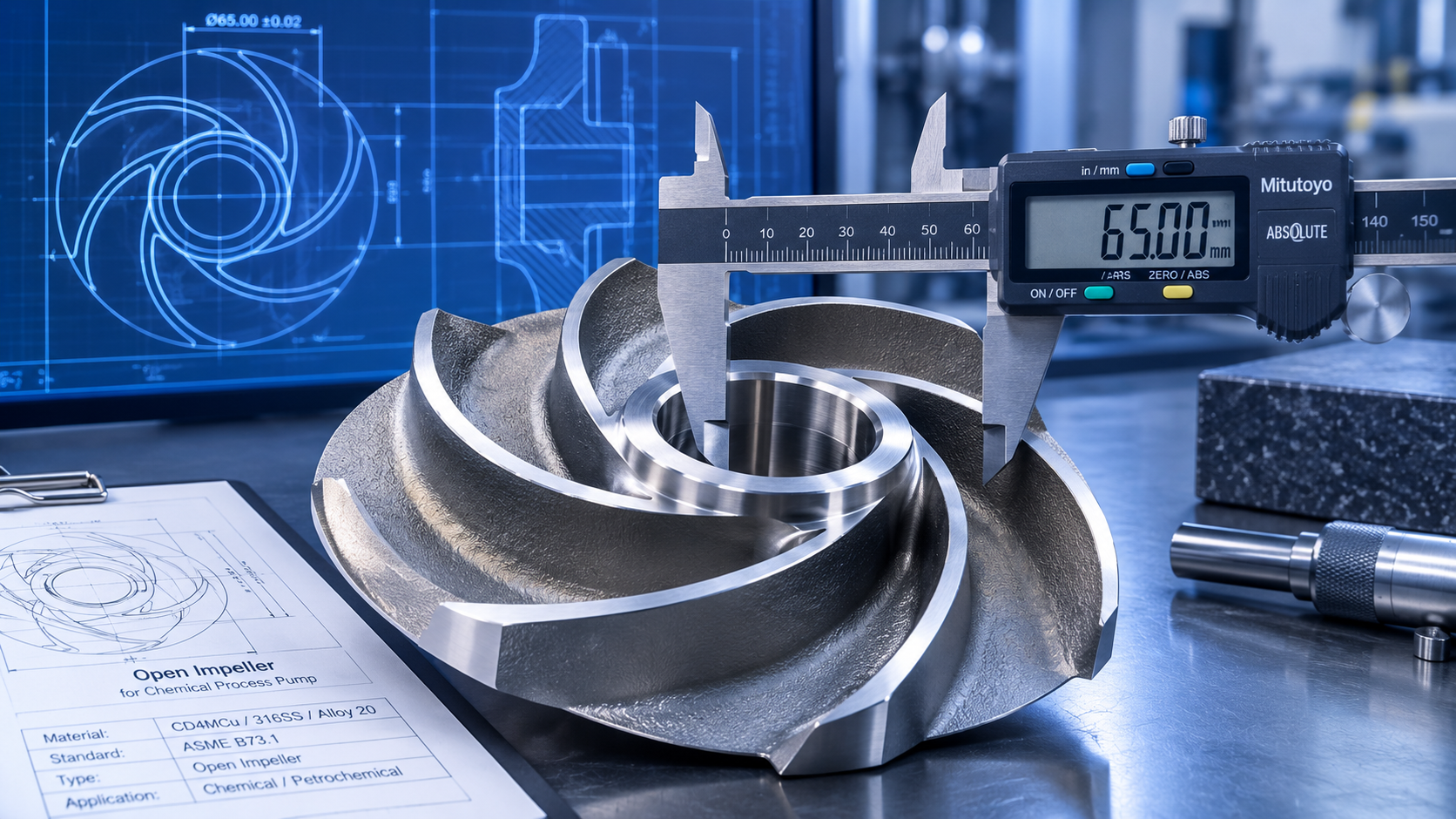
Time is money during a maintenance shutdown. Our pump guarantees 100% dimensional interchangeability with the Griswold 811 ANSI Series. Flange-to-flange dimensions, centerline heights, and baseplate footprints match the original specifications exactly, complying with ASME B73.1 standards. This true drop-in design ensures that your maintenance team can swap out the old pump without modifying existing pipelines, foundations, or motor mounts, drastically reducing installation time and labor costs.
Upgraded Reliability: Precision Engineering and Testing
We do not just copy, we improve. Our ANSI B73.1 equivalent features enhanced structural reliability. The pump body and cover are reinforced with optimized ribs, validated through advanced mechanical analysis to handle demanding industrial loads. Every pump is rigorously hydrostatically tested according to ASME B73.1 and HI 14.6 standards to ensure absolute leak-free performance. Furthermore, the rotor undergoes API 610 Class 2.5 dynamic balancing, which minimizes shaft deflection, reduces bearing wear, and significantly extends the Mean Time Between Failures (MTBF).
Broad Hydraulic Coverage and Material Flexibility
Matching the versatile nature of the Griswold 811, our pump is available in multiple frame sizes and a wide array of metallurgies, including Ductile Iron, 316 Stainless Steel, and CD4MCu. Whether you are handling clean water, corrosive chemicals, or abrasive slurries, we have the right material configuration. We also offer customized sealing and lubrication options, with remote monitoring interfaces available for modern predictive maintenance strategies. Standard delivery in 6 to 10 weeks ensures your maintenance schedule stays on track.
Optimize Your Pump Fleet Today
Discover the smarter alternative to the Griswold 811, without sacrificing an ounce of performance. Submit your pump specifications for a competitive quote within 24 hours.
Ready to Reduce Your Pump OPEX?
Get a Griswold 811 alternative quote within 24 hours
Send your Griswold 811 nameplate data or part numbers. Our engineering team responds with a detailed cross-reference, dimensional comparison, and pricing within one business day.