Direct answer: an ANSI chemical pump material cannot be released from the alloy name or chemical name alone. Screen the complete process conditions first, then verify the exact grade, product form, wetted component, fitment and documentation before making a material recommendation.
How to Use This Material Selection Guide
This guide helps maintenance engineers, procurement teams and distributors organize the first material screen for ANSI chemical-process pump wet ends. It separates material-family language from exact purchase specifications and connects corrosion questions to dimensional, mechanical and hydraulic fitment.
Use the guide to identify what must be verified. Do not use a family label as an approval for every concentration, temperature or acid. The final recommendation should be tied to the actual process window, component form, project specification and available evidence.
Start With the Process Conditions, Not the Alloy Name
Before comparing 316 stainless, duplex, Alloy 20, C-type nickel alloys or titanium, collect the conditions that control the review:
- Complete fluid composition, concentration and pH where relevant.
- Normal temperature and maximum or upset temperature.
- Chlorides, fluorides, oxidizing contaminants, reducing species and other impurities.
- Aeration, solids, velocity, entrained gas and erosion exposure.
- Cleaning, startup, shutdown, dilution and off-specification conditions.
- Existing failure mode, inspection findings and service history.
- Component form: casting, wrought, welded, repaired or assembled wet end.
A material screen that omits these inputs is incomplete even when the alloy name sounds familiar. Record the uncertainty and request the missing information rather than replacing it with an assumed threshold.
Material Family vs Exact Casting Grade
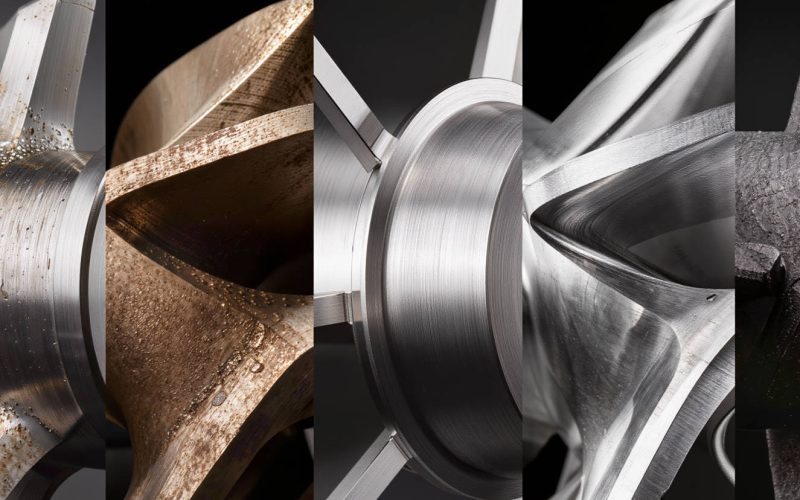
Material family, wrought designation, casting designation, UNS number and project material specification are related references, not automatically interchangeable procurement labels.
| Material family | Typical reference encountered | Procurement caution |
|---|---|---|
| 316 stainless | 316/316L or CF8M where specified | Wrought and casting designations differ; confirm the applicable specification. |
| CD4MCuN | Duplex pump casting family | Verify the exact ASTM grade, product form and project requirement. |
| Alloy 20 family | Alloy 20 / UNS N08020 (wrought reference) | CN7M / cast UNS N08007 where specified; do not treat wrought and cast UNS designations as identical procurement specifications. |
| C-type nickel alloy | C-276 / exact casting grade | Do not substitute wrought UNS N10276 for an unspecified casting. |
| Titanium | Wrought grades / ASTM B367 casting grades | State the exact product form and grade; do not invent an equivalency. |
316 Stainless / CF8M: When It Enters the Screening
316 stainless and CF8M may be common candidates for relatively mild chemical and water services. That makes them useful starting points, not a default approval for ANSI pumps or a substitute for process data.
Chloride pitting and stress-corrosion-cracking risk depends on chloride level, temperature, pH, oxygen or aeration, stress, crevice geometry and contaminants. Do not publish one universal ppm threshold. Review the actual exposure and the specific casting or wrought requirement.
Check exact listed conditions in the Chemical Resistance Guide before treating 316 stainless or CF8M as a candidate for a particular duty.
CD4MCuN: When Duplex Pump Castings Enter the Review
CD4MCuN may enter the review for selected chloride-bearing, erosive/corrosive and chemical services where both corrosion and mechanical wear need to be considered. The assessment still depends on the complete chemistry, temperature, solids, velocity, casting specification and operating cycle.
Do not turn a duplex family name into a universal sulfuric-acid concentration or temperature approval. Confirm the actual casting grade, heat treatment, inspection records and the failure mechanism being addressed.
Alloy 20 Family: Wrought vs Casting References
Alloy 20 is a material-family and common trade reference. Wrought Alloy 20 is commonly identified as UNS N08020, while CN7M is a casting reference with cast UNS N08007 where specified. These are different product-form designations; the purchase order must state the correct wrought or casting designation for the component and project specification.
Actual acid concentration, temperature, contaminants, aeration, velocity and process transients must be checked. Do not generalize a nearby sulfuric-acid data point into a broad range, and do not declare Alloy 20 universally suitable or unsuitable for hydrochloric acid.
C-Type Nickel Alloys for Severe Mixed and Chloride-Bearing Service
C-type nickel alloys may be considered when mixed or reducing chemistry, aggressive contaminants or localized corrosion mechanisms justify a broader nickel-alloy review. They remain condition-dependent materials, not universal approval for every acid.
C-276 / UNS N10276 is a wrought alloy designation. An exact casting material must be specified separately, with the applicable product form, heat treatment, traceability and inspection requirements. Review the Hastelloy C-276 pump material guide and the Alloy 20 vs C-276 guide alongside the project data.
Titanium for Oxidizing and Chloride-Bearing Service
Titanium may be screened for selected oxidizing and chloride-bearing services when the real environment supports the required passive condition. Moisture, oxidizing state, concentration, temperature, contaminants, crevices and flow conditions still need review.
Wrought Titanium Grade 2 and ASTM B367 casting grades are different procurement references. If a titanium casting is required, state the applicable casting specification and UNS designation separately from any wrought reference. Do not use “titanium” as an unqualified guarantee for every acid or chloride service.
For a focused comparison of titanium and C-type nickel alloys, see the Titanium vs Hastelloy material-screening article.
Condition-Based Screening Matrix
| Service characteristic | Families often evaluated | Evidence still required |
|---|---|---|
| Mild chemical or water service | Stainless family | Full chemistry and temperature. |
| Sulfuric-acid service | Alloy 20, nickel alloys or other project-specific alloys | Concentration, temperature and contaminants. |
| Chloride-bearing service | Duplex, titanium or nickel alloys | Chloride source, temperature, pH and crevices. |
| Oxidizing service | Titanium or selected stainless and nickel families | Complete oxidizing chemistry and exposure cycle. |
| Mixed or reducing acids | Nickel alloys or project-specific materials | Full composition and temperature. |
| Erosive/corrosive slurry | Higher-strength or corrosion-resistant candidates | Solids, velocity and corrosion mechanism. |
Material Selection Workflow
- Identify complete fluid composition.
- Confirm concentration and normal/upset temperature.
- Identify chlorides, fluorides, oxidizers, reducers and impurities.
- Review solids, velocity and erosion.
- Check exact listed conditions in the Chemical Resistance Guide.
- Identify the exact pump component and product form.
- Confirm casting/wrought grade and documentation.
- Verify dimensional and hydraulic replacement fitment.
- Release a quotation or material recommendation only after engineering review.
Pump Component Material Review
Material choice applies to the whole wet end and adjacent interfaces, not only the casing. Different components may have different mechanical, sealing, pressure and corrosion requirements.
| Component | Verify |
|---|---|
| Casing / cover | Exact casting grade, pressure requirement and corrosion allowance where specified. |
| Impeller | Material, trim, balance and erosion/corrosion mechanism. |
| Shaft / sleeve | Material, surface, seal interface and galvanic considerations. |
| Wear components | Material pairing, clearance, galling and erosion. |
| Mechanical seal | Faces, elastomers, metal parts and flush/barrier arrangement. |
| Gaskets / O-rings | Chemical and temperature compatibility. |
| Fasteners | Actual wetted exposure and specified material. |
Material Verification & Inspection Options
Inspection scope should match the component, project specification and risk. Options may include:
- MTR and heat-number traceability where required.
- PMI where agreed and applicable.
- Dimensional inspection for replacement fitment.
- Balance records for rotating components where applicable.
- Hydrostatic testing for pressure-containing parts where required.
- NDE and repair-weld documentation where specified.
Do not assume all components receive the same inspection package or that every shipment includes every certificate. State the required records in the RFQ and confirm them before release.
Need a pump material review?
Send the process conditions, exact pump/component reference and available drawings. We can screen the material family, product form, fitment and documentation requirements together.
What to Send for a Pump Material Review
- Existing pump manufacturer, model and size/frame/group.
- Required component and OEM part or drawing reference.
- Fluid and complete composition, concentration and normal/max temperature.
- pH where relevant, chloride/fluoride/contaminant information and solids.
- Flow, head, speed and operating cycle.
- Existing material and current failure mechanism.
- Required material if already specified.
- MTR, PMI, NDE, hydrostatic and dimensional requirements where applicable.
- Nameplate, drawing, section view or dimensional photos.
Frequently Asked Questions
What information is needed to select an ANSI pump material?
Provide complete fluid composition, concentration, normal and maximum temperature, contaminants, solids, velocity, operating cycle, failure mode, component form and pump fitment data.
Is 316 stainless suitable for chloride service?
It may be considered in selected conditions, but chloride level, temperature, pH, aeration, stress, crevices and contaminants must be reviewed together.
When should CD4MCuN be considered?
It may enter the review for selected chloride-bearing or erosive/corrosive services where a duplex pump casting and the complete process conditions are appropriate.
Is Alloy 20 always suitable for sulfuric acid?
No. Confirm the actual acid concentration, temperature, contaminants, aeration, velocity and process transients for the specified product form.
Is Hastelloy C-276 suitable for every acid?
No. C-276 / UNS N10276 is a wrought designation and requires a project-specific chemistry, temperature, form and component review.
Should every wetted component use the same material?
Not automatically. Casing, impeller, shaft, seals, gaskets and fasteners may have different requirements and must be reviewed as an assembly.
Engineering Sources & Reference Basis
This screening hub is based on the need to distinguish material families, product forms and project specifications. Reference points include ASTM B367 for titanium and titanium-alloy castings, official Haynes C-276 and alloy-family data, Alleima material and corrosion guidance, the applicable casting specification for CN7M where directly required by a project, and the ANSI Pumps Pro Chemical Resistance Guide for site-listed condition records. No copyrighted standard tables are reproduced here.
For aftermarket replacement pumps, wet ends and components, release the material recommendation only after exact pump/model, size/frame/group, component, dimensions, hydraulic duty, material requirement and seal/configuration information are confirmed. ASME B73.1 dimensional standardization does not by itself prove universal internal-component interchangeability.