
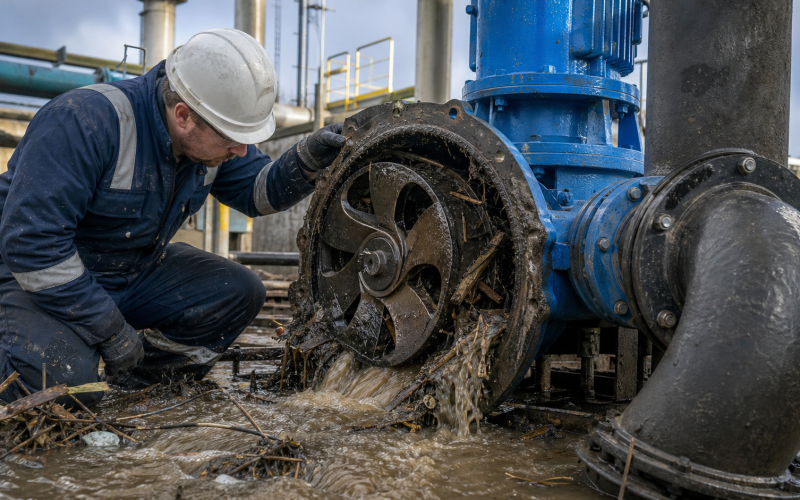
The impeller determines how a trash pump handles solids, develops head and responds to wear. Open or semi-open vanes, passage size, vane shape, casing clearance, material and speed all influence performance. This guide helps buyers and maintenance teams connect impeller design to the actual debris, flow and operating conditions.
What problem should a trash pump impeller solve?
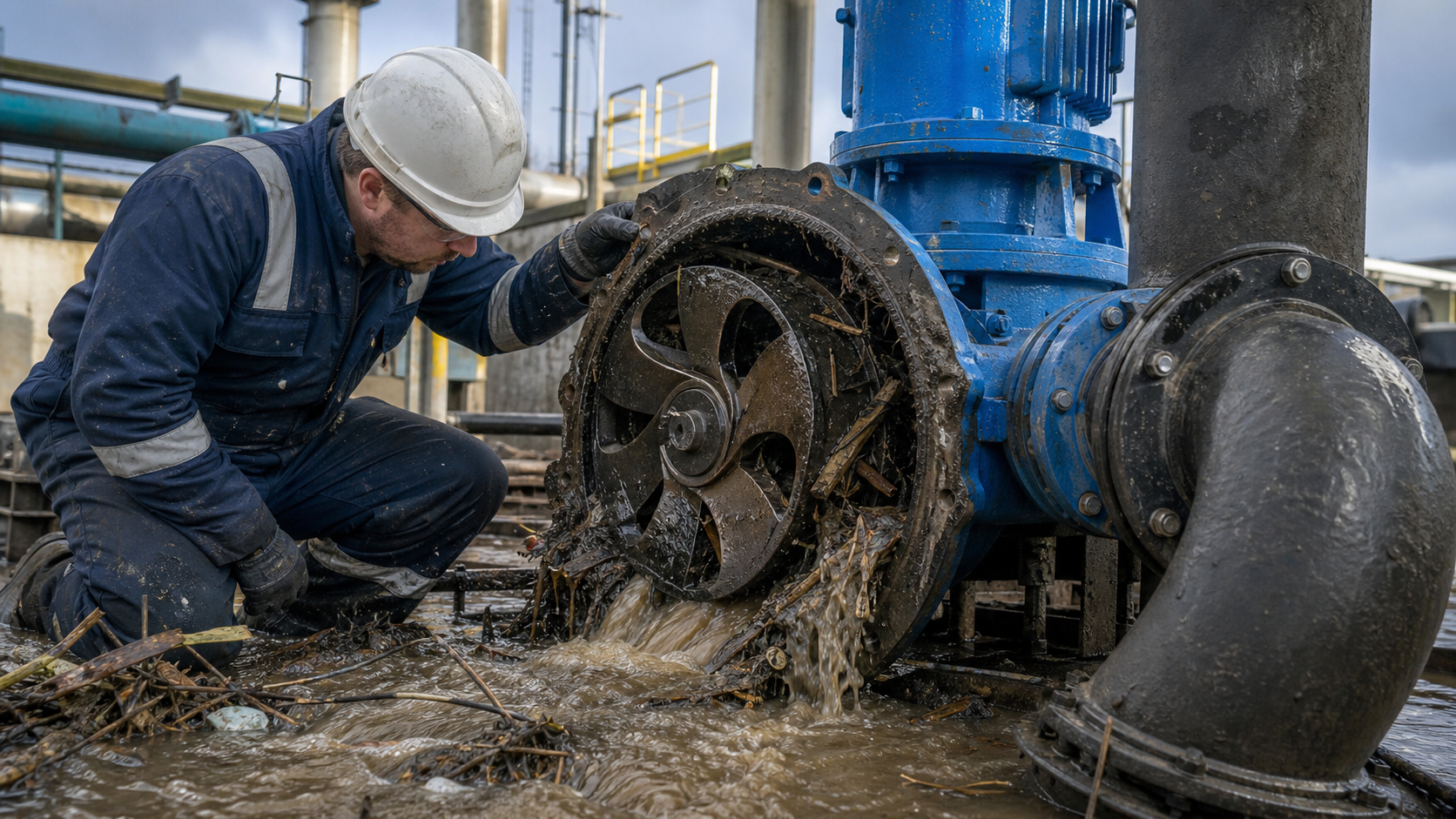
The impeller must pass the expected solids without frequent clogging while still delivering the required flow and head. “Trash” can mean leaves and fibrous material, soft debris, sand, stones, sludge or mixed solids; those services do not create the same loading or wear pattern.
Define solids size, shape, concentration, abrasiveness, tendency to wrap and required uninterrupted flow before comparing impellers.
Open, semi-open and vortex-style choices
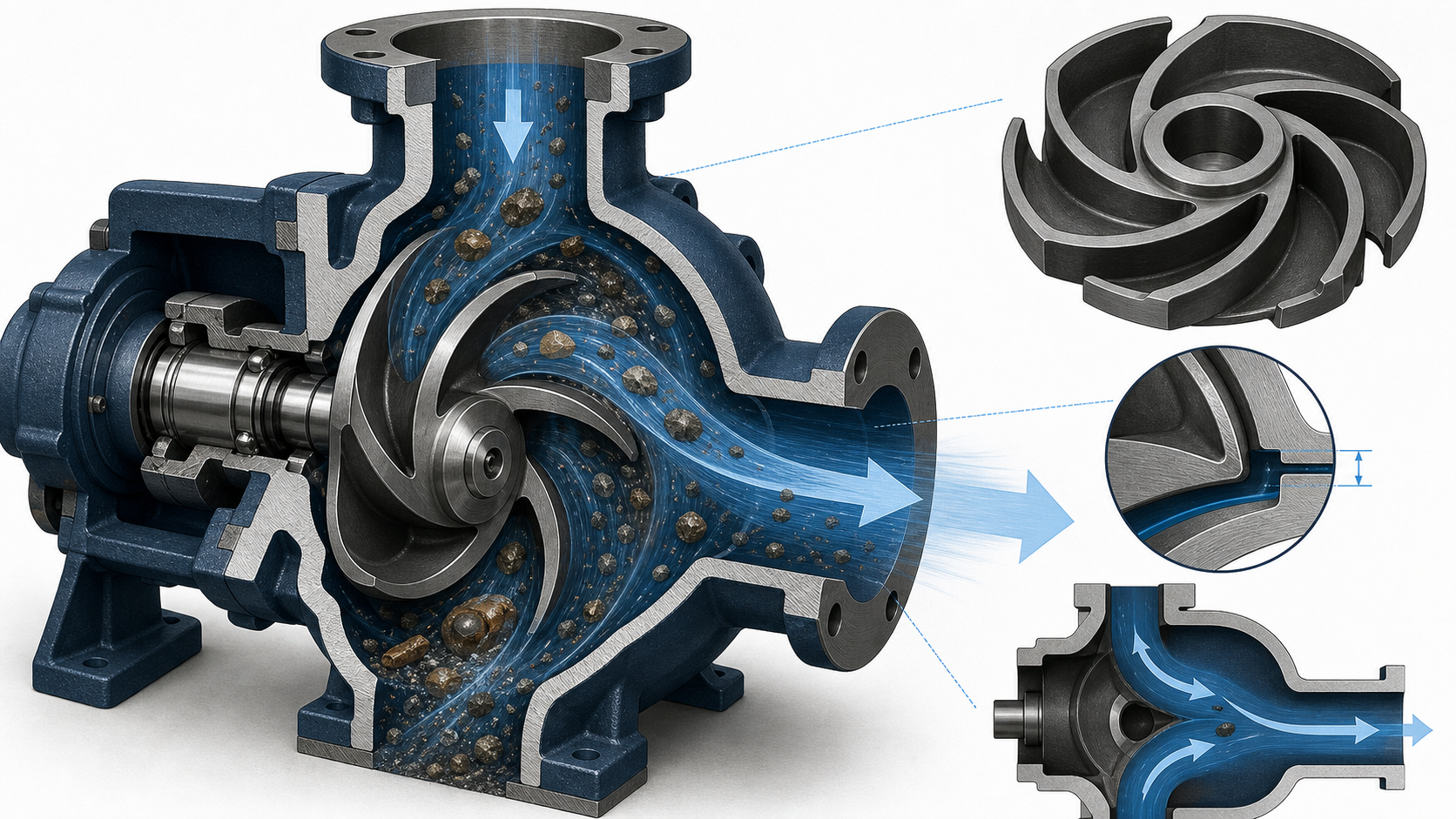
Open or semi-open impellers can provide larger passages and easier access for debris, but they may require clearance control and can lose hydraulic performance as wear increases. Vortex designs keep solids away from some surfaces but may have different efficiency and head characteristics.
The correct geometry depends on the pump design and the manufacturer’s tested curve. Do not install a visually similar impeller without checking the hydraulic and mechanical interfaces.
Passage size is only one design variable
Check vane inlet, discharge passage, casing throat, suction opening, impeller diameter, blade thickness, shaft fit, keyway, balance and clearance. A large passage does not help if debris bridges at the suction, casing throat or discharge elbow.
Also check the operating point. A pump running far from its preferred region may experience recirculation, vibration and accelerated wear even if it does not clog.
Materials and wear matter
Abrasive sand, gravel and mineral solids can erode vanes and casing surfaces. Fibrous solids can wrap around the impeller or shaft. Corrosive liquid can weaken or attack the same components. Select materials and coatings from the actual liquid and solids conditions, not from the word “trash.”
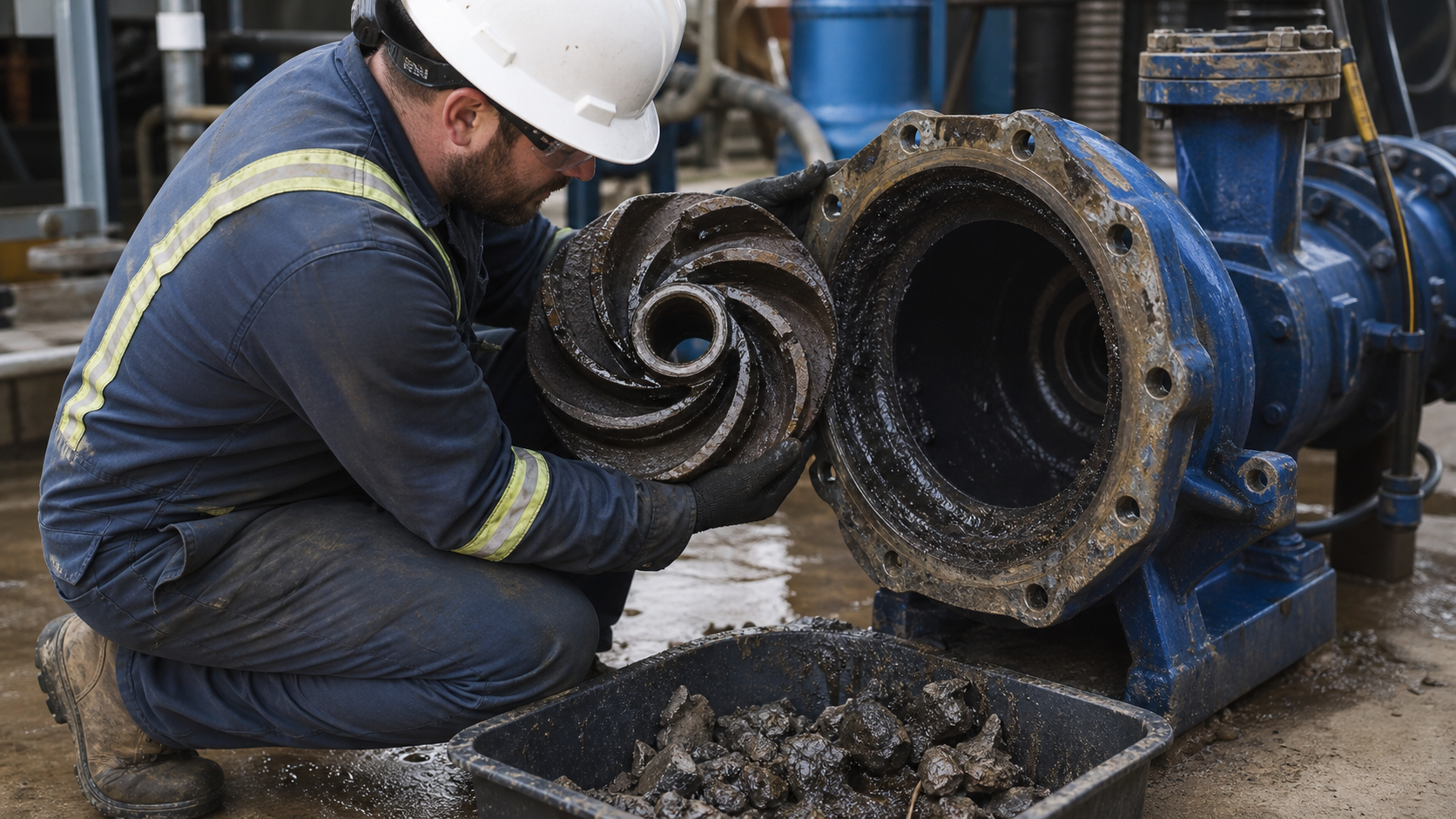
For a replacement, record the original material, wear pattern, solids evidence and any coating or hard-facing requirement.
Impeller review table
| Condition | Design question | Evidence |
|---|---|---|
| Large solids | Is the complete flow path large enough? | Solids size distribution, suction and discharge layout |
| Fibrous debris | Can material wrap or bridge at the vane or shaft? | Removed debris, impeller photos and clog history |
| Abrasive solids | Will erosion change clearance and head? | Particle hardness, concentration and wear measurements |
| Corrosive liquid | Are all wetted parts and fasteners compatible? | Chemistry, temperature and material records |
| Changing duty | Does the curve remain suitable across the range? | Flow, head, speed and operating history |
Maintenance checks that protect performance
Inspect the impeller for cracks, erosion, blocked passages, imbalance, vane damage and shaft-fit movement. Measure clearances against the applicable manufacturer limits. Inspect casing throat, wear components, suction passage, check valve and piping for restrictions.
After reassembly, verify rotation, alignment, guards, lubrication, seal condition and the operating point. Record vibration, pressure and flow so the next inspection has a baseline.
Why a bigger passage may reduce efficiency
More open geometry can improve solids handling but may reduce hydraulic efficiency or head for a given speed and diameter. A smaller passage may be efficient in clean liquid but unacceptable with debris. The decision should balance clogging risk, energy, wear, required head, maintenance access and production consequence.
Replacement impeller compatibility
Confirm outside diameter, vane geometry, width, balance, shaft and key, wear clearances, casing throat, rotation, material and the certified pump curve. A part that fits the shaft may still produce the wrong head, power or solids-handling behavior.
For ANSI process pumps, keep dimensional, mechanical, hydraulic, material and operating compatibility separate during the review.
When to request an engineering review
Request review when solids are mixed or changing, clogging is recurring, the impeller has been modified, a trim change is planned, the pump is handling abrasive or corrosive slurry, or a supplier proposes a substitute part without a curve and dimensional comparison.
What to send for a trash-pump quotation
Send solids description and size, liquid properties, flow, head, speed, suction conditions, photos of debris and wear, current impeller dimensions, pump model, material requirements and required operating hours. Include whether uninterrupted service or easy cleanout is the primary objective.
What to send for a useful quotation or review
Include the pump model or drawing, actual duty range, liquid properties, operating history, photos, inspection records, materials and required documentation. Clear inputs help separate a repair, component replacement, system correction or complete pump selection.
Need help reviewing a trash pump impeller?
ANSI Pumps Pro helps buyers review ANSI process pump duty, materials, fitment, testing and lifecycle support.
Sources and related reading
Use the applicable manufacturer documentation, project specification and site safety procedure. For general pumping-system guidance, see the U.S. Department of Energy pumping systems resources and the Hydraulic Institute. Final limits and acceptance criteria remain project-specific.
Frequently asked questions
What makes a trash pump impeller different?
It is designed around solids passage, clog resistance, wear, casing clearance and the required hydraulic duty. The correct geometry depends on the actual debris and liquid.
Is an open impeller always best for trash?
No. Open, semi-open and vortex designs have different passage, efficiency and wear trade-offs. Match the design to solids type, concentration, head and maintenance plan.
Why does a trash pump lose performance over time?
Erosion, worn clearances, vane damage, blockage, imbalance, casing wear and operation away from the intended duty can reduce flow and head.
Can any impeller with the same shaft size be used?
No. Check geometry, balance, diameter, width, key, material, clearance, casing throat, rotation and the certified hydraulic curve.