
Identify the Installed Group 2 Casing
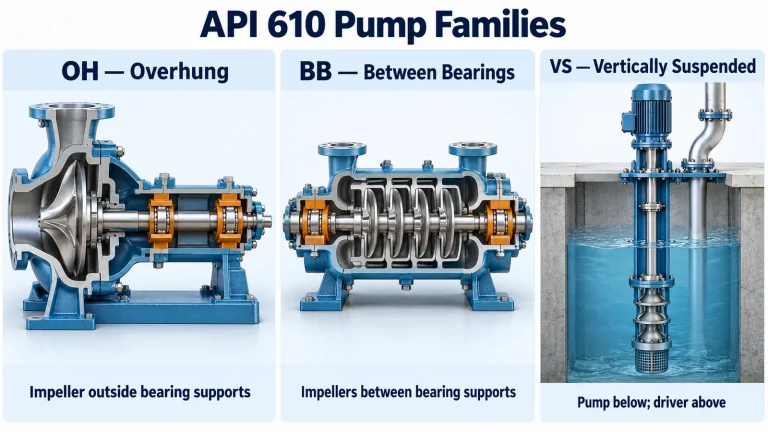
A Group 2 designation narrows the Mark III / Mark 3 family, but it does not identify one interchangeable casing. Begin with the installed pump nameplate, exact size, serial number and any casing part number or bill of materials. Then compare the existing casing with the components that must remain in service. A casing selected solely by frame group can have the wrong nozzle, rear-cover or hydraulic interface.
Record whether the installation is a legacy MARK III Group II or a later Mark 3 Standard Group 2 arrangement. Keep the original size suffix, drawing revision and site modifications in the inquiry. If an OEM part number is available, use the part-number cross-reference as an identification step, then confirm the drawing and physical interfaces.
Use the group as a first filter. Approve a replacement casing against the installed size, drawing or BOM, material and mating components.
Group 2 Size Reference
Flowserve’s Mark 3 ASME (ANSI) brochure lists the following Standard Group 2 size designations. This table helps identify the pump family; it does not confirm legacy casing interchangeability, stock status or availability in every material.
The first two numbers identify nominal suction and discharge sizes. The final number identifies the nominal hydraulic size; it is not a certified finished impeller diameter or a casing acceptance dimension. Keep suffixes such as LF, A, H and HH when checking a nameplate or drawing. Confirm flange drilling, pressure class and mating dimensions from the approved drawing.
Verify the Casing Interfaces
Review the casing with the rear cover, impeller and installation as a connected assembly. Agree the critical dimensions and the drawing revision before machining or order release.
ASME B73.1 defines dimensional interchangeability requirements for applicable pump configurations. The standard designation alone does not approve every aftermarket casing against every legacy revision, impeller or rear cover.
Specify the Casting Material
Flowserve’s Mark 3 ASME (ANSI) brochure lists the following material designations and casting specifications. They are material references for review, not universal chemical compatibility recommendations or confirmation that a particular size and alloy is in stock.
| Reference material | Brochure symbol | Listed casting designation / specification |
|---|---|---|
| Ductile iron | DCI | ASTM A395, Grade 60-40-18 |
| Carbon steel | DS | ASTM A216, Grade WCB |
| CF8M stainless steel | D4 | ASTM A744, Grade CF8M |
| CF3M stainless steel | D4L | ASTM A744, Grade CF3M |
| CD4MCuN duplex stainless steel | CD4M | ASTM A995, Grade 1B |
| Alloy 20 family cast grade | D20 | ASTM A744, Grade CN7M |
| C-276 family cast grade | DC3 | ASTM A494, Grade CW6M |
| Titanium casting listed by OEM | Ti | ASTM B367, Grade C-3 |
CN7M is a cast designation; it should not be described as identical to every wrought Alloy 20 product. Confirm the original material, fluid composition and concentration, temperature, contaminants, solids, chloride content where relevant, and observed corrosion or erosion mechanism before recommending a change.
Confirm the actual casting grade, procurement specification, documentation and availability for the requested size in the quotation.
Check the Impeller and Rear-Cover Relationship
Replacing a casing can change how the existing impeller, rear cover and pressure joint fit together. Confirm the impeller arrangement and trim, casing passage, rear-cover location and gasket interface as a matched assembly.
Mark 3 reverse-vane and open-impeller configurations use different clearance references. Set clearance using the instructions for the actual installed pump and revision. Do not transfer a setting or tolerance from another pump family.
If damage extends beyond the casing, review the Group 2 parts identification guide. If the existing wet end or power end cannot be reused, see the Durco Mark III replacement pump entry.
Agree Inspection and Acceptance Records
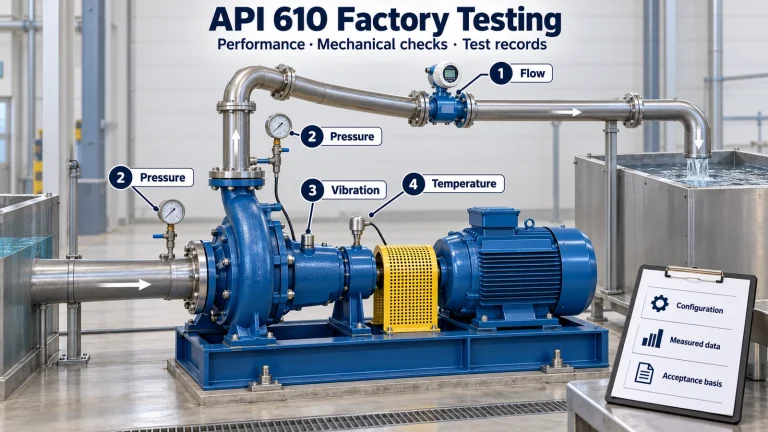
Before production, agree the controlling drawing revision, dimensions to inspect, casting grade and traceability, pressure-boundary test basis, and records that must accompany this order. Depending on the service and purchase specification, the agreed package may include a material test report, heat identification, PMI, a dimensional or CMM report, hydrostatic test record and certificate of conformity.
Do not assume every test, report, fixed pressure, hold time or tolerance applies to every casing. List the test pressure, duration, acceptance criteria and reporting requirements explicitly in the approved order.
Prepare a Fitment-Ready Casing RFQ
Send the pump and casing nameplate or part reference, exact size including suffix, clear photographs, available drawing or BOM, current and requested material, fluid and temperature, quantity, required date and requested inspection records. If the failed casing can be measured, add photographs of the rear-cover joint, flanges, mounting surfaces and damaged area. Include operating flow, head and speed when hydraulic matching or a change of duty is part of the request.
Use the page’s existing Send Pump Details route. State whether the request is for one casing, a matched wet end or a complete pump. The engineering review can then identify missing dimensions and confirm the quoted scope.
Frequently Asked Questions
Is Group 2 enough information to order a casing?
No. Confirm the installed size, casing reference, material, drawing revision and interfaces to the existing rear cover, impeller and piping.
Can a Mark 3 Standard Group 2 size table approve an older MARK III Group II part?
No. The table is a family reference. The installed drawing, BOM or measured mating features control the replacement review.
Can I request an alloy change after casing corrosion?
Yes, as an engineering review. Provide the process chemistry, temperature, contaminants, failed-part evidence and required casting grade. The alloy name alone does not establish suitability.
Which inspection documents will come with my casing?
Specify the documents in the RFQ and verify them in the quotation. The inspection package depends on the casing, material and purchase requirements.
Engineering References
- Flowserve: Durco Mark 3 ASME (ANSI) Chemical Process Pump and documentation
- Flowserve: Durco Mark 3 ASME (ANSI) pump brochure — Group 2 sizes and materials of construction.
- ASME B73.1 scope and dimensional interchangeability overview.
Check the current manufacturer instructions and the installed pump documentation for configuration-specific clearances and acceptance criteria.