

“Goulds 3196 replacement parts” is not a complete purchasing specification. The correct part depends on pump size, group or frame, shaft arrangement, impeller trim, seal chamber, power end, materials, rotation and actual duty. This guide helps maintenance and procurement teams request replacement parts that fit the installed pump and perform as required.

What does complete frame-size coverage really mean?
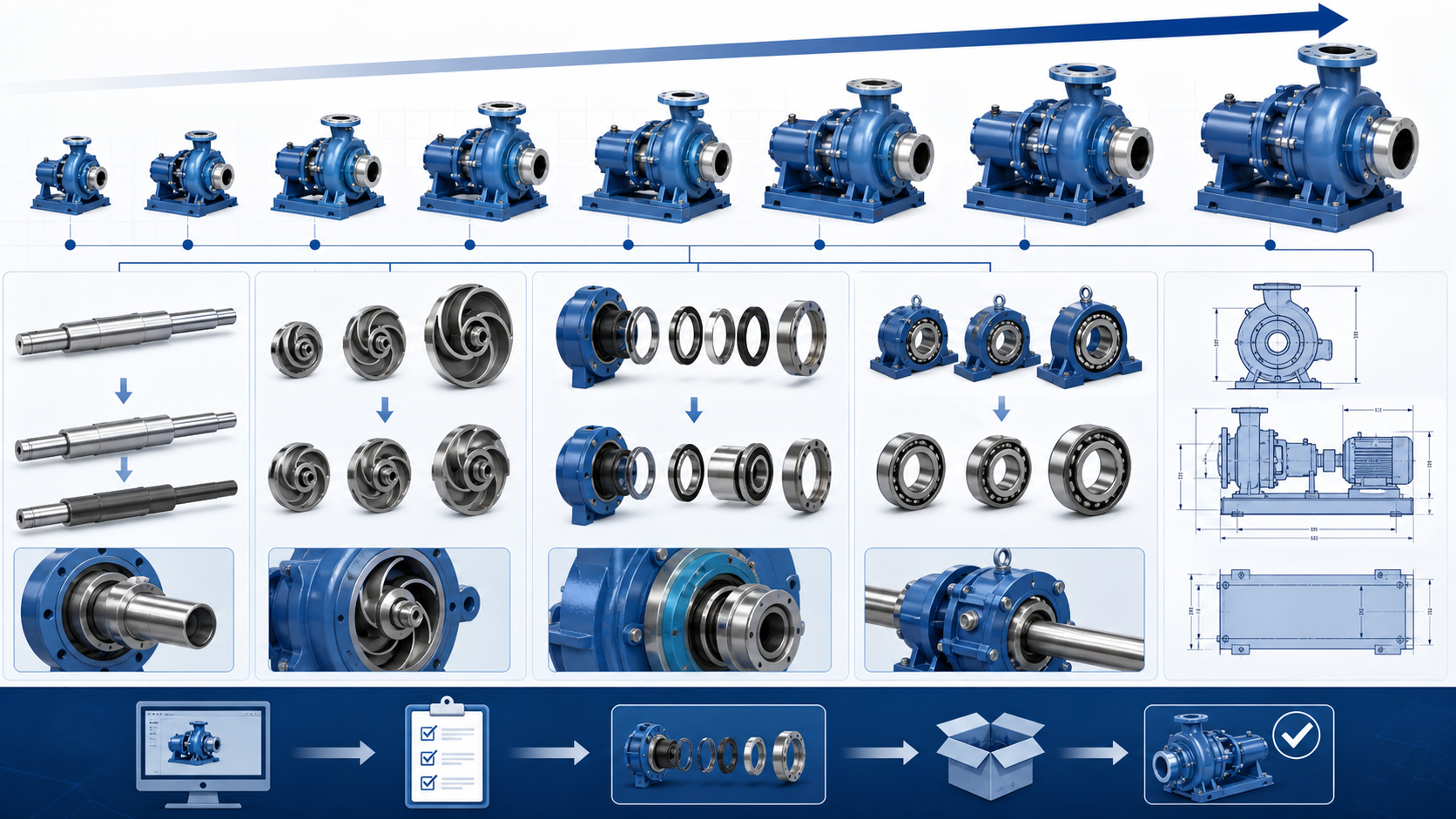
A supplier may offer a broad range of Goulds 3196 parts, but coverage should be stated by exact size, group, frame, configuration and component. A part catalog or family-level statement does not prove fitment to an old pump with modifications or a different power end.
Ask the supplier to identify the covered sizes and the evidence used for the specific quotation.
Identify the installed pump first
Record nameplate information, pump size, serial or asset number, frame, shaft arrangement, impeller diameter or trim, seal chamber, bearing housing, coupling, rotation, materials and motor data. Photograph the casing, power end, seal area and interfaces before disassembly.
Old or incomplete nameplates should be supplemented with drawings and measured dimensions.
Wet-end parts and power-end parts are different decisions
Wet-end replacement may involve casing, impeller, wear parts, shaft sleeve, seal chamber and gaskets. Power-end work may involve bearing housing, shaft, bearings, oil seals, lubrication arrangement and coupling interfaces. The two groups must be reviewed together where shaft, load, seal or impeller geometry interacts.
Do not assume that a wet end from one group can be mixed with a power end from another without a drawing comparison.
What must be checked for each part?
| Part | Fitment checks |
|---|---|
| Casing | Flanges, centerline, pressure boundary, seal chamber and wear interfaces |
| Impeller | Diameter, width, vane geometry, balance, key, rotation and curve |
| Shaft | Diameter, length, shoulders, keyways, threads, runout and materials |
| Bearings/power end | Frame, bearing span, loads, lubrication, housing and seals |
| Mechanical seal | Chamber, shaft sleeve, faces, elastomers, flush and pressure |
| Wear parts | Clearance, material, geometry and temperature condition |
How to verify frame-size coverage
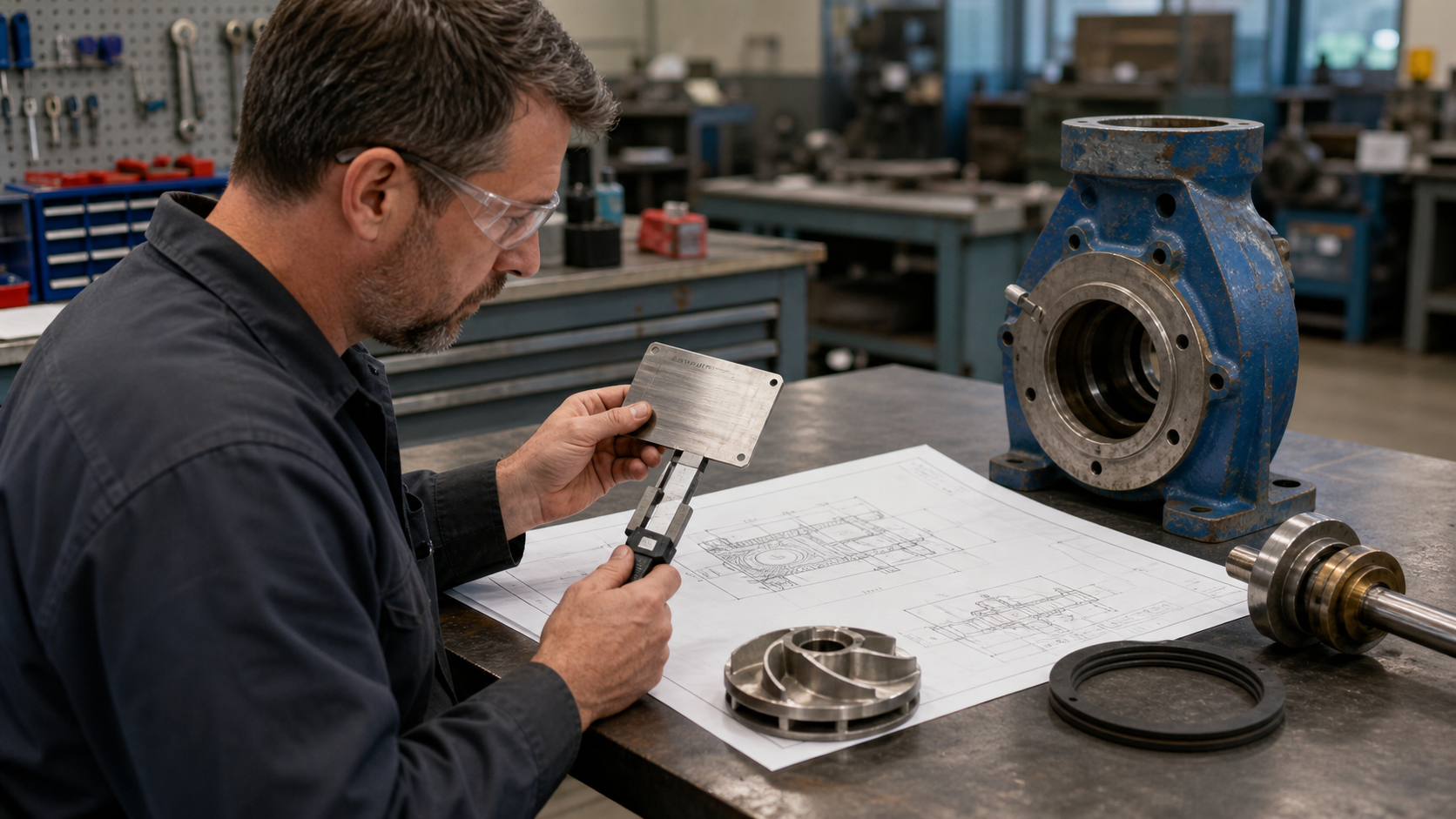
Use a controlled cross-reference containing the installed pump size, frame or group, drawing revision, part number, component description, material, dimensions and any required modification. Confirm that the replacement part is for the quoted configuration, not only for the 3196 family.
For export procurement, request photos or drawings before shipment when visual confirmation reduces fit-up risk.
Hydraulic compatibility still matters
A replacement impeller can physically fit and still produce the wrong head, power or NPSH requirement. Compare the actual flow, head, speed, trim, liquid properties and motor power. If the process duty has changed, the correct answer may be a different trim or pump selection rather than a like-for-like part.
Quality and traceability documents
Request material certificates, heat-number traceability where required, dimensional inspection, balance information, hydrostatic test records for pressure-retaining parts, seal and bearing details, approved drawings and deviation approval. Documentation should identify the exact size and component.
When to request a technical review
Request review when the nameplate is incomplete, parts are mixed across frame groups, the pump has been modified, the current failure involved the shaft or bearings, a different material is proposed, the operating duty changed or the supplier claims full coverage without a model-specific fitment statement.
What to send for a Goulds 3196 quotation
Send nameplate and serial information, pump size and frame, photos, part numbers, drawings, actual duty, speed, liquid properties, materials, seal details, motor data, required tests and delivery constraints.
What to send for a useful quotation or review
Include the pump model or drawing, actual duty range, liquid properties, motor data, operating history, photos, inspection records, materials and required documentation. Clear inputs help distinguish a component replacement from a system correction or complete pump selection.
Need help verifying Goulds 3196 replacement parts?
ANSI Pumps Pro helps buyers compare ANSI process pump duty, materials, fitment, testing and lifecycle support.
Sources and related reading
Use the applicable manufacturer documentation, project specification and site procedures. For general pumping-system guidance, see the U.S. Department of Energy pumping systems resources and the Hydraulic Institute. Final limits and acceptance criteria remain project-specific.
Frequently asked questions
What information is needed to order Goulds 3196 replacement parts?
Provide pump size, group or frame, serial or asset information, part description, dimensions, materials, impeller trim, seal chamber and actual duty where relevant.
Does a part listed for Goulds 3196 fit every 3196 pump?
No. Verify exact size, group, frame, shaft arrangement, seal chamber, material, impeller trim, power end and operating duty.
What is the difference between wet-end and power-end parts?
Wet-end parts handle the liquid and hydraulic duty; power-end parts support the shaft, bearings, lubrication and coupling. Their interfaces and loads must be checked together.
What documents should an aftermarket supplier provide?
Request controlled drawings, materials and traceability records where required, dimensional inspection, balance or pressure-test evidence, seal/bearing details and approved deviations.