
The 16-Week OEM Bottleneck That Is Costing Pump Repair Shops Millions
Picture this scenario: a critical chemical plant located 200 miles from your repair facility calls with a midnight emergency. Their Goulds 3196 MTX process pump has seized on a primary production line. They urgently need a replacement power end, a new shaft, bearings, and a complete wet end rebuild kit — and they need it yesterday. You immediately contact the local OEM distributor. The response? “14 to 16 weeks lead time.”
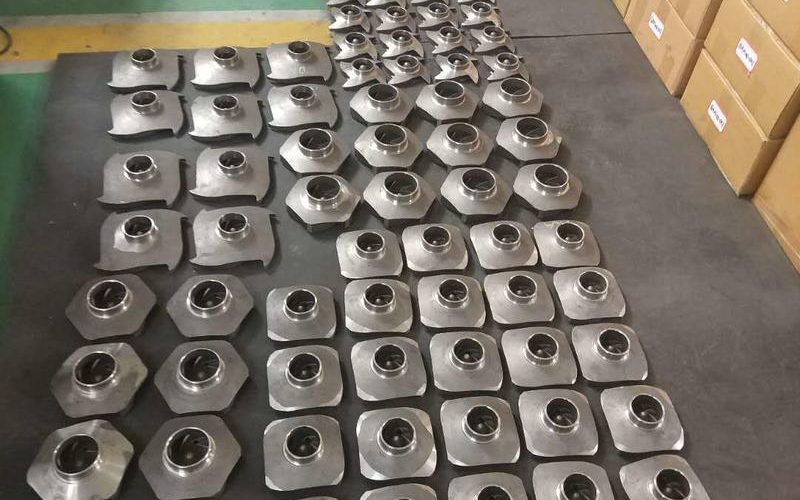
Unfortunately, that is no longer an outlier; it is the new industrial normal. Over the past few years, standard goulds 3196 parts lead time has steadily stretched from a manageable few weeks to a crippling 4-month wait. For exotic alloy variants, 20+ weeks is increasingly common. For an independent pump repair shop, a 16-week bottleneck means only one thing: a lost customer and a damaged reputation.
This article is a strategic guide for pump repair shop owners, field maintenance managers, and industrial buyers who are tired of losing lucrative contract business to OEM supply chain dysfunction — and are ready to secure a high-quality alternative.
Why OEM ANSI Pump Lead Times Have Exploded
The standard corporate excuses — “global logistics issues” or “raw material scarcities” — only scratch the surface. The real structural drivers within the ansi pump repair shop supply chain go much deeper into OEM business models:
⚠️ Quality & Compliance Assurance
All pumps and components from ANSI Pumps Pro are manufactured to ASME B73.1 dimensional specifications. Each shipment includes certified Material Test Reports (MTRs), CMM dimensional inspection reports, and hydrostatic test certificates (1.5× MAWP). 100% dimensional interchangeability guaranteed. Full material traceability from heat number to your receiving dock.
1. Corporate Consolidation and Rigid Production Scheduling
Major conglomerates have spent decades consolidating local foundries into fewer, massive global casting centers. When a single centralized casting facility hits peak capacity or encounters a maintenance issue, worldwide orders stall. There is no longer any regional overflow capacity to absorb sudden demand spikes.
2. The Financial Shift Toward Closed Service Agreements
Top-tier OEMs have aggressively shifted their corporate business models away from open spare parts distribution and toward high-margin, captive aftermarket service contracts. The economic incentive is to lock plants into costly annual service agreements rather than keeping a single $3,000 impeller sitting on a local shelf. Consequently, loose component production runs are often delayed until captive OEM service center pipelines are satisfied.
3. Exotic Alloy Production Prioritization
For custom wet ends specified in Alloy 20, Hastelloy C-276, or Titanium, the casting queue is even more restricted. The elite foundries capable of pouring these advanced metallurgies prioritize high-volume aerospace or defense contracts. Industrial pump castings represent lower-margin work for them, meaning your chemical pump casing often gets pushed to the back of the foundry schedule.
The Alternative: What Genuine “100% Interchangeable” Engineering Means
Premium aftermarket goulds 3196 replacement parts are not crude reverse-engineered copies. They are independently manufactured components built strictly to the original ASME B73.1 dimensional and hydraulic standards, ensuring they drop into existing systems seamlessly.
The Technical Hallmarks of a Qualified Aftermarket Component:
- ASME B73.1 Dimensional Alignment: All critical dimensions — including shaft centerline heights, flange bolt circles, face-to-face lengths, and seal chamber cross-sections — match the standard exactly. Parts slide into place with zero piping modification.
- Hydraulic and Dynamic Equivalence: Impeller vane profiles, volute cutwater angles, and back pump-out vane geometries are precisely matched to deliver identical flow, head, efficiency, and NPSHr curves.
- Full Metallurgical Traceability: Every structural casting must be backed by a certified MTR (Material Test Report) and verified via PMI (Positive Material Identification) testing to guarantee performance in aggressive fluids.
Lead Time Reality Check: OEM vs. Engineered Aftermarket
| Critical ANSI Component / Sub-Assembly | OEM Lead Time (Average) | ANSI Pumps Pro Lead Time | Supply Chain Savings |
|---|---|---|---|
| 316SS Impeller (STX / MTX Frames) | 6 – 10 Weeks | 2 – 4 Weeks (In Stock) | 60% – 70% Faster Delivery |
| CD4MCuN Duplex Casing (LTX Frames) | 12 – 16 Weeks | 4 – 6 Weeks | 65% Faster Delivery |
| Alloy 20 Wet End Rebuild Kit | 14 – 18 Weeks | 5 – 7 Weeks | 65% Faster Delivery |
| Hastelloy C-276 / Titanium Components | 16 – 24 Weeks | 6 – 10 Weeks | 60% Faster Delivery |
| Complete Standard Power End Assembly | 12 – 16 Weeks | 4 – 6 Weeks (Stocked Frames) | 65% Faster Delivery |
💰 The Hidden Cost of a 16-Week Wait
When a critical process pump goes down, the OEM replacement part cost is often the smallest line item on the emergency repair bill. Consider this real-world scenario:
| Downtime Cost Factor | Estimated Cost (USD) |
|---|---|
| Lost production (chemical plant @ $5,000/hr × 16 weeks downtime) | $13,440,000 |
| Emergency rental pump + temporary piping | $48,000 |
| Overtime labor for emergency crew (3 shifts × 3 technicians) | $72,000 |
| Penalty clauses / missed delivery commitments | $100,000 – $500,000+ |
| Total Estimated Downtime Impact | $13.6M – $14M+ |
Now compare: The same repair completed in 4 weeks instead of 16 with interchangeable aftermarket parts saves approximately $10 million in downtime alone. The parts cost difference becomes negligible against this backdrop.
*Conservative estimates based on mid-size continuous-process chemical plant. Actual downtime costs vary by industry and throughput.
The Goulds 3196 Power End Matrix: The Repair Shop’s Fleet Advantage
One of the most effective cash-flow and inventory optimization strategies for industrial repair shops is stocking interchangeable aftermarket power ends. The Goulds 3196 design utilizes a highly efficient modular philosophy: for example, a single standard STX power end assembly services more than 12 distinct hydraulic wet end sizes (ranging from 1×1.5-6 up to 3×4-10).
By keeping just one or two interchangeable power ends on your shop floor, you have an instant emergency replacement option for dozens of client pumps. Furthermore, this power end architecture cross-pollinates across Goulds’ specialty lines; the 3196 base components are shared with the 3796 self-priming, 3996 in-line, and LF3196 low-flow configurations. A strategic aftermarket supplier builds inventory around these core modular components to maximize your field agility.
How to Safely Qualify an Aftermarket ANSI Parts Supplier
To protect your shop’s reputation and avoid costly warranty re-work, use this strict 5-point qualification checklist before sourcing aftermarket parts:
- Dimensional Auditing: Ensure the supplier utilizes advanced CMM (Coordinate Measuring Machine) laser scanning. Request a sample inspection dimension report detailing the exact tolerance fits of the shaft journals and bearing bores.
- Foundry Certifications: Confirm their casting foundries are ISO 9001 certified and hold proven ASTM qualifications for complex metallurgies like Grade CN7M (Alloy 20) or CW6M (Hastelloy).
- Default Material Paperwork: Verify that certified MTRs and PMI test logs are provided automatically with every shipment, not as an afterthought or an extra-fee line item.
- Dynamic Balancing Standards: Ensure all replacement impellers are dynamically balanced to ISO G2.5 or higher specifications before leaving the factory floor to prevent premature bearing failure.
- Clear Operational Backing: Choose a supplier that stands behind their product with a comprehensive mechanical warranty that matches or exceeds the original OEM terms.
Once you understand how to qualify a supplier, learn exactly how to order with zero risk. Read our companion guide: How to Order 100% Interchangeable ANSI Pump Parts from China →
The Bottom Line: Secure Your Supply Chain Freedom
The OEM lead time crisis is a structural reality, not a temporary blurry patch. Conglomerate consolidation and centralized corporate service center shifts mean independent repair shops will continue to face parts rationing and delays.
As a source factory with over 10 years of experience in chemical pump manufacturing, we are committed to being the most reliable partner for independent repair shops and distributors worldwide. We maintain extensive inventory of universal power ends and wet end components fully compatible with Goulds 3196, 3796, 3996, and LF3196 series, covering STX, MTX, and LTX frame sizes. From standard stainless steel and duplex alloys to high-value Hastelloy and Titanium, every product ships with 100% MTR and PMI dual material certification. With our 2-4 week express delivery and emergency air freight channels, you can easily bypass the 16-week OEM lead time monopoly, restore your customers production, and secure those high-value repair contracts in your own hands.
Stop Losing Contracts to 16-Week OEM Delays
Get 100% interchangeable Goulds 3196 and Durco Mark III parts delivered in 2-6 weeks with full MTR, PMI, and hydrostatic test certification.
Request a Wholesale Quote & Current Stock List →
📞 WhatsApp: +86-186 5910 6155 | ✉️ [email protected]
📋 Quick RFQ — No Registration Required