Goulds 3196 Replacement Pumps: Engineering Guide for ANSI B73.1 Compatible Alternatives

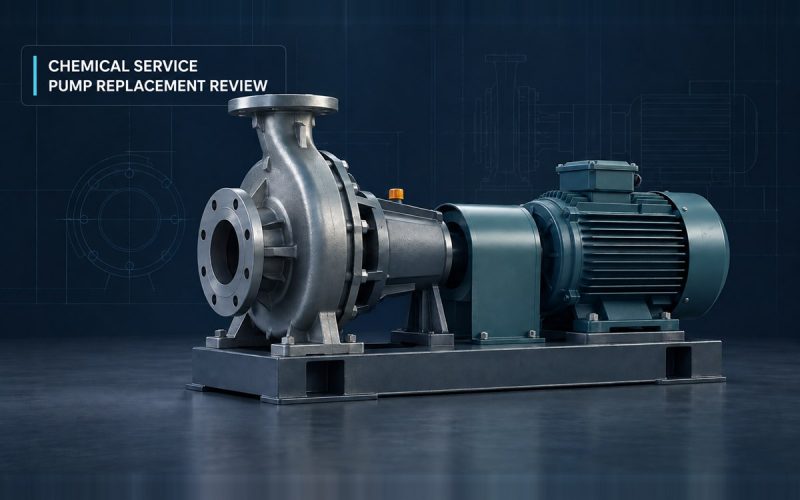
ANSI B73.1 Goulds 3196 replacement chemical process pump for industrial applications

Why Chemical Plants Evaluate Goulds 3196 Replacement Pumps

For decades, the Goulds 3196 has been one of the most widely recognized ANSI B73.1 horizontal process pumps used in chemical processing, water treatment, and industrial applications. Its reputation comes from proven hydraulic performance, standardized dimensions, and a large installed base across global industries.

However, many plants eventually face the same challenges:

  • Long OEM replacement lead times affecting production schedules
  • Increasing maintenance costs on aging equipment
  • Limited availability of legacy components
  • Need for alternative suppliers without modifying existing systems

When replacing an installed Goulds 3196 pump, the lowest purchase price is rarely the most important factor. The critical question is: can the replacement pump deliver the same mechanical fit, hydraulic performance, and reliability as the original equipment?

A properly engineered Goulds 3196 replacement should not simply look similar. It should be verified according to ANSI B73.1 requirements, application conditions, material compatibility, and installation requirements.

This guide explains the key factors engineers and procurement teams should evaluate before selecting an alternative ANSI B73.1 process pump replacement.

Why Replace a Goulds 3196 Pump?

1. Reducing Equipment Downtime Caused by Long Lead Times

In chemical processing facilities, pump failure can directly affect production schedules. A delayed replacement pump may result in reduced production capacity, emergency maintenance costs, additional inventory requirements, and extended equipment downtime.

Many industrial users begin searching for alternative suppliers because standard OEM delivery times may not match urgent maintenance requirements. A qualified replacement supplier can help reduce waiting periods while maintaining required engineering specifications. However, faster delivery should never replace proper technical verification.

2. Managing the Cost of Long-Term Pump Ownership

The purchase price of a process pump represents only part of the total operating cost. Engineers usually consider initial equipment investment, spare parts availability, maintenance frequency, downtime risk, and service life.

A replacement pump solution should provide value through reliable performance, compatible spare parts, suitable metallurgy, and easier future maintenance. The goal is not simply buying a cheaper pump — the goal is reducing the total lifecycle cost of the pumping system.

3. Supporting Aging Chemical Processing Equipment

Many chemical plants operate equipment installed years or even decades ago. During the operating life of a Goulds 3196 pump, plants may experience discontinued components, updated production requirements, changes in chemical concentration, and increased corrosion challenges.

A replacement evaluation provides an opportunity to review whether the existing pump design still matches current operating conditions. For example: Is the existing material suitable for today’s chemical media? Is the impeller size still optimized? Are seal components compatible? Is the pump operating near its Best Efficiency Point (BEP)? A replacement project is not only a purchasing decision — it is also an engineering improvement opportunity.

The Risks of Choosing the Wrong Replacement Pump

A pump may appear interchangeable externally but still create operational problems if critical details are not verified.

Risk 1: Incorrect Hydraulic Performance

The most common mistake in pump replacement is focusing only on dimensions. A replacement pump must match the required flow rate, head, speed, impeller diameter, motor power, and operating range. A pump that physically fits the piping system may still fail if it cannot provide required hydraulic performance. Excessive flow can overload the motor, insufficient head can reduce process efficiency, and operation far from BEP can increase vibration and wear. Hydraulic verification should always be completed before replacement.

Risk 2: Material Selection Does Not Match the Process Fluid

Chemical applications require careful material selection. The correct metallurgy depends on chemical concentration, temperature, chloride exposure, abrasive particles, and operating pressure. Selecting the wrong material can lead to corrosion damage, reduced service life, and unexpected maintenance costs.

Risk 3: Seal Chamber and Mechanical Seal Compatibility

Mechanical seal problems are one of the most common causes of pump leakage. When replacing a Goulds 3196 pump, engineers should verify seal chamber dimensions, shaft sleeve dimensions, mechanical seal arrangement, and operating pressure conditions. A replacement pump with incorrect seal geometry may cause seal leakage, excessive heat generation, and premature seal failure. This is why dimensional verification is essential before installation.

How to Verify a True Goulds 3196 Replacement Pump

Selecting a replacement pump requires more than confirming the model number. A professional replacement evaluation should verify the complete operating requirements of the existing pump system. Before replacing a Goulds 3196 pump, engineers should review five critical areas.

1. ANSI B73.1 Dimensional Compatibility

The Goulds 3196 is designed according to ANSI B73.1 standards, which define important dimensional requirements for chemical process pumps. A compatible replacement should maintain critical dimensions including suction and discharge flange dimensions, shaft centerline height, baseplate mounting dimensions, frame size, seal chamber dimensions, and coupling arrangement.

Goulds 3196 replacement pump dimensional compatibility checklist including flange shaft and seal chamber verification
Goulds 3196 replacement dimensional verification checklist — key measurement points for ANSI B73.1 compatibility

A replacement pump that matches only the external appearance is not enough. The engineering objective is to achieve fit, function, and reliability. A properly designed Goulds 3196 replacement should allow customers to minimize piping modifications and reduce installation risk.

2. Hydraulic Performance Matching

Mechanical compatibility is only one part of the evaluation. The replacement pump must also match the hydraulic requirements of the application. Important parameters include flow rate (Q), head (H), speed (RPM), and impeller diameter.

An incorrect impeller selection can result in lower process capacity, higher energy consumption, and operation away from the Best Efficiency Point (BEP). Before selecting a replacement pump, engineers should compare the existing pump curve, system curve, required operating point, and motor power margin. A properly matched replacement should operate within the expected performance range rather than simply meeting dimensional requirements.

3. Material Selection and Corrosion Resistance

Material selection is one of the most important decisions in chemical pump replacement. The same Goulds 3196 pump configuration may require different metallurgy depending on the application. A water treatment application may use stainless steel, while a chemical processing application involving aggressive media may require duplex stainless steel or nickel alloys.

ANSI process pump material selection comparison including CF8M CD4MCuN and Alloy 20 alloys
Common metallurgy options for Goulds 3196 replacement pumps — material selection affects corrosion resistance and service life

Material selection should consider chemical concentration, temperature, chloride content, abrasion level, and operating pressure. A lower-cost material may create higher maintenance costs if corrosion occurs prematurely.

4. Mechanical Seal and Seal Chamber Compatibility

Mechanical seal performance directly affects pump reliability. Many process pump failures are related to seal leakage, incorrect seal installation, excessive shaft movement, or improper operating conditions. When replacing a Goulds 3196 pump, engineers should verify seal chamber design, shaft sleeve compatibility, and mechanical seal selection according to fluid characteristics, temperature, pressure, and operating speed. A replacement pump should support commonly used mechanical seal arrangements to simplify future maintenance.

5. Baseplate and Installation Verification

Even a technically compatible pump can experience problems if installation conditions are ignored. Engineers should review suction conditions including NPSH available, suction piping design, and fluid temperature. Poor suction conditions may cause cavitation, vibration, and impeller damage. Check whether the pump operates near the design point, within acceptable vibration limits, and under stable process conditions. Consider spare parts availability, repair procedures, and future service requirements. A replacement project should improve long-term reliability, not only solve the immediate equipment problem.

Goulds 3196 Replacement Material Selection Guide

Choosing the correct material for a Goulds 3196 replacement pump depends on the chemical media, operating temperature, and environmental conditions. Below is a reference guide for common metallurgy options.

Material Advantages Typical Applications
CF8M / 316 Stainless Steel Good corrosion resistance and availability Water, mild chemicals, general process service
CD4MCuN Duplex Stainless Steel Higher strength and chloride resistance Chemical plants, seawater, aggressive chloride environments
Alloy 20 (CN7M) Excellent resistance to sulfuric acid environments Acid processing, pharmaceutical, food processing
Hastelloy C276 (CW2M) Superior corrosion resistance in severe conditions Severe chemical services, high-temperature corrosion
Cast Steel (WCB) Strong mechanical properties, cost-effective General industrial applications, non-corrosive services

Material traceability documentation, including certified Material Test Reports (MTRs) with chemical composition and heat number traceability, should be available for all critical Goulds 3196 replacement parts.

Goulds 3196 OEM vs ANSI Compatible Replacement Comparison

When evaluating replacement options, the comparison should focus on engineering value rather than purchase price alone.

Category Original Equipment ANSI Compatible Replacement
Pump Standard ANSI B73.1 ANSI B73.1
Application Chemical process service Chemical process service
Dimensional Compatibility Existing standard Verified equivalent design
Material Options Depends on configuration Multiple metallurgy options available
Spare Parts Availability OEM supply chain Alternative supply support
Lead Time May vary depending on production schedule Flexible manufacturing capability
Engineering Support OEM documentation Application-based evaluation

The best replacement choice is the supplier that can demonstrate technical compatibility and provide reliable engineering support.

For engineers also evaluating other ANSI process pump platforms, see our guide on Durco Mark III compatible replacement solutions.

Quality Control Process for Replacement Pumps

A reliable replacement pump supplier should provide more than a product. For industrial applications, customers need confidence that the replacement pump has been manufactured, inspected, and tested according to engineering requirements.

Material Traceability and Inspection

Chemical process pumps operate in demanding environments where material quality directly affects service life. For corrosion-resistant applications, material verification is especially important — including material certificates, chemical composition reports, heat number traceability, and manufacturing records. Material traceability helps ensure that the selected metallurgy matches the original engineering requirements.

Dimensional Inspection for Interchangeability

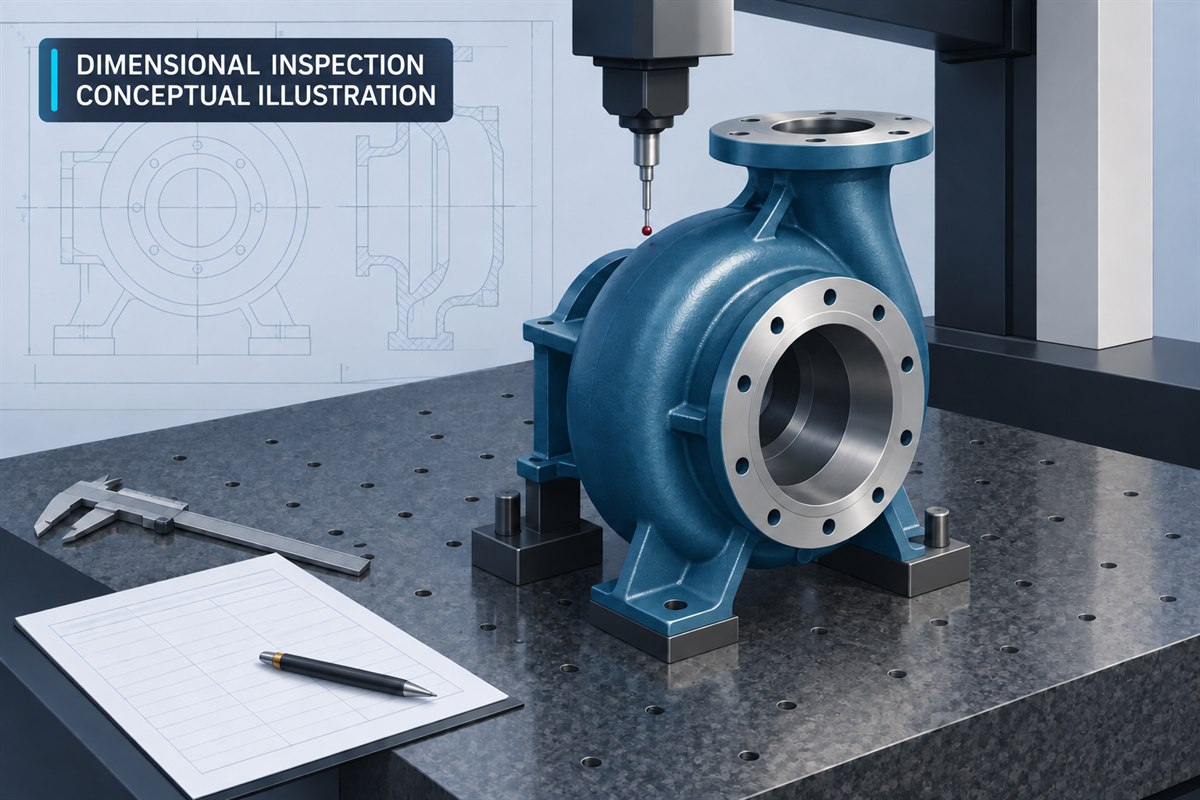
A successful Goulds 3196 replacement depends on accurate manufacturing dimensions. Critical inspection points include pump casing dimensions, shaft diameter, seal chamber dimensions, impeller fit, bearing frame alignment, and flange dimensions. Precision measurement equipment such as Coordinate Measuring Machines (CMM), digital measurement tools, and precision gauges verify critical components before assembly.

CMM inspection measuring ANSI process pump casing dimensions for Goulds 3196 replacement compatibility
Coordinate Measuring Machine (CMM) inspection verifies dimensional accuracy of ANSI B73.1 pump components

Hydrostatic Pressure Testing

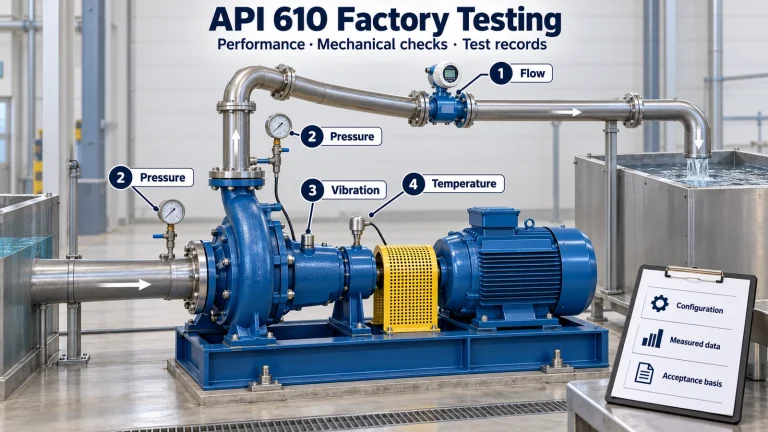
Pressure testing is an essential step for process pump quality verification. Hydrostatic testing helps confirm pressure containment capability, casting integrity, and leakage prevention. For chemical processing applications, pressure testing provides additional confidence before the equipment enters service.

Hydrostatic pressure testing of ANSI B73.1 process pump casing before shipment
Hydrostatic pressure testing verifies casing integrity at 1.5× maximum allowable working pressure

Manufacturing Experience in ANSI Process Pumps

ANSI process pumps require specific manufacturing knowledge because their performance depends on accurate relationships between multiple components. Important manufacturing areas include casting quality, machining accuracy, hydraulic design, rotating assembly balance, and seal system compatibility.

During the past 10+ years supplying ANSI B73.1 process pumps, our engineering team has inspected hundreds of replacement cases involving Goulds 3196, Durco Mark III, and other interchangeable ANSI pumps. Common replacement challenges we have addressed include:

  • Seal chamber dimensional variations causing leakage after installation
  • Incorrect impeller diameter affecting pump curve performance
  • Material mismatch causing premature corrosion in chloride environments
  • Baseplate alignment issues after replacing legacy equipment
ANSI process pump application in chemical processing plant environment
ANSI B73.1 process pumps installed in chemical processing facility

Goulds 3196 Replacement Verification Checklist

Before approving a replacement pump, confirm the following engineering checkpoints:

Item Verification Required
Pump standard ANSI B73.1 compliant
Flow and head Match application requirements
Impeller diameter Verified with pump curve
Material Suitable for process fluid
Seal chamber Compatible with mechanical seal
Shaft dimensions Confirmed against existing pump
Flange dimensions Matched to existing piping
Baseplate Installation verified
Testing documents MTR, CMM report, hydro test certificate available

Frequently Asked Questions About Goulds 3196 Replacement Pumps

Can a Goulds 3196 pump be replaced with another manufacturer?

Yes, a Goulds 3196 pump can be replaced by another manufacturer when the replacement pump is properly engineered and verified. The replacement should meet ANSI B73.1 requirements, hydraulic performance requirements, mechanical dimensions, material requirements, and installation conditions. The key factor is engineering compatibility, not simply the manufacturer name.

Are Goulds 3196 replacement parts interchangeable?

Many Goulds 3196 replacement components can be supplied through compatible ANSI pump replacement programs. However, interchangeability should always be verified according to pump size, frame configuration, component dimensions, and material requirements. Critical parts such as impellers, shafts, sleeves, mechanical seal components, and wear rings should be checked before installation. For a detailed reference, see our Goulds 3196 replacement parts guide.

What materials are available for Goulds 3196 replacement pumps?

Material selection depends on the application. Common options include 316 stainless steel (CF8M), CD4MCuN duplex stainless steel, Alloy 20, Hastelloy alloys, and cast steel. The correct material depends on chemical media, temperature, corrosion conditions, and abrasion requirements. See our chemical resistance guide for ANSI pumps for detailed recommendations.

Will a Goulds 3196 replacement pump fit existing piping?

A properly engineered ANSI B73.1 replacement pump is designed to maintain important dimensional requirements. Before replacement, engineers should verify flange dimensions, shaft centerline, baseplate arrangement, coupling alignment, and hydraulic requirements. A dimensional review helps reduce installation modifications.

What information is needed to select a replacement Goulds 3196 pump?

The most useful information includes existing pump model and size, flow requirement, head requirement, fluid characteristics, temperature, material requirements, motor information, and existing installation details. Providing accurate operating data allows engineers to recommend a suitable replacement solution.

Engineering Support Before Your Goulds 3196 Replacement Project

Replacing an installed process pump is an engineering decision, not only a purchasing decision. A successful replacement requires correct ANSI B73.1 compatibility, verified hydraulic performance, suitable material selection, accurate dimensional review, and reliable manufacturing quality.

ANSI Pumps Pro provides engineering support for customers evaluating Goulds 3196 compatible replacement pumps and ANSI process pump solutions. Contact our engineering team to review your existing pump information and replacement requirements.

Before selecting a replacement pump, provide: existing pump model, pump size, operating conditions, fluid information, and required materials. Our team can evaluate compatibility, material selection, replacement configuration, and technical requirements.

Request an Engineering Review

Get technical guidance on Goulds 3196 replacement pump selection, including compatibility verification and material recommendations.

Request an Engineering Review →

APP

About the Author — ANSI Pumps Pro Engineering Team

With over 10 years of experience in ANSI B73.1 process pump design, manufacturing, and aftermarket replacement solutions, the ANSI Pumps Pro engineering team supports chemical, water treatment, and industrial customers with pump selection, material verification, and interchangeability analysis. Our content is reviewed by senior pump engineers with direct field experience across chemical, petrochemical, and industrial pump applications.

Fact-Checking: Technical claims reference published industry standards (ASME B73.1, ASTM A743, API 682, Hydraulic Institute standards), peer-reviewed corrosion data, and internal engineering documentation. Product specifications reflect current information. Questions? Contact our team →

Quick Quote