When a CD4MCuN wet-end kit may be appropriate
CD4MCuN is a cast duplex stainless steel designation used for selected pump components. Whether it is appropriate depends on the actual liquid and operating conditions, the governing material specification and the design of each wetted part. Review concentration, temperature, pH, chlorides and other halides, oxidizing species, solids, velocity, deposits, startup and shutdown conditions, and any cleaning chemicals.
Use a documented materials review for corrosive or changing service. Do not treat a generic compatibility chart or the alloy name as a corrosion guarantee. For background, see the CD4MCuN duplex stainless material guide and the comparison of Hastelloy C-276 and Alloy 20.
Define exactly what the wet-end kit includes
“Wet-end kit” is not a universal bill of materials. The quote should identify each supplied item, quantity, material and part reference, and state which existing components will be reused.
| Scope group | Items to define | Ordering check |
|---|---|---|
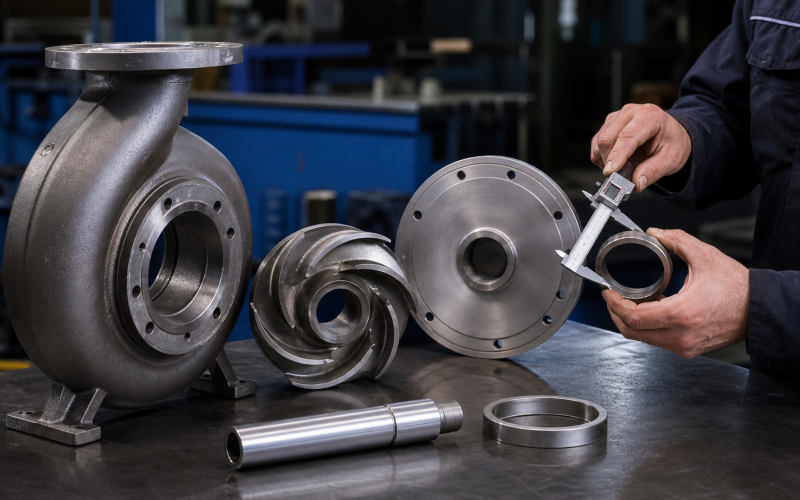
| Core hydraulic parts | Casing or volute, impeller, cover or seal chamber, and any wear rings or throat components in the agreed scope. | List part numbers, quantities, configuration and material for each item; do not infer included parts from the word “kit.” |
| Seal and shaft interfaces | Shaft sleeve, gasket set, mechanical seal or seal chamber parts when specifically included. | Confirm seal type, chamber arrangement, sleeve dimensions and selected elastomer/metal materials against the service. |
| Fasteners and small parts | Studs, nuts, plugs, keys and other hardware where included in the supplier’s BOM. | Define material, coating, dimensions and supply quantity on the drawing or purchase order. |
| Retained equipment | Power end, shaft, bearings, frame, coupling and baseplate that may remain in service. | Record what is reused and inspect its condition and interface dimensions before assembly. |
Fitment checks for Goulds 3196 and Durco Mark III
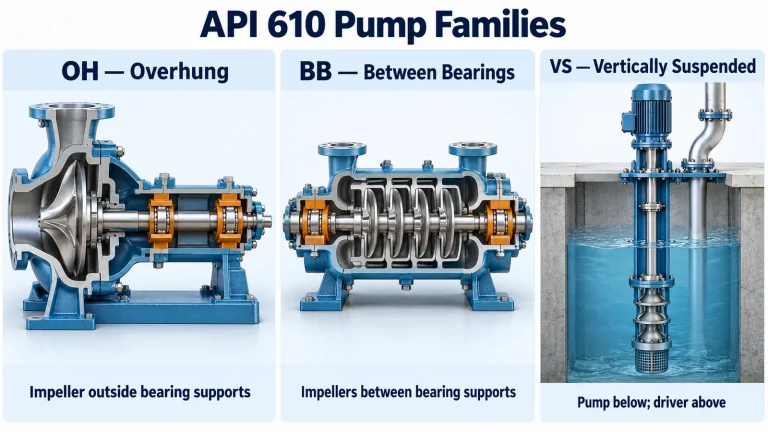
Both product families have configuration options and dimensional variants. Compare the proposed kit to the actual installed pump and the applicable manufacturer drawings or instruction manual. A shared ANSI process-pump dimensional standard does not establish that internal wet-end components from different manufacturers are interchangeable.
| Check | Record or compare | Why it matters |
|---|---|---|
| Pump identity | Manufacturer, model, complete size designation, frame/group, rotation and any suffix or configuration code. | Similar model names can cover different sizes, frames and construction options. |
| Casing and cover interfaces | Mounting pattern, register/pilot, gasket or joint details, seal chamber and cover dimensions using approved drawings. | Interface mismatch can prevent assembly or compromise sealing and alignment. |
| Impeller and shaft connection | Impeller part reference, outside diameter/trim, hub, thread or attachment, key and sleeve interface. | These details affect mechanical fit, rotation and hydraulic duty. |
| Hydraulic duty | Required flow, head, speed, liquid properties, operating range and impeller trim. | A component that physically fits may not meet the process duty or operating margin. |
| Clearances and setup | Applicable model/frame instruction manual, material and temperature conditions, and approved setting procedure. | Do not apply a single clearance value across variants; use the governing IOM and supplier drawing. |
ASME B73.1 addresses dimensional interchangeability for specified mounting dimensions and related interfaces. It should not be used as proof of internal component or hydraulic equivalence. Read more in our guide to ANSI B73.1 interchangeability versus component compatibility.
Material designation and service boundary
ASTM A890/A890M covers several cast duplex stainless steel grades. The purchaser selects the grade for the design and service conditions and specifies it in the procurement documents. “CD4MCuN,” “ASTM A890 Grade 1B” and “UNS J93372” are designations that may be cross-referenced in industry documentation; use a cross-reference only where the governing order specification, product form and material test report support it. Do not assume that similarly named specifications are automatically equivalent.
Specify the required material standard and grade for each part on the BOM. Request heat-level traceability and the agreed material test report. Where positive material identification is required, define the method and acceptance process. Handheld X-ray fluorescence can screen many alloying elements, but it does not measure nitrogen; it cannot by itself verify the full chemistry of CD4MCuN. Use the specified chemistry record and any supplementary test method required by the purchase specification.
Inspection, testing and document requirements
Make inspection requirements explicit in the RFQ and purchase order. The supplier’s documents should correspond to the agreed component scope and contract requirements, rather than a generic checklist applied to every order.
| Record / activity | Define before order | Acceptance basis |
|---|---|---|
| Material documentation | Required material standard/grade, report type, heat number and traceability scope. | Purchase specification and approved BOM/drawing. |
| PMI | Items to be checked, method, sampling extent and reporting format. | Specified chemistry/PMI procedure. XRF alone cannot confirm nitrogen content. |
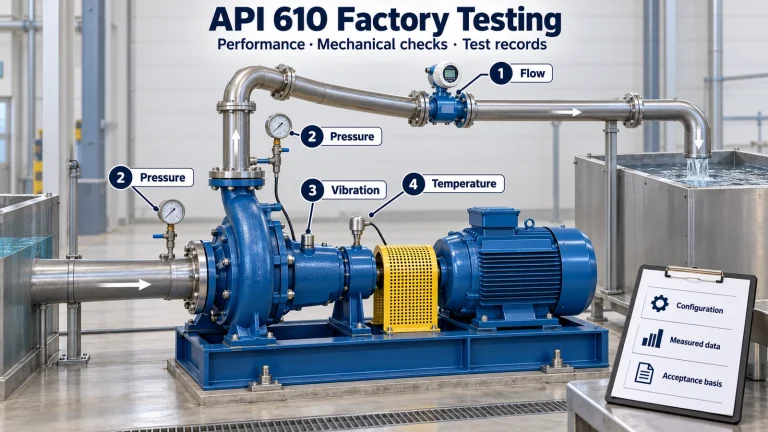
| Dimensional inspection | Critical dimensions, drawing revision, inspection report and any witness/hold points. | Approved component drawing and stated tolerances. |
| Pressure or performance testing | Whether required, test scope, medium, pressure/duration or performance points, and documentation. | Applicable pump standard, approved procedure and purchase order. |
| Balancing and NDT | Part/rotor scope, method, acceptance criteria and records if required. | Agreed rotor specification, drawing, contract code or purchaser requirement. |
Do not cite ASME B16.34 as the acceptance basis for pump-casting NDT; that standard covers valves. If NDT is required, state the applicable method, coverage, acceptance criteria and qualified procedure in the purchase documents.
RFQ checklist: information to send with your inquiry
Providing these details helps the supplier review scope and fitment before quoting. If a value is unknown, mark it unknown rather than estimating it.
- Existing pump manufacturer, model and complete size designation; frame/group and configuration code.
- Part numbers, quantities and requested kit scope; identify parts to be supplied and parts to be retained.
- Nameplate photo, assembly drawing and clear photos of the existing wet end; provide interface measurements where available.
- Impeller part reference and outside diameter/trim, plus operating flow, head, speed and operating range.
- Pumped liquid composition and concentration, temperature, pH, chloride/halide content, solids and relevant upset/cleaning conditions.
- Seal type, seal chamber arrangement, sleeve details and any seal plan or interface requirements.
- Required material standard/grade by component, MTR/traceability, PMI, dimensional inspection, testing and NDT documents.
- Delivery destination, target date, applicable project specification and any inspection or witness points.
For a part-number lookup, use the OEM part-number cross-reference. Include photos and the complete pump designation with any inquiry.
Receiving and pre-assembly checks
- Match labels, part numbers, quantities and heat numbers to the purchase order and material documents.
- Check machined faces, fits, threads and sealing surfaces for damage, corrosion, burrs or handling marks.
- Compare critical interfaces and impeller trim to the approved drawing; record discrepancies before installation.
- Confirm the proposed running clearance and assembly sequence in the applicable pump IOM and supplier instructions.
- Inspect retained shaft, power-end and sealing components for wear and runout as required by the maintenance procedure.
- Do not force, machine or assemble a questionable part to make it fit; resolve deviations with the supplier and responsible engineer.
Frequently asked questions
Will one CD4MCuN kit fit every Goulds 3196 or Durco Mark III?
No. Confirm the full pump size and frame, configuration, part references, interfaces, impeller trim and seal arrangement. Model-family names alone are not enough to establish fit.
Does ANSI B73.1 prove that replacement wet-end parts are interchangeable?
No. It addresses defined pump dimensional interfaces; it does not certify internal component fit or hydraulic equivalence between every manufacturer and configuration.
Can handheld XRF alone verify CD4MCuN?
No. XRF does not measure nitrogen, so it cannot confirm the full chemistry. Request the specified material test report and any supplementary verification required by the purchase specification.
What documents should I request with a kit?
State your requirements in the RFQ or purchase order. Commonly defined records include material reports and heat traceability, agreed PMI, dimensional inspection, and any required pressure/performance test, balancing or NDT reports.
Technical references
- Goulds LF 3196 IOM and Goulds NM 3196 IOM — use the applicable manual for configuration-specific assembly and clearance instructions.
- Flowserve Durco Mark 3 product information — product options vary; identify the installed configuration.
- ASME B73.1 — dimensional standard scope for horizontal end-suction chemical-process pumps.
- ASTM A890/A890M — cast duplex stainless steel grades and procurement considerations.
- Evident Scientific: XRF FAQ — method capabilities and elemental limitations.
- ASME B16.34 — valve standard scope.
Always follow the governing purchase specification, approved drawings and pump-specific instruction manual. This guide supports inquiry preparation and does not replace an engineering review of the actual service.