
Introduction: Two Industry Benchmarks, One Standard
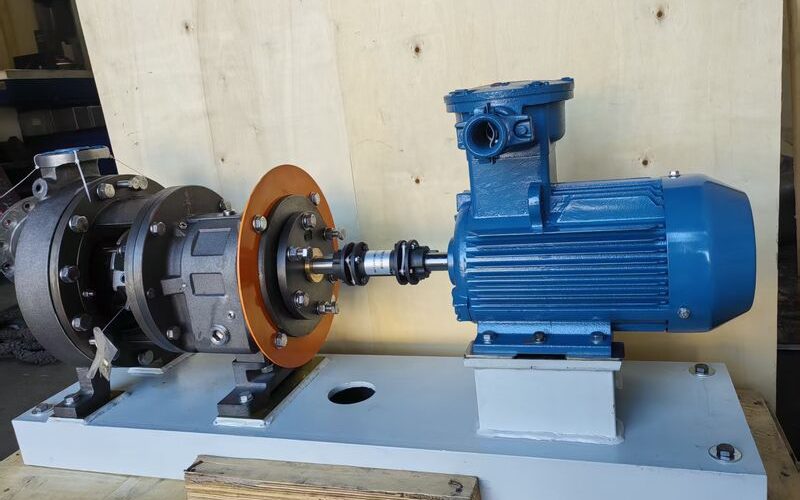
In the world of chemical process pumping, two names dominate the ANSI pump landscape: the ITT Goulds 3196 and the Flowserve Durco Mark III. Both pumps are engineered to meet the rigorous dimensional and performance requirements of ASME B73.1, the gold standard for horizontal end-suction centrifugal pumps in chemical service. This shared compliance means that both pumps are dimensionally interchangeable — they fit the same piping envelope, the same baseplate footprint, and the same coupling arrangements. However, beneath this surface-level compatibility lie fundamentally different design philosophies that directly impact reliability, maintenance procedures, and total cost of ownership (TCO).
For plant engineers, maintenance supervisors, and procurement managers making the choice between these two pump families — or seeking cost-effective aftermarket alternatives — understanding these design distinctions is not an academic exercise. It is the key to minimizing unplanned downtime, optimizing mean time between repair (MTBR), and reducing MRO spend without compromising process safety or reliability.
Technical Standard Alignment: ASME B73.1 Dimensional Interchangeability
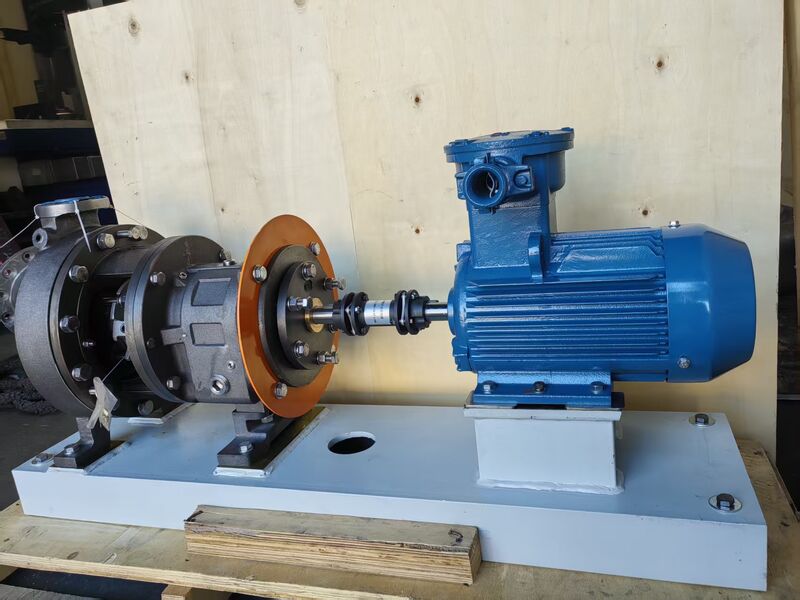
Both the Goulds 3196 and the Durco Mark III are designed and manufactured to the ASME B73.1 specification, which governs horizontal, end-suction, single-stage centrifugal pumps for chemical process applications. The standard mandates critical envelope dimensions — including nozzle locations, baseplate mounting points, shaft centerline height, and coupling spacer lengths — ensuring that pumps from different manufacturers are physically interchangeable without modifying existing piping or motor installations.
⚠️ Quality & Compliance Assurance
All pumps and components from ANSI Pumps Pro are manufactured to ASME B73.1 dimensional specifications. Each shipment includes certified Material Test Reports (MTRs), CMM dimensional inspection reports, and hydrostatic test certificates (1.5× MAWP). 100% dimensional interchangeability guaranteed. Full material traceability from heat number to your receiving dock.
This standardization is not merely a convenience; it is a strategic procurement advantage. When a plant’s installed base includes both Goulds 3196 and Durco Mark III pumps — a common scenario in facilities that have expanded over decades — having a single approved aftermarket supplier for fully interchangeable wet ends, power ends, and component parts dramatically simplifies inventory management and reduces vendor qualification overhead.
Core Design Philosophy: Open Impeller vs. Reverse Vane Impeller
The most consequential engineering difference between these two pump families lies in their approach to impeller design and hydraulic thrust management — a difference that cascades into every aspect of maintenance and operational behavior.
Goulds 3196: The Open Impeller with Front Clearance Adjustment
The Goulds 3196 employs an open impeller design. The impeller vanes are exposed on the front side, with semi-open vanes on the rear. Clearance between the impeller vanes and the front casing (volute cover) is the critical dimension that governs hydraulic efficiency. This clearance is adjusted by moving the entire bearing frame / rotor assembly toward the pump casing until the impeller contacts the front cover, then backing off to the manufacturer’s specified clearance — typically in the range of 0.015 to 0.020 inches, depending on operating temperature and service conditions.
Advantages of the open impeller:
- Superior handling of fluids with suspended solids and soft solids — the open vane geometry is less prone to clogging, making it the preferred choice in pulp & paper, waste treatment, and crystallization processes.
- Easier to clean and inspect without full disassembly — maintenance teams can check impeller condition simply by removing the casing bolts.
- Lower sensitivity to minor casting variations — open impellers do not require the precise front and back wear ring concentricity that enclosed impellers demand.
Durco Mark III: The Reverse Vane Impeller with Rear Clearance Adjustment
The Flowserve Durco Mark III takes a fundamentally different approach with its patented reverse vane impeller (RVI) design. The impeller incorporates pump-out vanes on the back shroud that actively reduce pressure in the stuffing box / seal chamber area. The clearance between these reverse vanes and the rear cover (seal chamber / stuffing box cover) is the adjustment point — not the front casing.
Advantages of the reverse vane impeller:
- Dramatically reduced axial thrust. The reverse vanes create a counterbalancing hydraulic force that offsets much of the axial load generated by the primary impeller vanes. The result is a 50-70% reduction in net axial thrust transmitted to the thrust bearing, directly extending bearing life — often by a factor of 2x or more compared to pumps without this feature.
- Lower seal chamber pressure. The pump-out vanes actively reduce the pressure environment around the mechanical seal, which decreases seal face loading, lowers seal operating temperature, and extends seal life. This is particularly beneficial when handling fluids near their vapor pressure or with poor lubricity.
- External impeller adjustment without disturbing the mechanical seal. This is perhaps the most maintenance-friendly feature of the Mark III design. Because the adjustment is made at the rear cover, the mechanical seal’s spring compression and face loading are completely unaffected by impeller clearance adjustments — a unique advantage not shared by the Goulds 3196.
Bearing Frame and Condition Monitoring
Goulds 3196: i-ALERT Monitoring System
The Goulds 3196 can be equipped with the i-ALERT condition monitoring system, a compact device mounted directly on the bearing housing that continuously measures vibration and temperature. The i-ALERT system uses LED indicators (green = normal, yellow = alert, red = alarm) to provide instant, at-a-glance pump health status to operators making rounds. While not a replacement for a full vibration analysis program, i-ALERT dramatically improves the probability of catching developing bearing defects before catastrophic failure occurs.
Durco Mark III: Taper Bore / Large Bore Seal Chamber
The Durco Mark III’s large bore (Taper Bore) seal chamber is a standout feature for mechanical seal reliability. The generous volumetric space around the seal — significantly larger than a standard cylindrical bore — promotes superior heat dissipation and solids evacuation around the seal faces. In services where the pumped fluid tends to crystallize, coke, or form deposits at the seal faces (common in hot oil, polymer, and chemical reactor services), this large bore design reduces the frequency of seal failures caused by fluid stagnation and thermal degradation.
Furthermore, the taper bore geometry naturally directs solids and debris away from the seal faces via centrifugal force, acting as a built-in cyclone separator. For plants that operate a mix of clean and slurry services, this can translate into meaningful MTBR improvements without requiring external flush plans.
Application-Specific Recommendations
| Application / Service Condition | Recommended Pump | Rationale |
|---|---|---|
| Sulfuric Acid (93-98%, ambient temperature) | Durco Mark III | Reverse vane reduces seal chamber pressure; lower seal face loading extends life in concentrated acid service |
| Chlor-Alkali / Caustic Soda (50% NaOH) | Goulds 3196 | Open impeller is less sensitive to caustic salt precipitation; easier to flush and clean |
| Petrochemical / Hot Oil (300°F+) | Durco Mark III | Large bore seal chamber provides superior heat dissipation; reverse vanes reduce axial load at high temperatures where bearing clearances expand |
| Pulp & Paper Stock (up to 6% consistency) | Goulds 3196 | Open impeller handles fibrous solids without clogging; front clearance adjustment compensates for wear from abrasive stock |
| Crystallization / Slurry Services | Goulds 3196 | Open impeller passes soft crystals more readily; easier to inspect and clean between batches |
| High-Purity / Sanitary Chemical | Durco Mark III | Smoother internal hydraulic passage reduces zones of stagnation; lower risk of product contamination |
Comprehensive Technical Comparison
| Comparison Dimension | Goulds 3196 | Durco Mark III |
|---|---|---|
| Impeller Type | Open impeller (front semi-open, rear enclosed) | Reverse vane impeller (enclosed with back pump-out vanes) |
| Clearance Adjustment Point | Front casing / volute cover | Rear cover / seal chamber cover |
| Adjustment Impact on Mechanical Seal | Changes seal compression; seal must be reset after adjustment | No impact — adjustment is independent of seal setting |
| Seal Chamber Volumetric Space | Standard cylindrical bore (optional enlarged bore on some models) | Standard bore or Taper Bore (large bore) with superior heat dissipation |
| Axial Thrust Management | Thrust bearing carries full hydraulic axial load | Reverse vanes reduce net axial thrust by 50-70% |
| Condition Monitoring | i-ALERT (vibration + temperature) | Conventional monitoring ports; third-party monitors can be fitted |
| Maintenance Complexity | Moderate — impeller clearance requires indicator measurement at front cover | Lower — external jacking bolts allow impeller adjustment without disturbing seal or casing |
| Solids Handling | Excellent — open vane geometry passes soft solids and fibers | Good — enclosed impeller with generous passageways; less tolerant of stringy materials |
| Standard Compliance | ASME B73.1 | ASME B73.1 |
| Typical MTBR (Properly Maintained) | 3-5 years (depending on service) | 4-7 years (axial thrust reduction extends bearing life) |
Commercial Consideration: The Case for 100% Interchangeable Aftermarket Alternatives
Whether your facility runs Goulds 3196 pumps, Durco Mark III pumps, or a mixed fleet of both, the reality of MRO procurement is that OEM parts lead times and pricing can significantly strain maintenance budgets. The good news: because both pump families are designed to the ASME B73.1 dimensional standard, high-quality aftermarket components — properly engineered and manufactured to matching metallurgical and dimensional specifications — can deliver identical performance at a fraction of OEM cost.
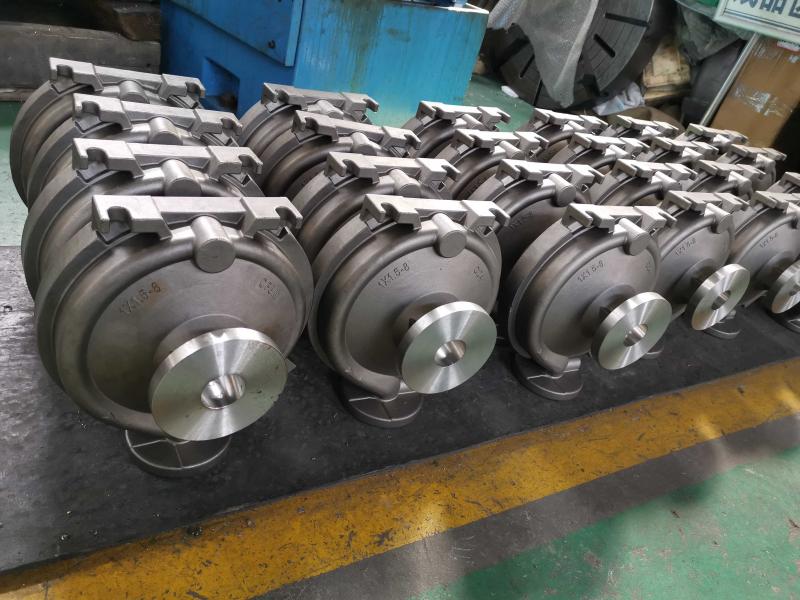
At ansipumpspro.com, we specialize in the manufacture and supply of 100% interchangeable ANSI process pump components for both the Goulds 3196 and Durco Mark III families. Our product scope includes:
- Complete Wet Ends — fully assembled casing, impeller, and seal chamber assemblies ready for direct bolt-up replacement
- Power Ends — complete bearing frame assemblies including shaft, bearings, bearing housing, and oil seals, pre-assembled and factory-tested
- Individual Components — impellers, casings, shaft sleeves, bearing housings, seal chambers, and wear rings in materials ranging from standard 316SS to exotic alloys including Titanium, Hastelloy C, Alloy 20, and CD4MCu
All components are manufactured under strict quality control with full dimensional inspection against OEM prints. The result: plug-and-play interchangeability that requires zero piping or electrical modifications — simply remove the old component, install ours, and return to service.
Contact our engineering team at ansipumpspro.com/contact with your pump model number, material requirements, and part numbers for a competitive quotation.
📋 Quick RFQ — No Registration Required
🔗 Related Reading
Decision Flowchart: 3196 or Mark III for Your Application?
5 Questions to Decide Goulds 3196 vs. Durco Mark III:
- Does your process fluid have high vapor pressure (risk of flashing)?
→ YES: Lean Mark III (reverse-vane impeller reduces seal chamber pressure 30-60%; lower NPSH margin requirement at seal face) - Is maintenance frequency a top concern (staffing constraints)?
→ YES: Lean Mark III (rear-cover impeller adjustment takes 15-20 min vs. 30-45 min for 3196 front-casing method) - Is your existing fleet predominantly Goulds 3196?
→ YES: Stay with 3196 (common power ends, shared spare parts, simpler training — unless conditions #1 or #2 are overriding) - Are you pumping abrasive slurries?
→ Either, but specify CD4MCuN material regardless of brand. The material decision matters more than the brand decision for abrasion resistance. - Is initial purchase price your primary constraint?
→ Goulds 3196-type (simpler casing design = typically 5-8% lower cost at same material and frame size). But consider TCO — see 15-Year TCO Comparison →