Identify the Installed Group 3 Casing Before Ordering
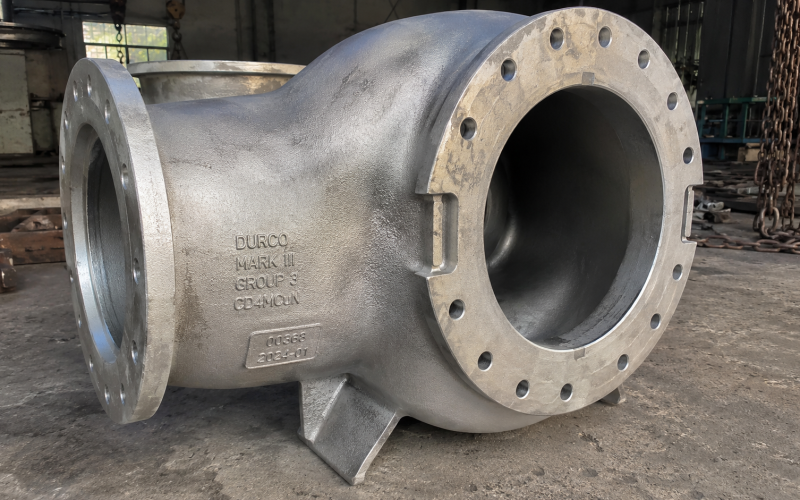
A Durco Mark III Group 3 casing replacement should be reviewed against the pump that is installed, not released from the family name alone. Start with the full nameplate designation, serial number, casing reference or part number, and any available sectional drawing or bill of materials.
Keep the exact size suffix in the record. Similar size strings can represent different hydraulic or casing configurations. If the existing reference is uncertain, use the OEM part-number cross-reference as a lookup aid and have the installed configuration confirmed before purchase.
What Must Be Checked on a Casing Replacement?
Separate the installation envelope from the interfaces that mate with the wet end. Use an approved drawing, verified part reference, or dimensional inspection to resolve any mismatch before a replacement is released.
| Review area | Information to confirm | Useful evidence |
|---|---|---|
| Pump identity | Mark III designation, Group, full size and suffix, serial number, and pump generation where shown. | Nameplate photo, parts list, and existing casing reference. |
| Installation interfaces | Suction and discharge nozzle size/location, orientation, base or foot mounting, flange facing and drilling, and connected piping constraints. | Approved dimensional drawing and field measurements where the installation is modified or uncertain. |
| Mating wet-end parts | Rear cover or seal chamber register, casing joint, impeller arrangement, wear/interface details, and required clearances. | Sectional drawing, component references, and the applicable assembly procedure. |
| Service conditions | Fluid composition, concentration, temperature range, pressure, solids, operating point, and any changed duty. | Process data sheet, pump curve or duty record, and failure history. |
| Material and records | Required alloy in the correct product form, pressure/design requirements, and inspection documentation. | Project material specification, approved drawing, MTR requirements, and agreed inspection/test plan. |
ASME B73.1 addresses dimensional interchange features for specified pump installation interfaces. It does not replace verification of the installed pump’s component configuration or prove hydraulic equivalence for a changed operating duty. See the B73.1 pump dimensions guide for the broader standard context.
For reverse-vane configurations, confirm the correct impeller/casing combination and follow the pump-specific clearance-setting procedure. Flowserve describes the Durco reverse-vane impeller and external adjustment features in its Durco product information; use the correct instructions for the installed Mark III configuration.
Verify the Casing Alloy Against the Process and Material Records
Do not select a casing material from the fluid name or an alloy trade name alone. The review should include the actual fluid composition, concentration, normal and upset temperatures, chlorides or other contaminants, pH where relevant, solids, velocity, aeration, and cleaning or shutdown conditions.
For the proposed casting, state the specified alloy, product form, applicable material specification and grade, and any purchaser requirements. Check that the supplied MTR and heat identification support the ordered material. PMI may be part of an agreed verification plan; it should not be presented as a substitute for the required material records.
Use the site’s CD4MCuN verification guide or Alloy 20 and C-276 comparison for the broader material-selection discussion. ASTM’s active specifications describe the relevant casting families, including duplex stainless castings, nickel-alloy castings, and titanium castings. The actual grade and acceptance requirements must follow the project specification and supplied records.
Use Inspection Evidence to Decide Whether to Repair or Replace
Assess the casing pressure boundary and interfaces from measured condition, not a universal percentage threshold. Record the damage location, remaining wall measurements, crack or leakage findings, flange and joint condition, material identity, and the applicable design limits.
A repair review should establish whether the proposed method is permitted for the material and pressure boundary, whether a qualified procedure and post-repair inspection are required, and whether the casing can return to service within the approved design basis. Escalate uncertain or through-wall damage for engineering review before reuse.
Agree on Inspection and Test Records Before Purchase
Inspection and pressure-test requirements depend on the contract, material, design basis, and applicable procedure. Ask the supplier to identify which records are included and which are optional before the order is placed.
What to Send for a Group 3 Casing Review
Providing the installed configuration and process conditions together helps the supplier identify open questions before quotation. Send the information available; note anything that has not yet been verified.
If you have an OEM casing number, check the part-number cross-reference. For a broader review of other Mark III components, use the Durco Mark III replacement-parts fitment guide. The Durco Mark III replacement page describes the commercial replacement scope.
Frequently Asked Questions
Is the Mark III Group 3 designation enough to confirm a replacement casing?
No. Confirm the complete size and suffix, installed casing reference, mating components, material, and installation interfaces from the nameplate, drawing, or verified measurements.
Does dimensional interchangeability prove hydraulic equivalence?
No. Installation dimensions and hydraulic suitability are separate checks. If the impeller, operating speed, fluid, or duty point changes, review the applicable pump curve and operating requirements.
Can I change the casing alloy during replacement?
A proposed material change needs review against the complete process chemistry and the materials of the other wetted components. Specify the required casting grade and supporting records; do not approve the change from an alloy name alone.
What documents are useful for a casing quotation?
Send the nameplate and serial number, casing reference or drawing, key interface dimensions, process conditions, required casting material, and the inspection or test documents specified for the project.
Can a damaged casing be repaired instead of replaced?
That depends on the damage, measured remaining section, material, pressure-boundary requirements, and an approved repair basis. A generic corrosion percentage or weldability rule should not replace that assessment.