When a Long OEM Lead Time Becomes a Repair-Shop Problem
A long quoted lead time is not automatically a reason to change suppliers. It is a signal to separate two different risks: schedule risk and replacement risk.
Schedule risk is the effect of waiting on shop capacity, promised turnaround and the end user’s maintenance plan. Replacement risk is the possibility that a faster part arrives with the wrong configuration, material, interface or documentation. A repair shop only improves the job when it reduces the first risk without increasing the second.
Quantify Lead-Time Exposure With Your Own Shop Data
There is no universal dollar value for a delayed pump repair. A shutdown plant, a shop with a standby unit available, and a planned overhaul can have completely different exposure. Instead of using a generic “millions lost” figure, calculate the part of the delay that is real for the job in front of you.
Edecision = estimated lead-time exposure for the repair decision
Cb = shop bay / floor-space / handling cost per day, if the job remains open
D = incremental delay days attributable to the replacement-part route
Nl = repair jobs displaced or lost because capacity remains occupied
Mj = contribution margin per displaced job, using the repair shop’s own records
Ce = expediting, premium freight or emergency sourcing cost
Cr = rework, temporary repair or additional inspection cost
Cp = customer-specific contractual or outage exposure, only when applicable and documented
Use one stated currency and evaluation window, and keep every cost category incremental and mutually exclusive to avoid double counting. Use your own job history, customer contract and operating data. Do not assume that supplier lead time equals plant downtime, and do not apply a generic hourly outage value to every repair.
Separate Schedule Risk From Replacement Risk
Identify the incremental delay that actually affects this repair.
Use model, size, frame or group, OEM reference, photos, drawing and measured evidence.
Check interfaces, metallurgy, hydraulic role and required documentation.
Compare written scope, manufacturing status, inspection plan and delivery commitment—not price and date alone.
What ASME B73.1 Does—and Does Not—Prove
ASME B73.1 is important to ANSI process-pump replacement work because it includes dimensional interchangeability requirements for defined pump-level interfaces. ASME describes the intent as interchangeability, for pumps of the same standard dimension designation, with respect to mounting dimensions, suction and discharge nozzle size and location, input shafts, baseplates and foundation bolt holes.
For hydraulic components, dimensional interchangeability and hydraulic equivalence are separate questions. When the proposed part can change pump performance, review the applicable pump performance curves or other approved performance data rather than assuming the original curve remains unchanged.
Five Checks Before an Aftermarket Part Is Released
Record manufacturer / installed brand, model, pump size, frame or group, OEM reference and any evidence of previous modification. Use the OEM part-number cross-reference as an identification route, not as final proof of fit.
Compare the critical interfaces that control assembly and operation. When the configuration is uncertain, use controlled drawings, measured dimensions and the installed part rather than catalogue family names alone. The replacement-parts inspection guide covers the incoming and dimensional verification workflow in more detail.
For an impeller, casing or other hydraulic component, confirm the relevant geometry, trim, speed and duty-point requirements. Do not assume identical head, efficiency, power or NPSHr from dimensional fit alone.
State the required material designation and the process conditions that matter to selection. For duplex casting questions, use the CD4MCuN material guide. For broader preliminary screening, use the chemical resistance guide, then confirm the final selection against project requirements.
Specify the evidence the buyer actually needs: approved drawing, dimensional report, material documentation, PMI where required, balance record where applicable, and pressure testing for applicable pressure-retaining parts. For balancing requirements, the acceptance basis should be stated for the specific rotor and project; ISO 21940-11 is the current ISO standard covering procedures and unbalance tolerances for rotors with rigid behaviour.
What Actually Changes Replacement-Part Lead Time?
A supplier name alone does not determine delivery. The route changes with the exact part, casting status, material, machining scope, inspection package and buyer approval process. Ask for the manufacturing status and the assumptions behind the quoted date.
| Variable | Why it matters | What the repair shop should confirm |
|---|---|---|
| Part identity | A similar family name can hide a different revision or interface. | Model, size, frame/group, OEM reference, drawing or measured evidence. |
| Material | Availability and manufacturing route vary by alloy and component. | Exact grade, service conditions and required material records. |
| Casting / raw-part status | Finished stock, semi-finished stock and a new casting route have different schedules. | What physically exists at quotation time. |
| Machining scope | Critical interfaces, impeller trim or drawing-based work can add operations. | Approved dimensions and machining scope. |
| Inspection | Dimensional, material, balance or pressure-test requirements affect release steps. | ITP / documentation requirements before order release. |
| Buyer approval | Drawing or deviation approval can become the critical path. | Who approves and what evidence is required. |
| Logistics | Transport mode and destination change delivery after manufacturing release. | Incoterm, ship-to location and required delivery date. |
Standalone Parts ANSI Pumps Pro Can Review for Repair Shops
For standalone replacement-part requests, the current commercial scope is intentionally focused on major metallic components that can be identified and verified from the installed pump data, OEM reference, drawing or measured sample.
| Component | Information to confirm before quotation |
|---|---|
| Casing | Pump family and size, material, nozzle / mounting interfaces, pressure requirement and applicable inspection scope. |
| Cover | Exact cover configuration, material, gasket / seal-related interfaces and drawing or reference where available. |
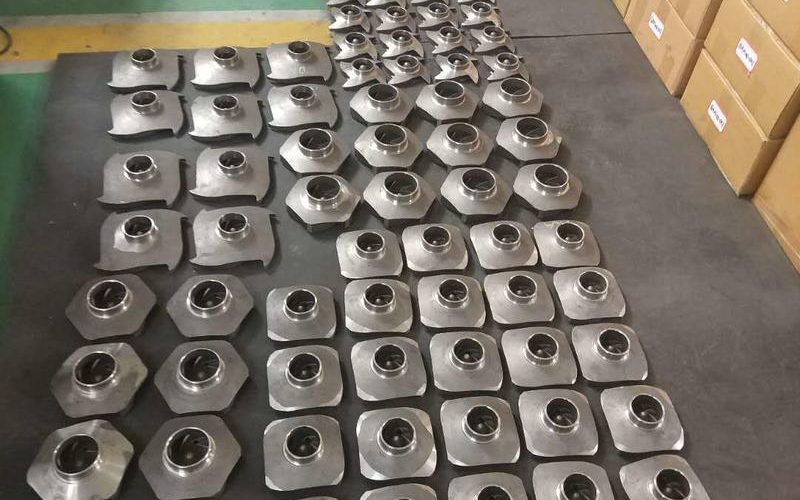
| Impeller | Pump size, impeller configuration, diameter / trim where applicable, material, speed and hydraulic requirement. |
| Shaft | Frame / group, dimensions, fits, keyway, runout requirement, material and drawing or sample evidence. |
| Selected metallic mechanical-seal components | Drawing-based metal component definition, critical dimensions, material and mating-interface requirements. |
What Repair Shops Should Send With an Urgent RFQ
The fastest useful RFQ is not the shortest email. It is the smallest evidence package that closes the identification and acceptance questions early.
If the installed unit is a 3196-family pump, continue with the Goulds 3196 replacement verification page. For Mark III equipment, use the Durco Mark III replacement verification page. For other engineering references, start from the Technical Resources hub.
When You Should Not Switch Sources Just to Shorten Lead Time
A shorter procurement route can be valuable, but some jobs should remain on the approved source or be escalated before any substitution is released.
Frequently Asked Questions
Is a long OEM lead time enough reason to use an aftermarket part?
No. A long lead time can justify reviewing another sourcing route, but the replacement still has to pass the applicable identification, interface, material, hydraulic and documentation checks.
Does ASME B73.1 mean internal pump parts are interchangeable?
No. ASME B73.1 establishes dimensional interchangeability requirements for defined pump-level interfaces. Internal component fit, hydraulic geometry, materials and configuration-specific details still require separate verification.
Does a matching OEM part number guarantee fit?
No. It is a strong identification input, but prior repairs, revisions or modifications may mean the installed configuration differs from the original reference. Confirm the part against the installed equipment and available drawings or measurements.
What information should a repair shop send first?
Start with the nameplate, model, pump size, frame or group, part reference, clear photos, required material, quantity and required date. Add duty and impeller information when the requested part can affect hydraulic performance.
Which inspection records should be requested?
The answer depends on the component and purchase specification. Typical requirements can include an approved drawing, dimensional report, material documentation, PMI where required, a balance record where applicable, and pressure testing for applicable pressure-retaining parts.
Sources and Related Engineering Guides
Primary standard: ASME B73.1 — Specification for Horizontal End Suction Centrifugal Pumps for Chemical Process.
Rotor balancing reference: ISO 21940-11:2016 — Mechanical vibration — Rotor balancing — Part 11. The project specification should define whether and how a balance requirement applies to the supplied component.
Engineering principle: final replacement acceptance should follow the installed configuration, approved drawings, project specification, applicable standards and the buyer’s inspection requirements.